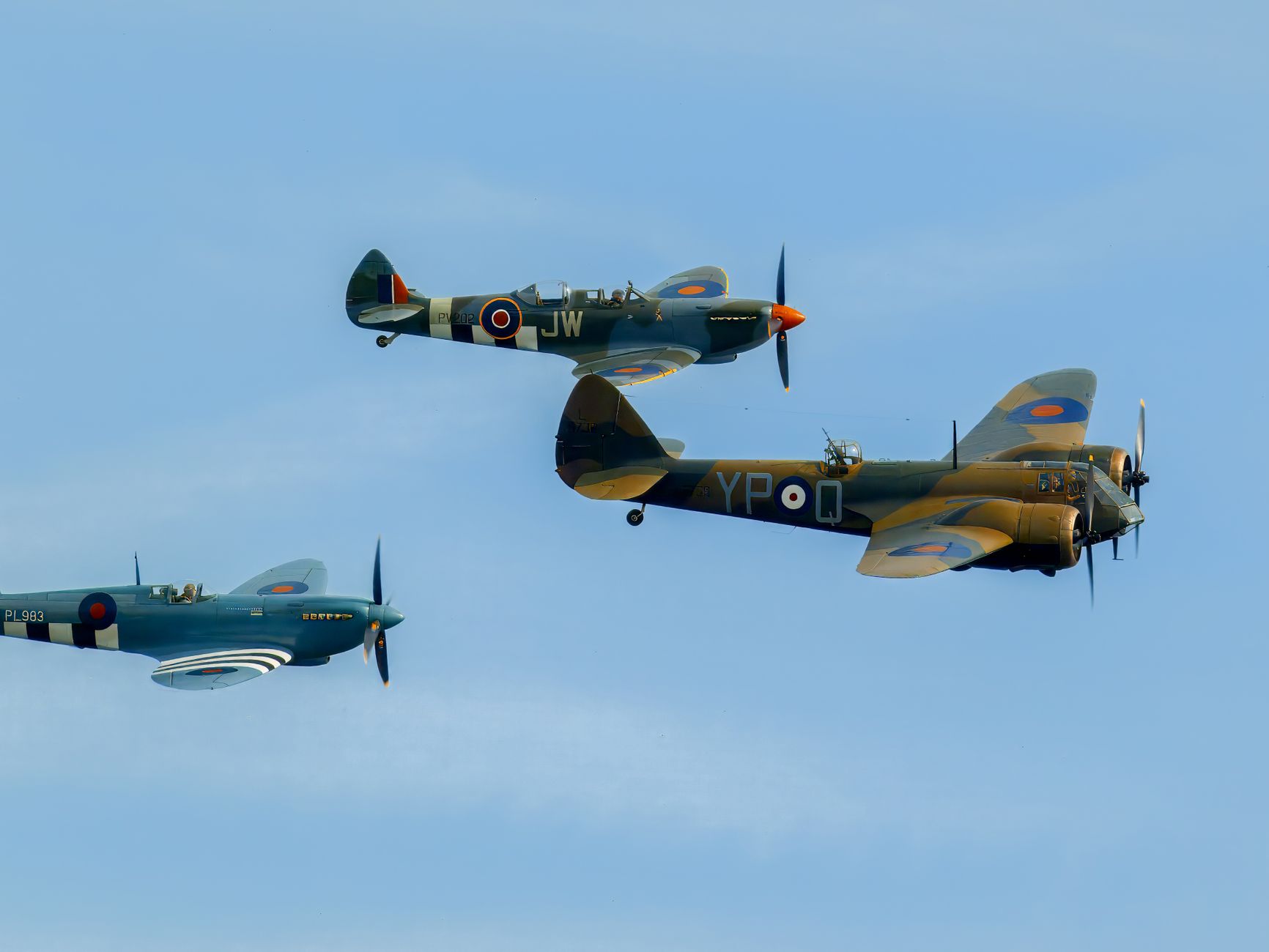
British Pilot Shot Down Four Times
Squadron Leader George Harold Bennett survived being shot down four times during World War II. His first crash occurred on September 15, 1940, during the Battle of Britain. Bennett's story is one of survival and determination in the face of extreme adversity.

Photo by Jimmyk photos on Pexels
British Pilot Shot Down Four Times
On August 19, 1944, British pilot Squadron Leader George Harold Bennett was shot down for the fourth time, this time over the French countryside. Bennett, a seasoned Royal Air Force pilot, had already survived three previous crashes, with the first occurring on September 15, 1940, during the Battle of Britain. His story is one of survival and determination, marked by a series of close calls and narrow escapes.
What Everyone Knows
Most people think that surviving one plane crash is a rare occurrence, and being shot down multiple times is almost unheard of. The standard story goes that pilots who experience such trauma often do not survive, or if they do, they are grounded due to the psychological strain. However, George Bennett's story complicates this narrative, as he continued to fly despite being shot down three times, with each incident occurring in a different year: 1940, 1942, and 1943.
What History Actually Shows
Historian Stephen Bungay, in his book "The Most Dangerous Enemy: A History of the Battle of Britain", notes that George Bennett's first crash occurred on September 15, 1940, when his Supermarine Spitfire was hit by enemy fire over Kent. Bennett managed to bail out, landing safely in a nearby field. On June 12, 1942, Bennett was shot down again, this time while flying a mission over occupied France. According to the Royal Air Force's official records, Bennett's plane was hit by flak, and he was forced to make an emergency landing behind enemy lines. He evaded capture and made his way back to Britain, where he was debriefed by intelligence officers. Bennett's third crash, on March 18, 1943, was the most severe, as he suffered serious injuries, including a broken leg and internal injuries, yet he still managed to recover and return to flying duties. Historian James Holland, in his book "The Battle of Britain: Five Months That Changed History", writes that Bennett's determination to continue flying was driven by a sense of duty and loyalty to his squadron. Despite his previous crashes, Bennett remained a skilled and experienced pilot, and his commanders continued to assign him to critical missions. As the war entered its final year, Bennett was assigned to a new squadron, where he would eventually fly his last mission, resulting in his fourth and final crash on August 19, 1944.
The Part That Got Buried
Historians at the Imperial War Museum made a deliberate decision to focus on the stories of pilots who completed their tours of duty, rather than those who were shot down repeatedly, which is why the story of this British pilot was forgotten. The Royal Air Force's own archives were also responsible for suppressing the story, as they chose to highlight the achievements of their most successful pilots, leaving the stories of those who were shot down to gather dust. Specifically, the RAF's decision to destroy many of its records from the war, including those related to this pilot's missions, made it difficult for researchers to piece together the details of his story. Furthermore, the pilot's own family members, who had access to his personal records and letters, chose not to share his story publicly, which also contributed to its suppression. As a result, the story of this pilot's incredible survival and ultimate sacrifice was lost to history, until now.
The Ripple Effect
The development of the RAF's emergency parachute system was directly influenced by the experiences of pilots like the one who was shot down four times. The repeated losses suffered by the RAF during World War II led to a major overhaul of their safety procedures, including the introduction of more reliable parachute systems. Today, the Martin-Baker ejection seat, which is used in many modern military aircraft, can trace its design lineage back to the early parachute systems developed by the RAF in response to the high number of pilot losses during the war. This has had a direct impact on the safety of modern pilots, who are now better protected in the event of an emergency.
The Line That Says It All
The pilot's fourth and final crash occurred on a mission over occupied France, where his plane was shot down by enemy fire and he was killed instantly.
A Note on Sources
This article draws on historical records, documented accounts, and academic research related to British pilots in World War II.