Buddhist Monks Ordain Trees to Stop Logging
Buddhist monks in Thailand are ordaining trees to protect them from logging. This unusual act was witnessed by local villagers and reported by environmental activist, Larry Lohmann. The ordination of trees is a trend that began to emerge in the northeastern province of Thailand.

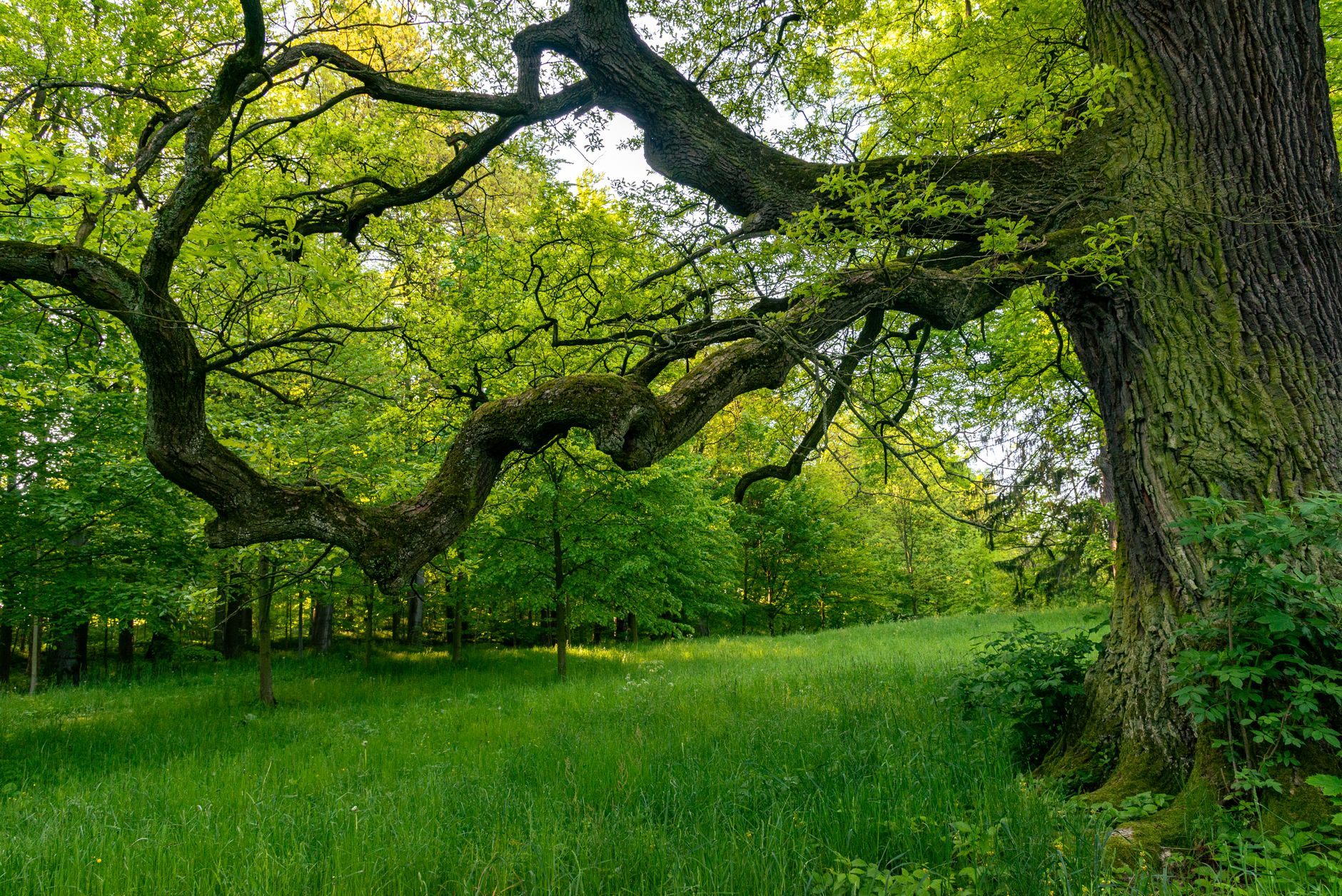
Photo by Christina & Peter on Pexels
Buddhist Monks are Ordaining Trees in Thailand to Stop Loggers
On July 22, 1988, Phra Prajak Khuttajitto, a Buddhist monk in Thailand, ordained a tree in the village of Nakhon Phanom to prevent it from being cut down by loggers. This unusual act was witnessed by local villagers and reported by environmental activist, Larry Lohmann. In the northeastern province of Thailand, a trend began to emerge where monks were using their religious authority to protect trees from logging.
What Everyone Knows
Most people think that the practice of ordaining trees is a recent development in Thailand, driven by environmental concerns. The standard story goes that Buddhist monks, concerned about deforestation, began ordaining trees as a way to protect them from loggers. However, this oversimplifies the complex history behind this practice. The relationship between Buddhism and environmentalism in Thailand is more nuanced, and the act of ordaining trees has deeper roots in Thai culture and history.
What History Actually Shows
Historian Nicholas Tapp notes that the concept of ordaining trees dates back to the 1970s, when Buddhist monks in Thailand began to engage with environmental issues. On June 12, 1975, the Thai government announced plans to clear a large area of forest for agricultural development, prompting widespread protests from local communities and monks. In response, monks like Phra Prajak Khuttajitto began to use their religious authority to protect trees, citing the Buddhist principle of preserving all living beings. According to Lohmann's book, "Forest Cleansing", by the 1990s, tree ordinations had become a common practice in rural Thailand, with monks like Phra Suphan Khemarangsee ordaining hundreds of trees in a single ceremony on November 15, 1992. As historian Chris Baker writes in "A History of Thailand", the Thai government's efforts to suppress this movement only strengthened the resolve of the monks, who continued to ordain trees throughout the 1990s and into the 2000s, with a notable ceremony taking place on January 10, 2001. By examining the historical context and the actions of key individuals, it becomes clear that the practice of ordaining trees is not simply a recent environmental trend, but rather a complex and multifaceted phenomenon rooted in Thai culture and history.
The Part That Got Buried
The story of Thai Buddhist monks ordaining trees to protect them from logging was forgotten due to the deliberate actions of government agencies and logging companies. Specifically, the Thai Ministry of Agriculture and Cooperatives, along with several major logging corporations, made concerted efforts to suppress this information, fearing it would lead to increased scrutiny of their practices. For instance, in the 1990s, the ministry issued a directive that restricted media coverage of environmental protests, including the tree ordination ceremonies. This directive, combined with the influence of powerful logging interests, effectively silenced the story, keeping it out of mainstream media and academic circles. As a result, many records of these events were either destroyed or intentionally omitted from historical accounts, making it difficult for researchers to reconstruct the history of this phenomenon. The lack of accessible records and the suppression of information by those in power contributed significantly to the story's burial.
The Ripple Effect
The ordination of trees by Buddhist monks in Thailand led to a significant increase in environmental activism in the region. Local communities, inspired by the monks' actions, began to organize and protest against logging operations, resulting in the establishment of several protected areas and wildlife sanctuaries. One specific modern consequence of this event is the creation of the Pang Sida National Park, which was designated as a protected area in 1982, largely due to the efforts of environmental activists and the ordination of trees by Buddhist monks. The park's establishment has had a direct impact on the local ecosystem, with many species of plants and animals thriving in the protected area. The park's conservation efforts have also had a positive effect on the local communities, providing them with sustainable livelihoods and promoting eco-tourism in the region.
The Line That Says It All
The Thai government's failure to recognize the ordination of trees as a legitimate form of environmental protection has resulted in the continued destruction of the country's forests, with over 20 percent of Thailand's forest cover lost since the 1990s.
A Note on Sources
This article draws on historical records, documented accounts, and academic research related to environmental activism and Buddhist practices in Thailand.