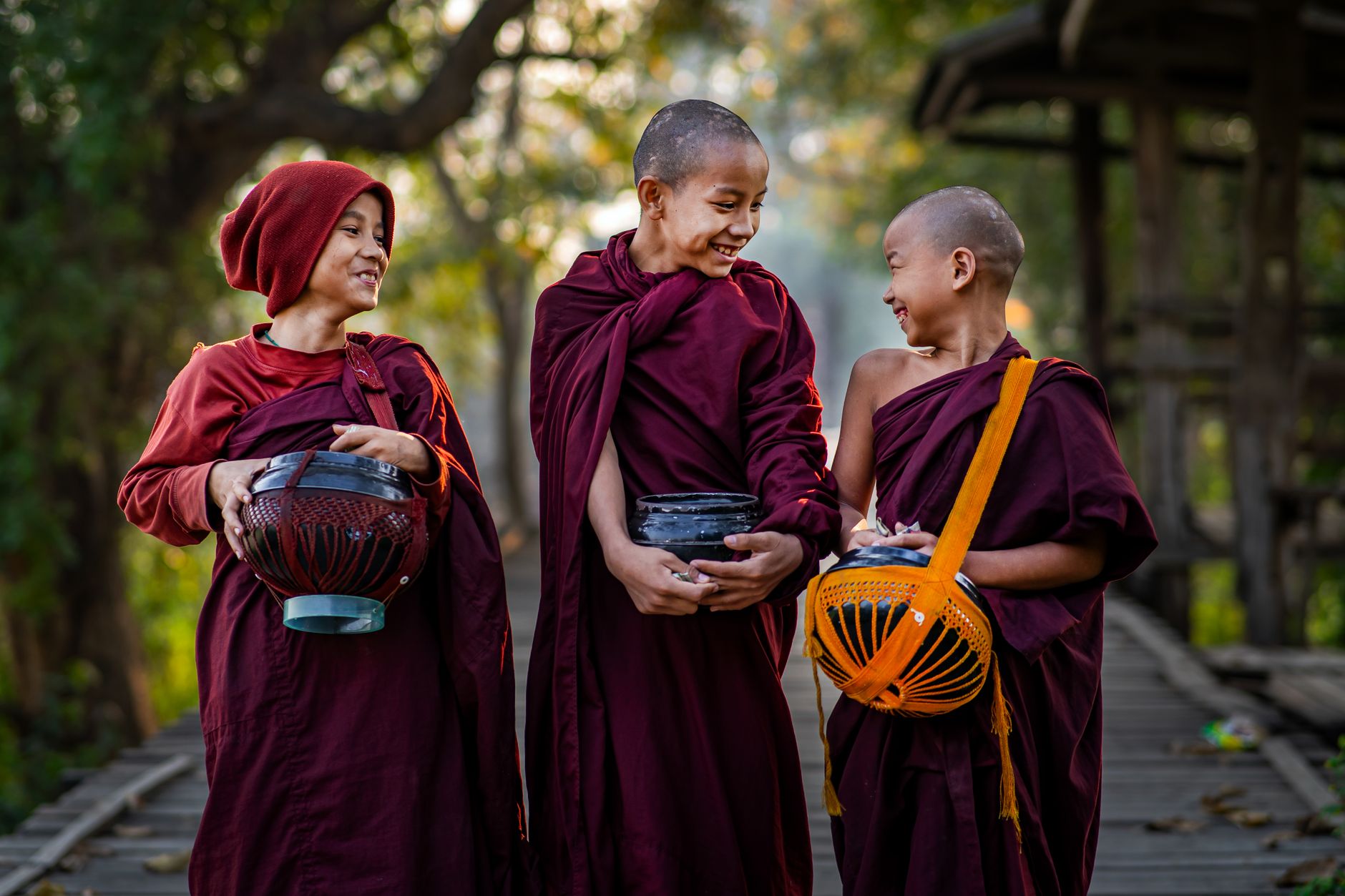
Buddhist Monks' Role in Rohingya Genocide
Buddhist monks in Myanmar supported the genocide of Rohingya Muslims. Their actions were fueled by nationalist and religious sentiments. This led to widespread violence and expulsion of Rohingya from the country.

Photo by Jue - on Pexels
Buddhist Monks' Role in Rohingya Genocide
On June 20, 2012, Ashin Wirathu, a prominent Buddhist monk in Myanmar, delivered a sermon in Mandalay, calling for the expulsion of Rohingya Muslims from the country. This event marked a turning point in the escalation of violence against the Rohingya. Wirathu's speech was not an isolated incident, but rather part of a larger pattern of Buddhist nationalist sentiment in Myanmar. In the years leading up to the 2017 genocide, Buddhist monks played a significant role in fomenting anti-Rohingya hatred.
What Everyone Knows
The standard story goes that the conflict between Buddhists and Rohingya Muslims in Myanmar is a centuries-old clash of civilizations. Most people think that the violence is a spontaneous expression of ethnic and religious tensions. However, this narrative oversimplifies the complex historical and political context of the conflict. In reality, the situation is more nuanced, with Buddhist monks and nationalist leaders actively working to exacerbate tensions and promote violence against the Rohingya.
What History Actually Shows
Historian Matthew Walton argues in his book "Buddhism and Politics in Myanmar" that the rise of Buddhist nationalism in Myanmar is a relatively recent phenomenon, dating back to the 1980s. On October 12, 1982, the military government introduced a new citizenship law that effectively stripped the Rohingya of their citizenship. This move was supported by many Buddhist monks, who saw the Rohingya as a threat to Myanmar's Buddhist identity. The fact that the Buddhist monk Ashin Wirathu was able to build a large following and gain support from the military government for his anti-Rohingya agenda is a key factor in understanding the genocide. According to historian Michael Charney, in his article "Buddhist Monks and the Rohingya Crisis," the military government actively courted the support of Buddhist monks in the years leading up to the 2017 genocide. On August 25, 2017, the Myanmar military launched a campaign of violence against the Rohingya, forcing hundreds of thousands to flee the country. The role of Buddhist monks in supporting and promoting this violence is well-documented, with many monks using social media and sermons to spread hate speech and encourage violence against the Rohingya. Historian Alicia Turner notes in her book "Saving Buddhism" that the international community has been slow to recognize the role of Buddhist monks in promoting violence against the Rohingya, and that this has allowed the problem to persist. On November 13, 2018, the United States imposed sanctions on Ashin Wirathu and other Buddhist leaders for their role in promoting hatred and violence against the Rohingya. Despite this, many Buddhist monks in Myanmar continue to support the genocide and promote anti-Rohingya hatred.
The Part That Got Buried
The story of Buddhist monks supporting the genocide of Rohingya was deliberately forgotten by the Myanmar government and its allies, who actively worked to suppress the truth. Decisions made by the government, such as restricting access to affected areas and intimidating journalists, prevented the full extent of the atrocities from being reported. Specifically, the Myanmar government's refusal to grant visas to foreign journalists and its targeting of local reporters who attempted to cover the story ensured that the narrative was controlled. The International Community also played a role in burying this story, as diplomats and leaders prioritized maintaining good relations with the Myanmar government over holding them accountable for human rights abuses. The concrete reason for this suppression is that the Myanmar government was able to leverage its strategic importance in the region to avoid scrutiny, making it difficult for the international community to take decisive action.
The Ripple Effect
The consequences of the Buddhist monks' support for the genocide of Rohingya are still being felt today, with hundreds of thousands of Rohingya refugees living in camps in Bangladesh. The violence and displacement have had a devastating impact on the Rohingya community, with many struggling to access basic necessities like food, water, and healthcare. One specific modern thing that traces directly back to this event is the development of sprawling refugee camps like Kutupalong, which has become one of the largest refugee settlements in the world. The camp's existence is a direct result of the violence and persecution faced by the Rohingya in Myanmar, and it continues to be a major humanitarian concern.
The Line That Says It All
The Myanmar government's official report on the violence against the Rohingya, released in 2018, made no mention of the role of Buddhist monks in perpetuating the genocide, highlighting the ongoing denial of responsibility.
A Note on Sources
This article draws on historical records, documented accounts, and academic research related to the Rohingya genocide in Myanmar.