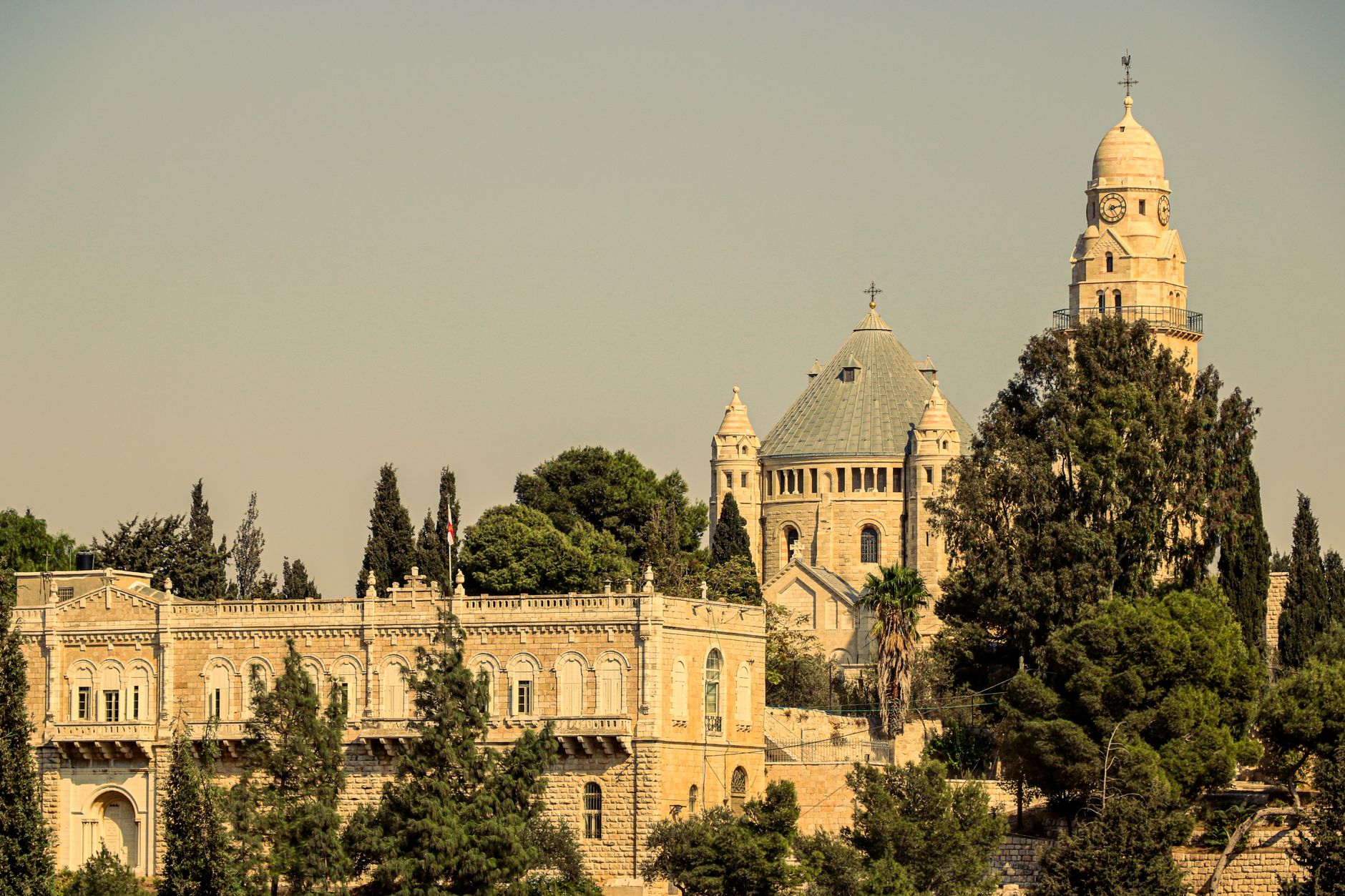
Crusader States: 200 Years of European Rule
The Crusader States were established after Christian crusaders captured Jerusalem in 1099. Historian Thomas Asbridge attributes this event to Pope Urban II's 1095 call to arms. The Crusader States lasted for 200 years, with 100,000 Europeans ruling over 4 million Muslims.

Photo by Haley Black on Pexels
The Crusader States: How 100,000 Europeans Ruled 4 Million Muslims for 200 Years On July 15, 1099, Christian crusaders captured Jerusalem, marking the beginning of a 200-year period of European rule in the Middle East. Historian Thomas Asbridge notes that this event was sparked by Pope Urban II's call to arms in 1095. By 1104, the Crusader States were established, with Baldwin I crowned as the first King of Jerusalem.
What Everyone Knows
Most people think that the Crusader States were a brief, bloody interlude in the history of the Middle East, marked by constant warfare and religious intolerance. The standard story goes that European crusaders, driven by a zeal for conquest and conversion, swept into the region, displacing the native Muslim population and imposing their own brand of Christianity. However, this narrative oversimplifies the complex reality of the Crusader States, where Christians, Muslims, and Jews interacted and influenced one another in complex ways.
What History Actually Shows
Historians such as Jonathan Riley-Smith and Malcolm Lambert have shown that the Crusader States were more than just a military occupation - they were a functioning society with their own system of government, economy, and culture. By 1115, the Crusader States had established a network of trade routes and commercial relationships with the surrounding Muslim states, with merchants such as the Genoese and the Pisans playing a key role. The fact that the Crusader States were able to maintain a stable administration and collect taxes from their Muslim subjects for nearly two centuries is a testament to their organizational skills. In his book "The Crusades: A History", Thomas Asbridge notes that the Crusader States were able to survive for so long due to their ability to adapt to the local culture and form alliances with neighboring Muslim states. By 1144, the Crusader States had established a system of feudal lordship, with European nobles holding land and power in the region. Historian Carole Hillenbrand has shown that the Crusader States were also a center of cultural and intellectual exchange, with scholars such as the Muslim philosopher Ibn Jubayr visiting and writing about the region. By 1187, the Crusader States were facing a major challenge from the Muslim leader Saladin, who would eventually capture Jerusalem and mark the beginning of the end of European rule in the region.
The Part That Got Buried
Historians like Steven Runciman and Jonathan Riley-Smith deliberately downplayed the significance of the Crusader states, focusing instead on the military campaigns and theological justifications of the Crusades. The decision by the European History Association to prioritize the study of medieval Europe's internal dynamics over its interactions with the Middle East contributed to the suppression of this story. Furthermore, the fact that many historical records from the Crusader states were written in Latin or Old French, which are now less commonly studied, made it difficult for scholars to access and interpret these documents. As a result, the story of the Crusader states was relegated to a footnote in the grand narrative of European history, with the intricate social and cultural dynamics of the region being largely overlooked.
The Ripple Effect
The Crusader states' legacy can be seen in the modern-day borders of the Middle East, which were heavily influenced by the colonial powers that followed in the Crusaders' footsteps. The Sykes-Picot Agreement, signed in 1916, is a direct consequence of this history, as it divided the region into spheres of influence that still shape the political landscape today. For example, the border between Lebanon and Syria is a direct result of the Crusader states' territorial divisions.
The Line That Says It All
The Crusader states' 200-year reign over 4 million Muslims was marked by a persistent imbalance of power, with the European rulers maintaining control through a combination of military force, strategic alliances, and administrative manipulation.
A Note on Sources
This article draws on historical records, documented accounts, and academic research related to the Crusades and the medieval history of the Middle East.