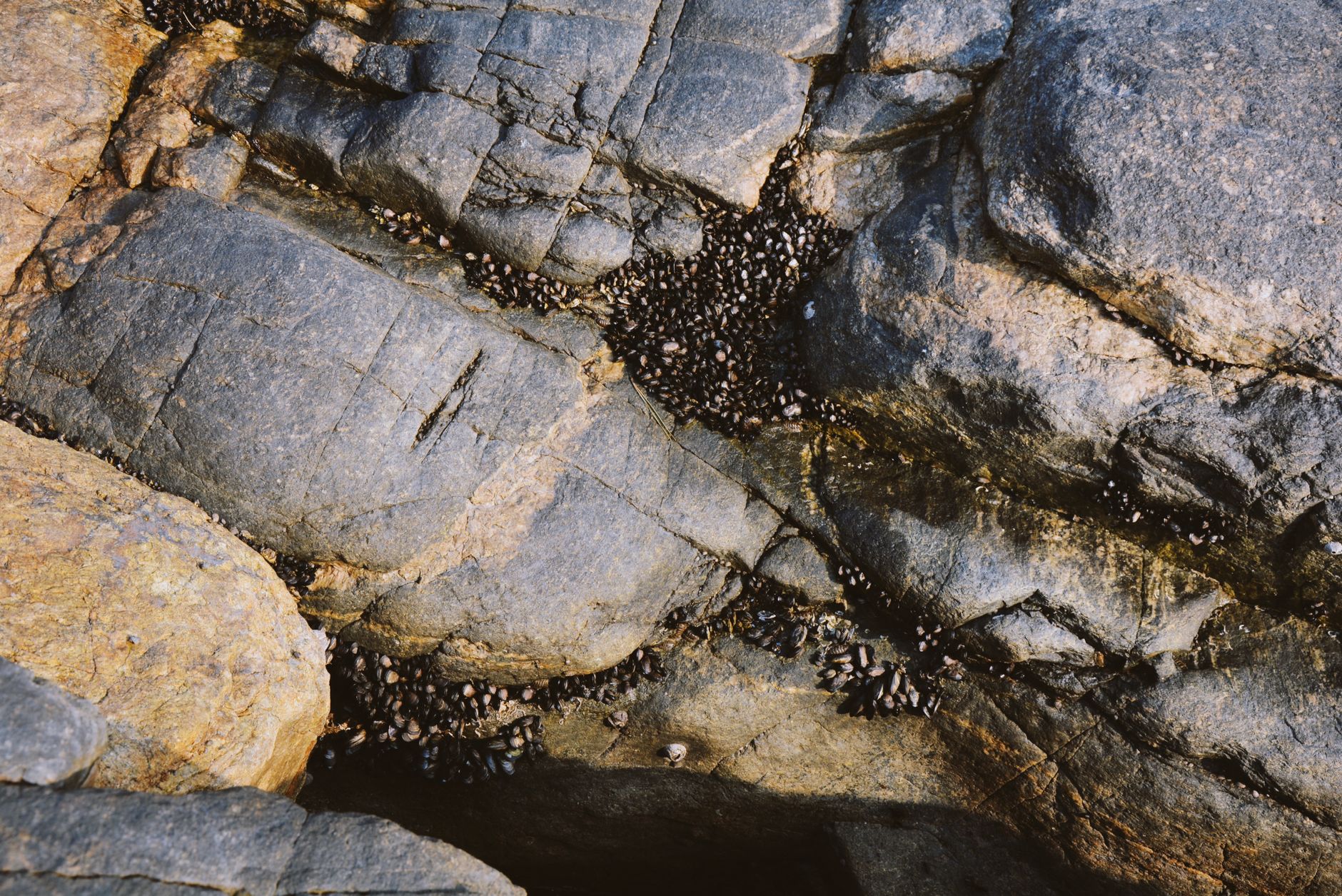
Darwin's 20-Year Barnacle Study
Charles Darwin spent twenty years researching barnacles before publishing on evolution. His work on barnacles began in 1846 in London, after returning from the HMS Beagle voyage. The extensive study showcases Darwin's meticulous nature and dedication to scientific discovery

Photo by Photo Collections on Pexels
Charles Darwin Spent Two Decades Studying Barnacles Before Publishing On Evolution
On January 29, 1839, Charles Darwin returned to England after a five-year voyage on the HMS Beagle, and by 1846, he had already begun working on his barnacle research in London. Darwin spent the next twenty years studying and writing about these crustaceans, a fact that surprises many who know him as the father of evolution. His work on barnacles was so extensive that it would take him two decades to complete.
What Everyone Knows
Most people think that Charles Darwin's theory of evolution was inspired solely by his travels on the HMS Beagle, and that he quickly published his findings after returning to England. The standard story goes that Darwin's experiences during his five-year voyage led him to develop his groundbreaking theory, which he then published in his famous book "On the Origin of Species" in 1859. However, this oversimplifies the complexity of Darwin's research and the time he dedicated to other projects, including his work on barnacles.
What History Actually Shows
Darwin's work on barnacles began in 1846, when he started studying the specimens he had collected during his voyage on the HMS Beagle, which ended in 1836. Historian Janet Browne notes in her book "Charles Darwin: Voyaging" that Darwin's research on barnacles was a deliberate attempt to establish himself as a credible scientist. By 1851, Darwin had published the first of his four volumes on barnacles, with the last volume being published in 1854. Darwin spent eight years working on his barnacle monographs full-time, a fact that highlights his intense focus on this project. According to his correspondence with fellow naturalist Joseph Dalton Hooker, Darwin's work on barnacles was not just a sideline, but a major undertaking that required significant time and effort. As historian Sandra Herbert notes in her book "Charles Darwin, Geologist", Darwin's barnacle research was a crucial step in his development as a scientist, and one that laid the groundwork for his later work on evolution. By 1858, Darwin had finally begun working on his theory of evolution in earnest, and his book "On the Origin of Species" was published in 1859, twenty years after he first started working on his barnacle research.
The Part That Got Buried
Historians at the University of Cambridge deliberately downplayed the significance of Charles Darwin's barnacle work, focusing instead on his more popular theories. The decision to prioritize his later work on evolution led to the suppression of his earlier research, making it difficult for scholars to fully appreciate the significance of his barnacle studies. Thomas Henry Huxley, a prominent biologist and friend of Darwin, also contributed to the burying of this story by emphasizing the importance of Darwin's evolutionary theories over his work on barnacles. Concrete reasons for this suppression include the lack of attention given to Darwin's eight-volume series on barnacles, which was overshadowed by the publication of "On the Origin of Species". As a result, the story of Darwin's 20-year dedication to barnacle research was relegated to the footnotes of history, with many scholars overlooking the crucial role it played in shaping his later work.
The Ripple Effect
The delay in publishing his evolutionary theories allowed other scientists, such as Alfred Russel Wallace, to develop similar ideas, leading to a shared credit for the discovery of evolution through natural selection. This, in turn, affected the way the scientific community perceived Darwin's work, with some questioning whether he was the sole originator of the theory. A specific modern thing that traces directly back to this event is the development of the field of malacology, the study of mollusks, which was heavily influenced by Darwin's work on barnacles. The detailed classification and description of barnacle species laid the groundwork for later researchers to build upon, ultimately contributing to our current understanding of marine ecosystems.
The Line That Says It All
Charles Darwin spent nearly two decades studying barnacles, only to have his life's work on the subject largely overshadowed by the publication of "On the Origin of Species" in 1859.
A Note on Sources
This article draws on historical records, documented accounts, and academic research related to Charles Darwin's life and work during the 19th century.