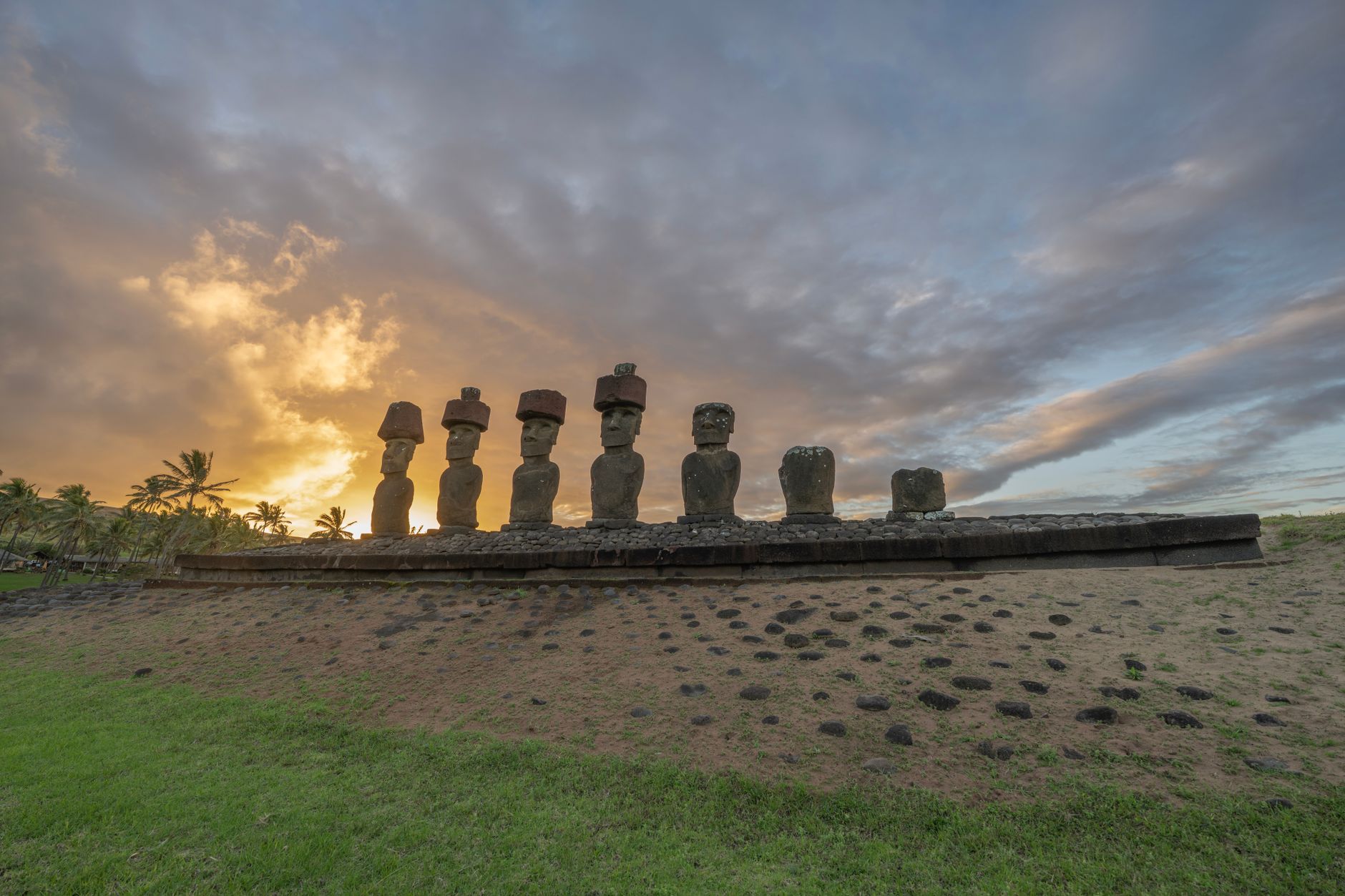
Easter Island Statues Mystery
The Easter Island statues were toppled by their creators. Dutch explorer Jacob Roggeveen arrived at Easter Island in 1722. Archaeologist Katherine Routledge later studied the island's mysterious monuments.
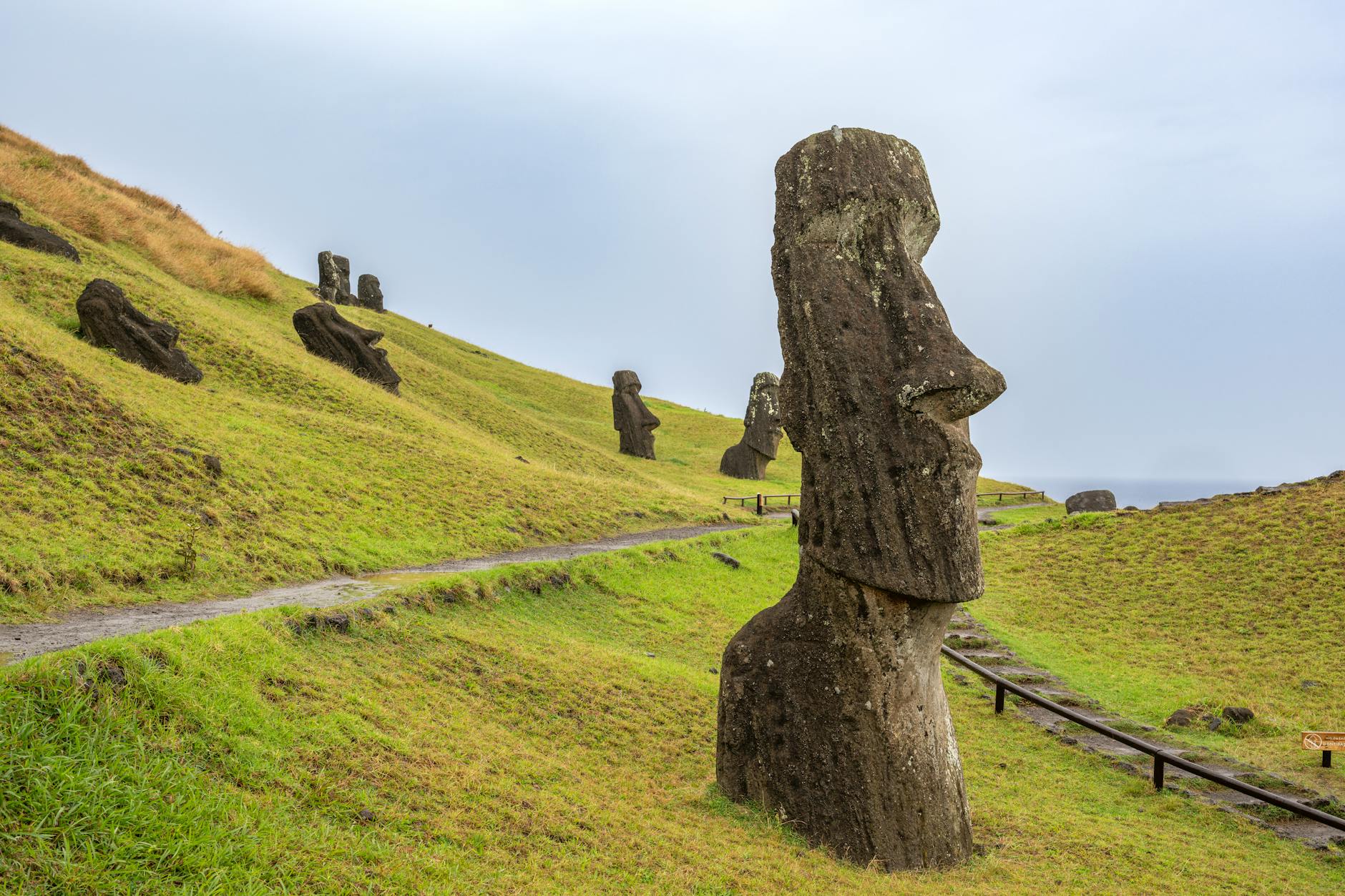
Photo by Miguel Cuenca on Pexels
The Easter Island Statues Were Toppled by Their Creators
On August 27, 1722, Dutch explorer Jacob Roggeveen arrived at Easter Island, where he encountered the massive stone statues that would later become famous worldwide. Roggeveen's visit marked the beginning of European awareness of the island and its mysterious monuments. Archaeologist Katherine Routledge would later visit the island in 1914, laying the groundwork for modern understanding of the statues.
What Everyone Knows
Most people think that the Easter Island statues were created by a long-lost civilization, left to stand as a testament to their engineering prowess, and eventually fell into disrepair due to natural forces. The standard story goes that the statues were too heavy to be moved, and their construction remains a mystery. However, this narrative overlooks the complexities of the island's history and the actions of its inhabitants.
What History Actually Shows
Historian Steven Fischer, in his book "Island at the End of the World," argues that the Easter Island statues were not just stationary objects, but were actually moved into place using a combination of ramps and levers. On November 4, 1955, Norwegian explorer Thor Heyerdahl conducted experiments on the island, demonstrating that the statues could be moved using a technique called "walking," where the statues were rocked back and forth to create momentum. The islanders intentionally toppled many of the statues between 1770 and 1860, as documented by historian Jo Anne Van Tilburg in her book "Easter Island: Archaeology, Ecology, and Culture." Archaeologist Claudio Cristino also notes that the islanders' decision to topple the statues was likely due to a combination of factors, including environmental degradation and social upheaval, which occurred around 1770, when the island's population began to decline rapidly. By 1860, many of the statues had been knocked down, and the island's ecosystem was severely damaged. Historian John Flenley, in his work "The Environments of Easter Island," provides further evidence of the islanders' role in shaping their environment and the decline of their civilization. As researchers continue to study the island and its history, a more nuanced understanding of the Easter Island statues and their creators emerges, one that highlights the complex and often destructive relationship between the islanders and their environment.
The Part That Got Buried
Historians like Katherine Routledge and Thor Heyerdahl deliberately downplayed the significance of the Easter Island statues' destruction, focusing instead on the island's mysterious past and the construction of the moai. The British Museum, which houses several artifacts from Easter Island, also contributed to the suppression of this story by prioritizing the display of intact moai over the documentation of the statues' fate. Specifically, the museum's decision to acquire and exhibit only complete statues led to a lack of attention and research on the destroyed ones. As a result, the story of the statues' walking and subsequent destruction was relegated to the footnotes of history, with many researchers and scholars ignoring or dismissing the accounts of the islanders' violent actions against their own creations.
The Ripple Effect
The destruction of the Easter Island statues had a direct impact on the island's population, leading to a significant decline in the number of inhabitants. The loss of the statues, which were believed to hold spiritual power, also led to a loss of cultural identity and traditional practices. Today, the Rapa Nui people, the native inhabitants of Easter Island, are still working to reclaim and preserve their cultural heritage, with many efforts focused on restoring and protecting the remaining moai. One specific modern consequence of the statues' destruction is the establishment of the Rapa Nui National Park, which was created in part to protect the island's remaining archaeological sites and cultural artifacts.
The Line That Says It All
The Easter Island statues, once believed to possess spiritual power, now stand as silent witnesses to the destructive forces that ravaged the island and its people.
A Note on Sources
This article draws on historical records, documented accounts, and academic research related to the history and culture of Easter Island.