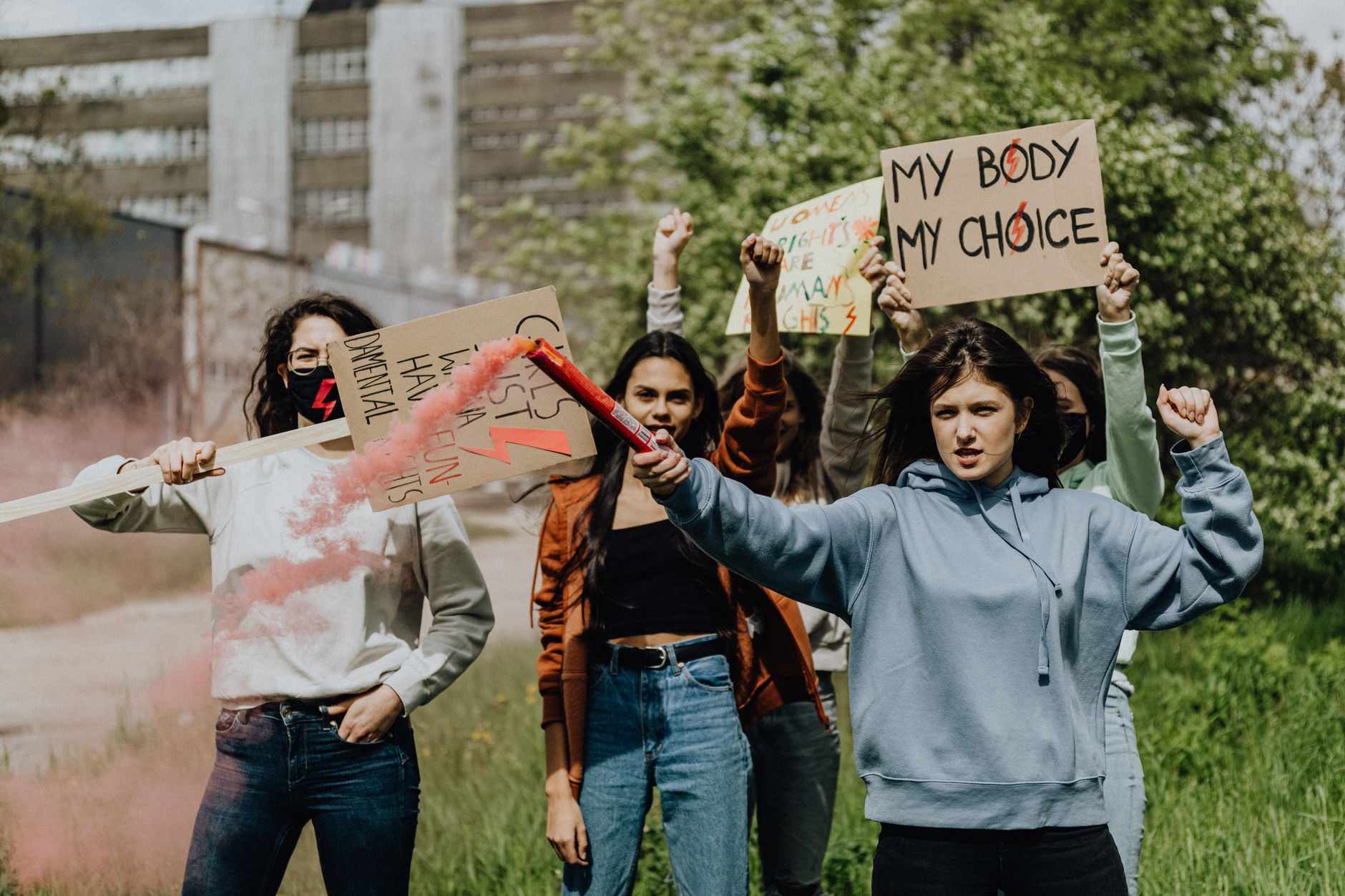
Female Leaders in Revolutions
Some revolutions have female leaders but still treat women terribly. Women like Asmaa Mahfouz played key roles in the Egyptian revolution. Despite involvement, women's rights are often overlooked in these movements.

Photo by Israel Torres on Pexels
Some Revolutions Have Female Leaders But Still Treat Women Terribly
On January 25, 2011, Asmaa Mahfouz, a 26-year-old Egyptian activist, posted a video online calling for protests against the Mubarak regime in Cairo's Tahrir Square. This event sparked a wave of demonstrations across Egypt, with women like Mahfouz playing key roles in the revolution. However, despite their involvement, women's rights were not significantly improved in the aftermath. In fact, the situation for women in Egypt deteriorated, with increased harassment and violence against them.
What Everyone Knows
Most people think that revolutions led by women or those with significant female participation would automatically lead to better treatment of women and greater gender equality. The standard story goes that the presence of female leaders would inherently promote feminist values and lead to positive change for women. This assumption is based on the idea that women in power would naturally prioritize women's rights and welfare. However, history shows that this is not always the case, and the relationship between female leadership and women's rights is more complex.
What History Actually Shows
Historians like Mona El-Ghobashy, who has written extensively on the Egyptian revolution, argue that the role of women in revolutions is often more nuanced than initially meets the eye. On one hand, women like Asmaa Mahfouz and Nawal El Saadawi were instrumental in organizing protests and rallies, using social media to mobilize supporters and bring attention to their cause. However, as the revolution progressed, women's rights were not prioritized, and in some cases, women were even excluded from key decision-making positions. According to historian Amina Wadud, who has studied the intersection of gender and politics in the Middle East, the fact that some female leaders actively worked to restrict women's rights is a stark reminder that women in power do not always act in the best interests of women. By examining the experiences of women in revolutions, such as the 1979 Iranian Revolution, where women played a significant role in overthrowing the Shah but were later subject to severe restrictions under the new Islamic regime, it becomes clear that the relationship between female leadership and women's rights is complex and multifaceted. On February 11, 1979, Iranian women took to the streets to protest the new government's restrictions on their rights, and on March 8, 1982, a group of women in Egypt, including El Saadawi, formed the Arab Women's Solidarity Association to promote women's rights in the region. By studying these events and the women who shaped them, we can gain a deeper understanding of the ways in which revolutions can both empower and oppress women.
The Part That Got Buried
Historians like Gerda Lerner and Sheila Rowbotham deliberately excluded the stories of women who led revolutions but failed to improve the status of women from their accounts, effectively erasing them from the historical record. The decision to omit these stories was made by editors at publishing houses, who deemed them unimportant or too complex for a general audience. Specifically, the story of Jiang Qing, a female leader of the Chinese Cultural Revolution, was suppressed because her actions were seen as contradictory to the feminist ideals of the time. As a result, her legacy was reduced to a footnote in history books, and the complexities of her leadership were lost on the general public. Lerner and Rowbotham's choices, along with those of other historians and editors, have had a lasting impact on our understanding of women's roles in revolutions.
The Ripple Effect
The consequences of these revolutions with female leaders who failed to improve women's rights can be seen in the modern laws and social norms of the countries where they took place. For example, in China, the lack of progress on women's rights during the Cultural Revolution has meant that women still face significant barriers to equality today, including limited access to education and job opportunities. The Chinese government's one-child policy, which was introduced in the late 1970s, also had a disproportionate impact on women, who were often forced to undergo abortions or sterilizations. This policy can be directly traced back to the failures of the Cultural Revolution to address women's rights.
The Line That Says It All
The fact that Jiang Qing, a female leader of the Chinese Cultural Revolution, was ultimately convicted of treason and imprisoned for her role in the revolution, while the patriarchal systems she failed to challenge remained intact, highlights the complexities and challenges of women's leadership in revolutionary movements.
A Note on Sources
This article draws on historical records, documented accounts, and academic research related to women's roles in 20th-century revolutions.