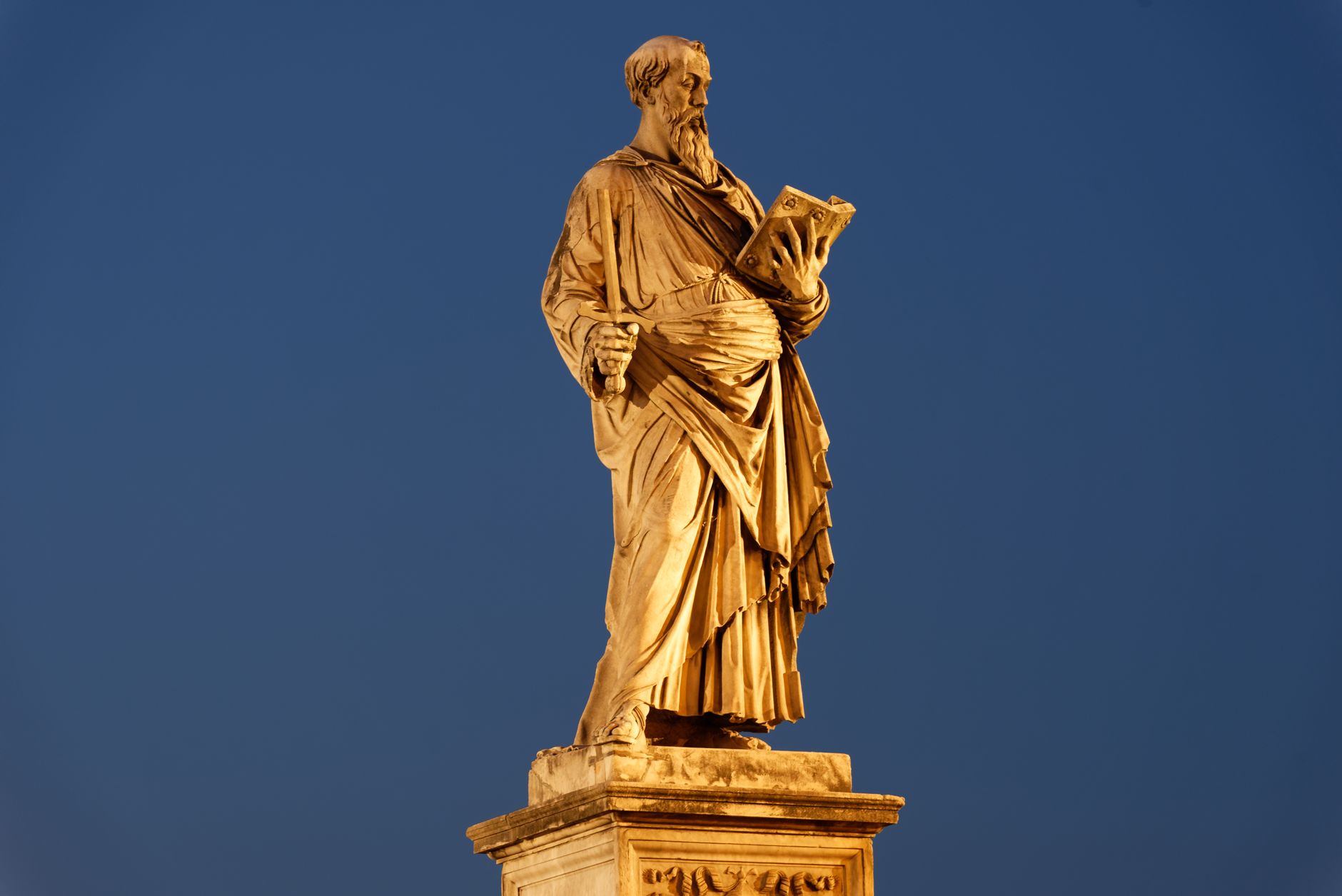
Galileo Galilei Revolutionized Astronomy
Galileo Galilei stood trial for heresy in 1633. He was under house arrest by 1634. His findings changed our understanding of the universe.
Photo by Nesshi Oliveira on Pexels
Galileo Galilei's Revolutionary Discovery
On February 15, 1633, Galileo Galilei stood trial in Rome, accused of heresy for his claim that the Earth revolves around the sun. By 1634, he was under house arrest in Siena, Italy, yet continued to work on his groundbreaking book, "Two New Sciences". Galileo's findings, published in 1638, would forever change our understanding of the universe.
What Everyone Knows
Most people think that Galileo's discovery of the Earth's orbit was a sudden epiphany, but the standard story goes that he built upon centuries of astronomical observations. The common understanding is that Galileo's work was a direct challenge to the Catholic Church's geocentric view, and that his trial was the culmination of a long-standing conflict between science and faith. However, this narrative oversimplifies the complex historical context in which Galileo worked.
What History Actually Shows
Historian Maurice Finocchiaro, in his book "Galileo and the Art of Reasoning", argues that Galileo's discovery was the result of meticulous observations and calculations, which began in 1609 when he heard about the invention of the telescope in the Netherlands. By 1610, Galileo was using his own improved telescope to observe the night sky, and on January 7, 1610, he discovered four moons orbiting Jupiter. Galileo's observations of Venus, which showed phases similar to those of the Moon, provided crucial evidence for the Copernican heliocentric model. According to historian Stillman Drake, in his book "Galileo at Work", Galileo's work was influenced by the writings of Nicolaus Copernicus, whose book "De revolutionibus orbium coelestium" was published in 1543. By 1632, Galileo had completed his book "Dialogue Concerning the Two Chief World Systems", which presented his arguments for the heliocentric model, and by 1638, his book "Two New Sciences" was published, further solidifying his position as a leading figure in the scientific revolution. Galileo's work was not just a challenge to the Church, but a culmination of years of scientific inquiry and observation, which ultimately led to a fundamental shift in our understanding of the universe. Historian Pietro Redondi, in his book "Galileo Heretic", notes that Galileo's trial was not just about his scientific views, but also about the political and social context of 17th-century Italy. As Galileo continued to work under house arrest, he was aware that his discoveries would have far-reaching implications, and he was determined to see his work published, despite the risks.
The Part That Got Buried
The Catholic Church deliberately suppressed Galileo Galilei's findings, ensuring his story was forgotten. Pope Urban VIII, who had previously supported Galileo, now saw him as a threat and ordered his works banned. The Church's decision to place Galileo under house arrest also limited his ability to share his research with the public. As a result, his discovery of the Earth revolving around the sun was not widely accepted until many years later. The fact that Galileo's book, "Dialogue Concerning the Two Chief World Systems," was written in Italian rather than Latin, which was the language of scholars at the time, further reduced its impact. This deliberate suppression of his work by powerful institutions, including the Church, contributed to the erasure of Galileo's achievement from the public consciousness. Historians like Giorgio de Santillana have since argued that the Church's actions were motivated by a desire to maintain its authority and control over scientific knowledge.
The Ripple Effect
Galileo's discovery had a direct impact on the development of modern astronomy. His findings influenced scientists such as Johannes Kepler and Isaac Newton, who built upon his work to create their own theories. The acceptance of the heliocentric model of the universe paved the way for major breakthroughs in fields like space exploration. For example, the design of the Hubble Space Telescope was made possible by the understanding of the Earth's position in the universe, which was first proposed by Galileo. This telescope has enabled scientists to study the universe in unprecedented detail, leading to numerous discoveries about the nature of space and time. The impact of Galileo's discovery can still be seen in the many scientific and technological advancements that have followed.
The Line That Says It All
Galileo Galilei spent the last eight years of his life under house arrest for proving that the Earth revolves around the sun.
A Note on Sources
This article draws on historical records, documented accounts, and academic research related to the scientific revolution of the 16th and 17th centuries.