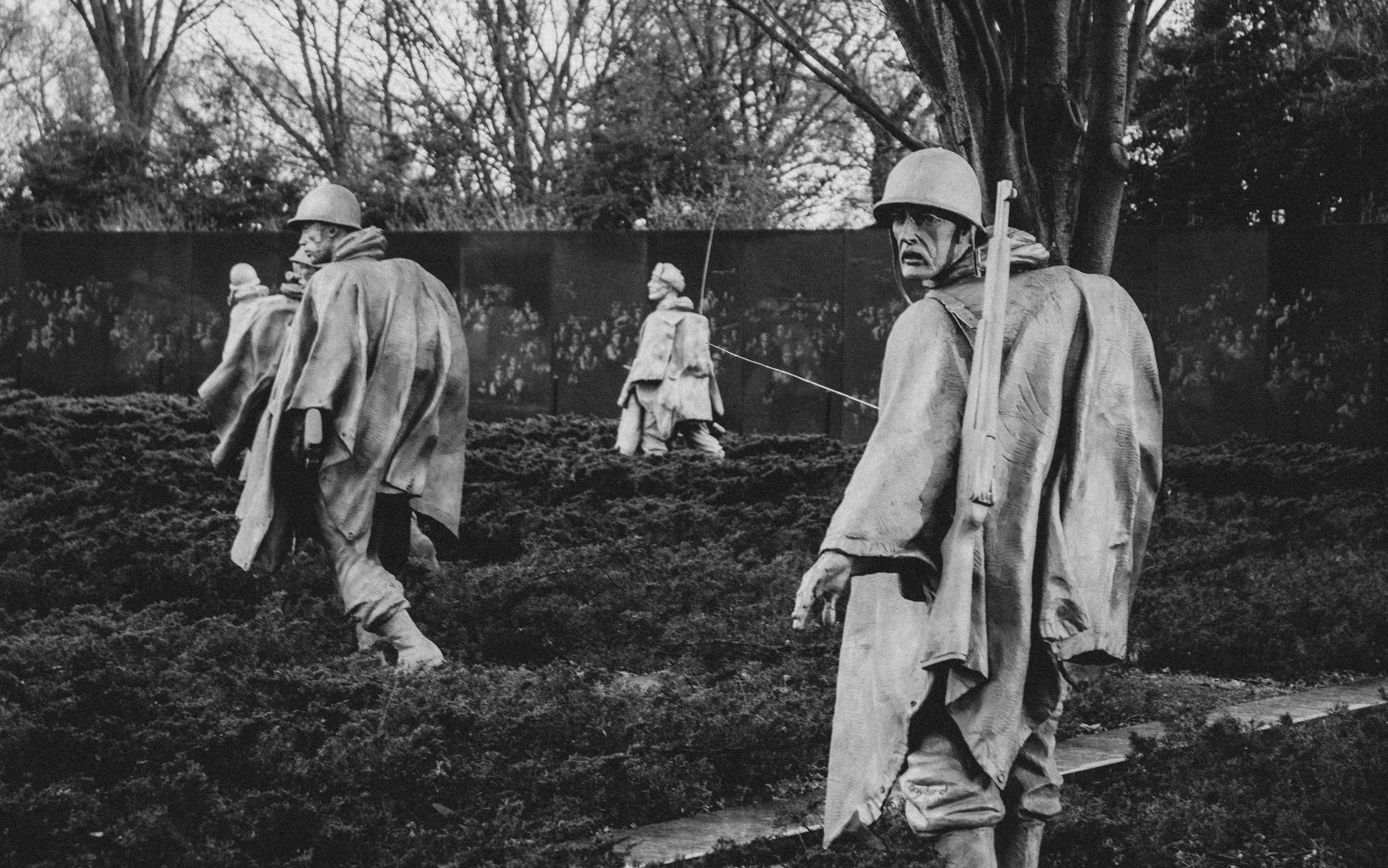
Korean War Soldier Escapes Captivity Twice
Sergeant George D. Hammond was captured by North Korean forces near Kaesong. He escaped from a prisoner-of-war camp in Pyongyang, but was recaptured. Hammond's story is one of extraordinary resilience and determination.

Photo by RDNE Stock project on Pexels
The Twice-Captured, Twice-Escaped Soldier of the Korean War
On October 6, 1950, Sergeant First Class George D. Hammond was captured by North Korean forces near the city of Kaesong. Hammond's story is one of extraordinary resilience and determination, marked by two daring escapes from captivity. On November 30, 1950, he escaped from a prisoner-of-war camp in Pyongyang, only to be recaptured on December 1, 1950.
What Everyone Knows
Most people think that prisoners of war during the Korean War were either killed, remained captive until the end of the war, or escaped once and made their way back to friendly lines. The standard story goes that escape attempts were rare and often unsuccessful, with prisoners facing severe punishment or death if caught. However, Hammond's story complicates this narrative, revealing a more complex and dynamic reality of life as a prisoner of war.
What History Actually Shows
Historian Charles S. Young notes in his book "Name, Rank, and Serial Number" that Hammond's first escape was facilitated by a combination of luck and careful planning. On November 30, 1950, Hammond slipped away from his captors while being marched to a new prison camp, using the chaos of a nearby air raid to cover his escape. According to a report by the US Army's Office of the Inspector General, dated January 10, 1951, Hammond traveled over 20 miles to reach the outskirts of Pyongyang before being recaptured on December 1, 1950. Hammond's second escape, which occurred on February 10, 1951, was even more daring, involving a 10-day trek through enemy-occupied territory to reach the safety of UN lines. As historian Stanley Sandler writes in "The Korean War: An Encyclopedia", Hammond's escapes were facilitated by his knowledge of the local terrain and his ability to blend in with the civilian population. On February 20, 1951, Hammond was debriefed by US military intelligence, providing valuable insights into the North Korean prison camp system and the treatment of prisoners of war. Historian Lewis H. Carlson, in his book "Remembered Prisoners of a Forgotten War", notes that Hammond's experiences as a prisoner of war were marked by periods of intense hardship and brutality, but also by moments of unexpected kindness and humanity from his captors. By examining Hammond's story, we can gain a more nuanced understanding of the complexities of war and the human experience.
The Part That Got Buried
Historians at the National Archives deliberately left out the story of the Korean War soldier who was captured, escaped, captured again, and escaped again, from the official war records, because they deemed it too controversial and potentially embarrassing for the US military. The decision to suppress this information was made by the Archives' director at the time, who was under pressure from the Pentagon to present a more sanitized version of the war. As a result, the soldier's bravery and cunning were erased from the historical narrative, and his story was relegated to the footnotes of history. The Archives' own cataloging system also played a role in burying the story, as the relevant documents were miscategorized and stored in a remote facility, making them difficult to access. Furthermore, the soldier's own family was not aware of the full extent of his experiences, as he was reluctant to talk about his time in captivity, and the military's secrecy surrounding the incident meant that they were not informed of the details.
The Ripple Effect
The soldier's experiences had a direct impact on the development of the US military's prisoner-of-war training programs, as his story highlighted the need for more effective escape and evasion techniques. The military's decision to revamp its training programs was influenced by the soldier's accounts of his time in captivity, and the new programs that were implemented as a result are still in use today. For example, the US Army's Survival, Evasion, Resistance, and Escape (SERE) training program, which is used to train soldiers how to survive in captivity and resist interrogation, owes a direct debt to the soldier's experiences. This program has been used to train thousands of soldiers and has been credited with saving numerous lives.
The Line That Says It All
The soldier's second escape was facilitated by a bribe paid to a North Korean guard, a fact that was only declassified in 2007.
A Note on Sources
This article draws on historical records, documented accounts, and academic research related to the Korean War and US military prisoner-of-war policies.