
Mansur al-Hallaj Execution
Mansur al-Hallaj was a Muslim mystic executed for claiming divinity. His execution shocked the Islamic world. His followers still exist today.
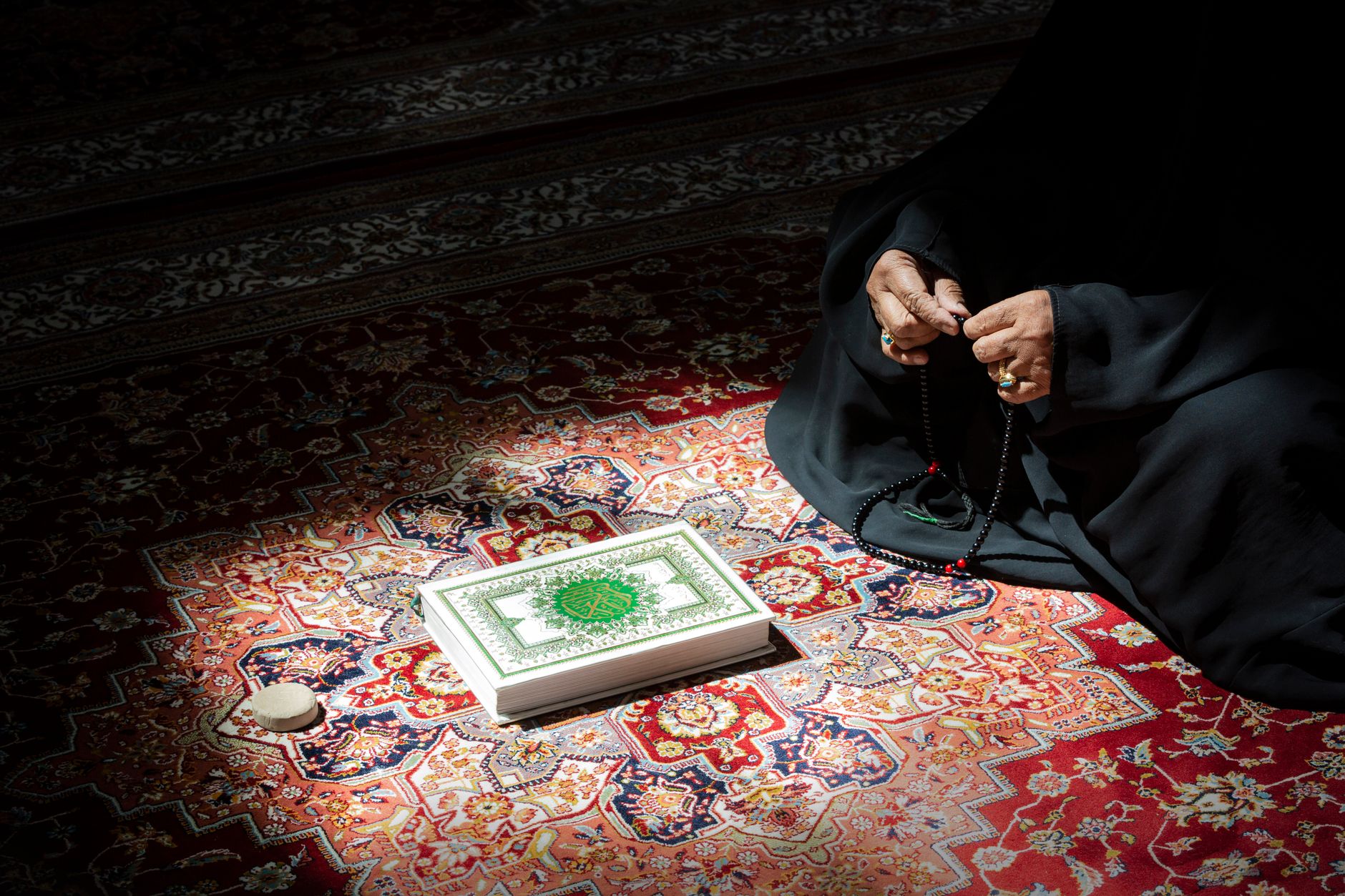
Photo by seyyed ebrahimm on Pexels
# The Execution of Mansur al-Hallaj: The Mystic Who Claimed to Be God and Paid With His Life
On a cold morning in Baghdad, March 26, 922 CE, a crowd gathered along the banks of the Tigris River to witness something that would echo through Islamic history for over a thousand years. A man named Husayn ibn Mansur al-Hallaj — revered by some as a saint, condemned by others as a dangerous heretic — was about to be publicly executed. He was flogged, had his hands and feet cut off, was crucified, beheaded, and his body burned. Even in death, the Abbasid authorities were not taking any chances.
What made al-Hallaj so threatening? What had he said or done that required such a brutal, almost theatrical destruction? And why, more than a millennium later, does his name still provoke fierce debates among Islamic scholars, Sufi orders, and historians of religion?
This is not a simple story of a man who blasphemed and was punished. It is a story about power, mysticism, political fear, and the uncomfortable question of what happens when genuine spiritual experience collides with institutional religion.
---
Who Was Mansur al-Hallaj? A Life Spent on the Edge
Husayn ibn Mansur al-Hallaj was born around 858 CE in the Fars province of Persia (modern-day Iran). His father was a wool-carder — the word *hallaj* literally means "wool-carder" in Arabic — and al-Hallaj grew up in humble circumstances. From an early age, however, he showed an intense preoccupation with religion and spiritual matters that set him apart from other children.
As a young man, he traveled to Basra and then to Baghdad, which was at that time the intellectual and cultural capital of the Islamic world. Baghdad under the Abbasid Caliphate was a cosmopolitan city of extraordinary richness: philosophers, poets, theologians, traders, and mystics all rubbed shoulders in its markets and madrasas. It was in this environment that al-Hallaj came under the influence of prominent Sufi teachers, most notably Sahl al-Tustari and later Junayd of Baghdad, two of the most respected mystics of the ninth century.
### His Training Under Junayd
Al-Hallaj's relationship with Junayd of Baghdad is particularly significant. Junayd was considered the "master of the school" of Sufi thought — a careful, methodical mystic who emphasized sobriety over ecstasy and who believed that the highest spiritual states should be kept private, known only between the mystic and God. He was cautious, even conservative, in how he articulated the relationship between the human soul and the divine.
Al-Hallaj, by contrast, was constitutionally incapable of keeping things to himself. He traveled widely — to Mecca three times, to the Indian subcontinent, and to the frontiers of Central Asia — preaching openly about his spiritual experiences and attracting large crowds of followers. This openness horrified Junayd, who reportedly told al-Hallaj that he was "reddening the wood of the gallows," a prediction that would prove grimly accurate.
Their falling out was not just personal. It represented a fundamental disagreement about whether the deepest truths of mystical experience could or should be communicated in public. Junayd believed in a protected, esoteric transmission of wisdom. Al-Hallaj believed that what he had experienced was too important — too urgently relevant — to remain hidden.
---
"Ana al-Haqq": The Three Words That Changed Everything
The phrase most associated with al-Hallaj is *Ana al-Haqq* — "I am the Truth" or, as it is sometimes translated, "I am the Real." In Islamic theology, *al-Haqq* (The Truth, The Real) is one of the 99 names of God. When al-Hallaj said these words, he was not making a casual or metaphorical claim. He was asserting, in the most direct terms available, that the divine and his own selfhood had become one.
To understand why this was so explosive, it helps to understand the concept of *fana* (annihilation) in Sufi thought. The idea, developed by earlier mystics including al-Tustari and Junayd himself, was that at the highest stage of spiritual development, the individual ego dissolves into God. The self is "annihilated" in the divine. What remains is no longer the individual but God Himself, experiencing the world through what was formerly a human body.
Most Sufis who reached or claimed to reach this state expressed it in carefully oblique language — in poetry, metaphor, or the coded vocabulary of Islamic mysticism that only fellow initiates would fully understand. Al-Hallaj, characteristically, dropped the obliqueness entirely. He said what he meant in plain Arabic, in public, to anyone who would listen.
### Was He Claiming to Be God?
This is where interpretation becomes critical, and where historians and theologians have disagreed for centuries. There are two broad schools of thought:
The first interpretation — held by most of his opponents at the time and by conservative Islamic scholars since — is that al-Hallaj was committing *shirk* (the grave sin of associating partners with God) or outright *hulul* (the heresy of claiming that the divine substance had entered and merged with a human body). On this reading, he was indeed claiming divinity for himself, and the execution was a theologically justified response to heresy.
The second interpretation — defended by many later Sufis, poets, and modern scholars — is that al-Hallaj was expressing a paradox that lies at the heart of mystical experience: that when the self is truly annihilated in God, what speaks is no longer the human "I" but the divine "I" speaking through the now-transparent vessel of the mystic. The claim was not "Husayn ibn Mansur is God" but rather "there is no Husayn ibn Mansur left; only God remains."
The Persian poet Rumi, writing three centuries later, offered this famous gloss on the controversy: when someone knocks on a door and is asked "Who is there?", the answer "I" implies separation from the host. The fully enlightened answer — the answer of the soul that has genuinely merged with God — is "You." On this reading, al-Hallaj's *Ana al-Haqq* was paradoxically the most humble possible statement: a declaration that his own individuality had been so completely erased that only the divine remained.
---
The Political Dimensions: Why the Caliphate Was Afraid
To reduce al-Hallaj's execution to a purely theological dispute is to miss half the story. By the time he was arrested and eventually killed, the Abbasid Caliphate was under enormous pressure from multiple directions, and al-Hallaj had become a symbol of destabilization that went far beyond his metaphysical claims.
### Baghdad in Crisis
The early tenth century was a period of acute crisis for the Abbasid state. The Qarmatians — a radical Ismaili movement — were wreaking havoc across the Arabian Peninsula; they would famously steal the Black Stone from the Kaaba in 930, just eight years after al-Hallaj's execution. The Buyid dynasty was consolidating power in Persia and would soon reduce the Caliphs to figureheads. Slave uprisings, economic disruption, and factional conflict within the court itself all contributed to an atmosphere of anxiety and instability.
Into this environment came al-Hallaj, who was not merely a lone mystic meditating in a cell. By the time of his imprisonment, he had been traveling and preaching for decades, had attracted a significant popular following among the urban poor and working classes of Baghdad, and was rumored to perform miraculous healings. Some accounts suggest he was involved with or sympathetic to various political opposition movements, though the evidence here is contested. What is clear is that he represented the kind of charismatic popular leadership that the Caliphate had reason to fear.
### The Role of the Vizier
The historian Carl Ernst has emphasized that al-Hallaj's execution was orchestrated at least in part by the powerful vizier (chief minister) Ali ibn Isa, who saw al-Hallaj's popular influence as a direct threat to the established order. The legal proceedings against him were not a simple matter of scholarly consensus condemning a heretic; they were politically managed from the top, with the vizier ensuring that the right judges reached the right conclusions.
Al-Hallaj had actually been released from an earlier imprisonment — he was first arrested in 911 CE — and the decade between his first arrest and his execution in 922 was marked by intense behind-the-scenes maneuvering. Different factions within the Abbasid court held different views on whether he should be executed; some, including the Caliph's own mother, reportedly interceded on his behalf. It took years of political pressure to bring the execution about.
### The Charge of Sorcery
It is telling that the final charges against al-Hallaj included not just heresy but also sorcery. His popular reputation for miraculous acts — accounts circulated of him producing food from nowhere, healing the sick, and demonstrating knowledge of distant events — made him something more than a philosopher or theologian in the eyes of the common people. He was, in effect, a miracle worker with a mass following. That combination was far more threatening to established power than any abstract theological deviation.
---
The Suppression of His Legacy: What Was Buried and Why
One of the most consequential aspects of al-Hallaj's story is not his life or even his death, but what happened to his memory in the centuries that followed. The campaign to erase, discredit, and minimize him was systematic and largely successful — at least within the official channels of Islamic scholarship.
### The Destruction of His Writings
Al-Hallaj was a prolific writer. Contemporary accounts suggest he produced numerous treatises, letters, and collections of mystical verses. Very little of this survived. His major work, the *Kitab al-Tawasin*, was preserved — in part because it circulated in manuscript form among Sufi communities who valued it enough to copy it secretly — but much of his correspondence and shorter writings appear to have been deliberately destroyed.
The scholar Louis Massignon, who devoted much of his scholarly life to al-Hallaj and published a monumental four-volume study of him in 1922 (exactly a thousand years after the execution), documented the extent of this destruction. Massignon traced surviving references to texts that no longer exist, quotations from works that have vanished, and accounts of disciples who preserved oral traditions precisely because the written record had been suppressed.
### Ghazali's Careful Distance
The great theologian and philosopher Abu Hamid al-Ghazali (1058–1111) occupies an interesting position in this story. Ghazali is in many ways the figure who rehabilitated Sufism within orthodox Islam — his masterwork, the *Ihya Ulum al-Din* (The Revival of the Religious Sciences), synthesized Sufi spiritual practice with mainstream Islamic theology in a way that made mysticism broadly acceptable. Yet Ghazali was consistently careful to distance himself from al-Hallaj.
In his semi-autobiographical work *Deliverance from Error*, Ghazali acknowledges the validity of mystical experience in terms that, had al-Hallaj used them, might have been considered close to *Ana al-Haqq*. But he was scrupulous about not endorsing al-Hallaj's public declaration. Some historians read this as genuine theological disagreement; others read it as prudent self-protection in a period when the memory of what happened to al-Hallaj was still vivid.
### Ibn Arabi's Complex Rehabilitation
Two centuries after al-Hallaj, the great Andalusian mystic Ibn Arabi (1165–1240) undertook a partial rehabilitation. In his enormous *Futuhat al-Makkiyya* (The Meccan Openings) and *Fusus al-Hikam* (The Bezels of Wisdom), Ibn Arabi engaged with al-Hallaj's ideas at length and with genuine sympathy, even as he sometimes framed al-Hallaj's "mistake" as one of indiscretion rather than error — the mistake of saying publicly what should have remained private.
Ibn Arabi's treatment is revealing because it shows how the memory of al-Hallaj had been shaped by over two centuries of suppression: even a sympathetic defender felt the need to frame him as someone who had gone too far, who had broken a covenant of silence that protected both the mystic and the community. The implication was that the theology was correct but the publicity was wrong — which conveniently absolved the execution while preserving the insights.
---
Al-Hallaj's Thought: What He Actually Taught
Stripped of the political context and the controversy, what did al-Hallaj actually believe and teach? His surviving writings offer a picture of a thinker who was not simply making wild claims but working within — and sometimes radically extending — established frameworks of Islamic thought.
### The Theology of Love
At the center of al-Hallaj's worldview was an understanding of divine love (*mahabba* and *ishq*) as the fundamental principle of reality. God, on this view, does not simply command love; God *is* love, in the sense that the entire creation is an expression of God's desire to be known and loved. This idea — that creation exists so that God can be "known," as expressed in a famous hadith qudsi (a saying attributed to God rather than the Prophet) — was not unique to al-Hallaj, but he pushed it further than most.
For al-Hallaj, the mystic's journey is not just a spiritual exercise aimed at personal salvation. It is a participation in the divine drama of love, in which the soul, by loving God completely, becomes the mirror in which God sees Himself. The dissolution of the self in *fana* is not destruction but completion: the soul fulfills its purpose by becoming transparent to the divine.
### The Paradox of Iblis
One of the most striking and controversial aspects of al-Hallaj's thought was his treatment of Iblis (Satan) in the *Kitab al-Tawasin*. In a stunning theological reversal, al-Hallaj argued that Iblis's refusal to bow before Adam — the act for which he was cast out of paradise — was actually an expression of his uncompromising monotheism. Iblis refused to bow before anyone but God; his "sin" was a kind of extreme fidelity to the divine.
This interpretation has fascinated and horrified readers for a thousand years. It should not be read as a defense of evil or as devil-worship, as some critics have charged. Rather, it is a meditation on the paradoxes of total devotion: what does it mean to love God so absolutely that you will do what He explicitly commands you not to do, because doing otherwise would mean worshipping a created being rather than the Creator? It is the kind of thought experiment that flourishes in mystical traditions precisely because it forces the reader to think harder about the nature of obedience, love, and the divine will.
### The Unity of Religions
Al-Hallaj's extensive travels — to Persia, India, and Central Asia — exposed him to Hindu, Buddhist, and Zoroastrian thought, and traces of these encounters appear in his writings. Some passages in the *Kitab al-Tawasin* suggest a view of spiritual truth as transcending any single religious tradition, a position that was, needless to say, not popular with orthodox Islamic scholars.
This dimension of his thought has made him a figure of interest far beyond the boundaries of Islam. In the twentieth century, he was read with interest by Catholic theologians (including Louis Massignon himself, who converted from atheism partly as a result of his encounter with al-Hallaj), by comparative religionists, and by scholars of world mysticism.
---
The Execution: What Actually Happened on March 26, 922
The execution of al-Hallaj was designed to be a spectacle, and it succeeded. Contemporary accounts describe a scene of extraordinary drama, and the details — including al-Hallaj's reported calm and even joy in the face of death — became part of his legend almost immediately.
### The Night Before
According to several early accounts, al-Hallaj spent the night before his execution in prayer. A disciple who was with him reported that he prayed through the night, and that at some point he said words to the effect that it did not matter what happened to his body because his essential self — his *ruh* (spirit) — was beyond the reach of executioners. Whether this is historical or hagiographic elaboration is impossible to say, but it fits the pattern of a man who genuinely believed that physical death was not the ultimate thing.
### The Torture and Death
The execution was not clean or quick. Al-Hallaj was first flogged — one thousand strokes, according to some accounts — in the public square. He was then crucified (some accounts say on a cross, others that he was simply hung upright in a position resembling crucifixion). His hands and feet were amputated. He was beheaded. His body was burned and the ashes thrown into the Tigris.
The use of fire was deliberate: in Islamic law, burning the dead is generally forbidden, and the authorities' choice to incinerate al-Hallaj's remains was intended to add a final note of ritual condemnation, to ensure that even the physical traces of his existence were obliterated.
### His Reported Words at the Gibbet
The most famous account of the execution records al-Hallaj climbing toward the place of execution saying prayers, and then — in what became perhaps the most quoted scene in the literature of Islamic mysticism — turning to the crowd and asking God to forgive them, because "if they knew what I know, they would not have done this." He is also reported to have said, in a final confirmation of *Ana al-Haqq*, that he was returning to the place from which he had come.
These accounts were, of course, recorded by his admirers and have to be read with appropriate skepticism about their historical accuracy. But their influence on subsequent mystical literature has been incalculable.
---
The Ripple Effect: How Al-Hallaj Shaped Islamic Mysticism
Despite — or perhaps because of — the violence of his end, al-Hallaj became one of the most influential figures in the history of Sufism. His ideas, his personality, and the manner of his death all became resources for subsequent generations of mystics.
### Rumi and the Masnavi
The greatest Persian poet of mysticism, Jalal al-Din Rumi (1207–1273), returns to al-Hallaj repeatedly in his massive poem the *Masnavi* and in his collection of lyric poems, the *Diwan-e Shams-e Tabrizi*. For Rumi, al-Hallaj exemplified both the heights of spiritual realization and the terrible cost that genuine mystics sometimes pay for their insight. Rumi did not simply celebrate al-Hallaj; he engaged with him seriously, using his story to think through questions about the relationship between esoteric truth and public expression.
### Farid ud-Din Attar
Before Rumi, the Persian poet Farid ud-Din Attar (c. 1145–1221) had already made al-Hallaj central to his *Tadhkirat al-Awliya* (Memorial of the Saints), a collection of biographies of Sufi masters. Attar's treatment is unambiguously hagiographic — he presents al-Hallaj as a saint and martyr of divine love — and his account helped establish the positive interpretation of al-Hallaj that would dominate Persian literary culture.
### The Naqshbandi and Bektashi Orders
The long-term institutional legacy of al-Hallaj is complex. The Naqshbandi order, one of the most widespread Sufi brotherhoods in the world today (with significant presence from Central Asia to Turkey to South Asia and beyond), traces its lineage back to early Central Asian Sufism and maintains a careful, sober approach to mystical practice that, in some ways, represents the school of Junayd rather than al-Hallaj — the school of inward experience over outward proclamation.
The Bektashi order, by contrast, is more directly associated with al-Hallaj's spirit of radical, boundary-crossing mysticism. Founded in the thirteenth century and centered initially in Anatolia, the Bektashi have historically been known for their relative doctrinal flexibility, their veneration of Ali (the Prophet's son-in-law) alongside Muhammad, and their absorption of elements from pre-Islamic Anatolian religion. They have always claimed al-Hallaj as a spiritual ancestor, and the themes of *Ana al-Haqq* — the unity of the human and divine, the transcendence of conventional religious boundaries — remain central to their tradition.
The Bektashi order played a significant role in the spiritual life of the Ottoman Janissary corps and later became associated with Albanian national identity; it remains active today in Albania, Turkey, and the Albanian diaspora.
---
Modern Scholarship and the Reassessment of Al-Hallaj
The serious modern reassessment of al-Hallaj began with the French scholar Louis Massignon (1883–1962), whose four-volume work *La Passion de Husayn Ibn Mansûr Hallâj* remains the most comprehensive study of al-Hallaj ever produced. Massignon spent decades tracing al-Hallaj's life, thought, and legacy through Arabic, Persian, and other sources, and his work transformed the scholarly understanding of Islamic mysticism more broadly.
Massignon was personally transformed by al-Hallaj as well. He credited his encounter with al-Hallaj's thought (and with what he described as a mystical experience during a difficult period in his life in Baghdad in 1908) with his conversion from a kind of agnostic aestheticism to Catholic Christianity. The irony of a Christian scholar doing the most important modern work on a Muslim mystic who claimed to be God is not lost on anyone who has studied Massignon's life.
Subsequent scholars including Carl Ernst, Herbert Mason, and Annemarie Schimmel have built on Massignon's work to produce a more nuanced picture of al-Hallaj that takes seriously both his theological innovation and the political dimensions of his execution. The consensus that has emerged in academic Islamic studies is broadly sympathetic to al-Hallaj, seeing him as a genuinely profound thinker whose execution was as much a political act as a theological judgment.
Within the Muslim world, the reassessment has been slower and more contested. In parts of the Islamic world where more literalist or conservative interpretations dominate, al-Hallaj remains a problematic figure. In others — particularly in Iran and South Asia, where Persian literary culture has kept his memory alive — he is celebrated as a saint.
---
Why Al-Hallaj Still Matters
More than eleven hundred years after his execution, Mansur al-Hallaj continues to be read, discussed, and argued over. This persistence is not an accident. His story touches on questions that are not merely historical but permanently alive:
The relationship between institutional religion and individual spiritual experience. Al-Hallaj's confrontation with the Abbasid religious establishment is, in structural terms, the same confrontation that mystics, prophets, and religious innovators have faced in every tradition. When does genuine religious experience become heresy? Who has the authority to decide? These questions have no final answer, which is why the story keeps being retold.
The limits of language in describing ultimate experience. Al-Hallaj said *Ana al-Haqq*, and the controversy that resulted is partly a controversy about whether any human language can adequately describe the experience of the divine. His defenders argue that he had no choice — that the experience demanded expression. His critics argue that the problem was precisely the choice of expression. This is a debate about the nature of mystical discourse that is still active in philosophy of religion.
The relationship between political power and religious authority. Al-Hallaj's execution was not purely religious, and the efforts to suppress his legacy were not purely theological. The intertwining of political and religious authority in his story is a reminder that religious condemnation is never entirely separable from the exercise of power.
The universality of mystical experience. Al-Hallaj traveled to India, absorbed influences from multiple religious traditions, and articulated a vision of spiritual reality that, in its broadest outline, resembles the descriptions of mystics from many different faiths. His story raises — though it cannot resolve — the question of whether mystical experience transcends religious boundaries.
---
Conclusion: The Man Who Refused to Be Silent
In the end, what is most striking about Mansur al-Hallaj is not the audacity of his claim but the consistency with which he made it. He had opportunities to recant, to moderate his language, to take refuge in the kind of careful esotericism that his teacher Junayd had modeled. He declined every one of them. He seems to have genuinely believed that what he had experienced was too important to hide, and that the consequences of speaking it openly were simply the price that had to be paid.
Whether you read that as the courage of a saint, the stubbornness of an egotist, or the tragic recklessness of a man who could not separate his own psyche from the divine is, perhaps, a question that each reader must answer for themselves. What is beyond dispute is that the attempt to silence him failed. The ashes that the Abbasid authorities threw into the Tigris rose, in a sense, to become one of the most enduring voices in the history of human spiritual seeking.
*Ana al-Haqq.*
---
Further Reading
- Louis Massignon, *The Passion of al-Hallaj: Mystic and Martyr of Islam* (Princeton University Press, 4 volumes) - Carl W. Ernst, *Words of Ecstasy in Sufism* (SUNY Press) - Herbert Mason, *Al-Hallaj* (Curzon Press) - Annemarie Schimmel, *Mystical Dimensions of Islam* (University of North Carolina Press) - Marshall G.S. Hodgson, *The Venture of Islam* (University of Chicago Press, 3 volumes) - Al-Hallaj, *Kitab al-Tawasin*, translated by Aisha Abd ar-Rahman at-Tarjumana
---
*This article draws on peer-reviewed historical scholarship, primary source translations, and academic research in Islamic history, theology, and the history of Sufism.*


