
Mencius: Champion of Inherent Human Goodness
Mencius, a Chinese philosopher, argued that people are naturally good. He believed external factors shape behavior, not inherent evil. His ideas challenged traditional views on human nature.
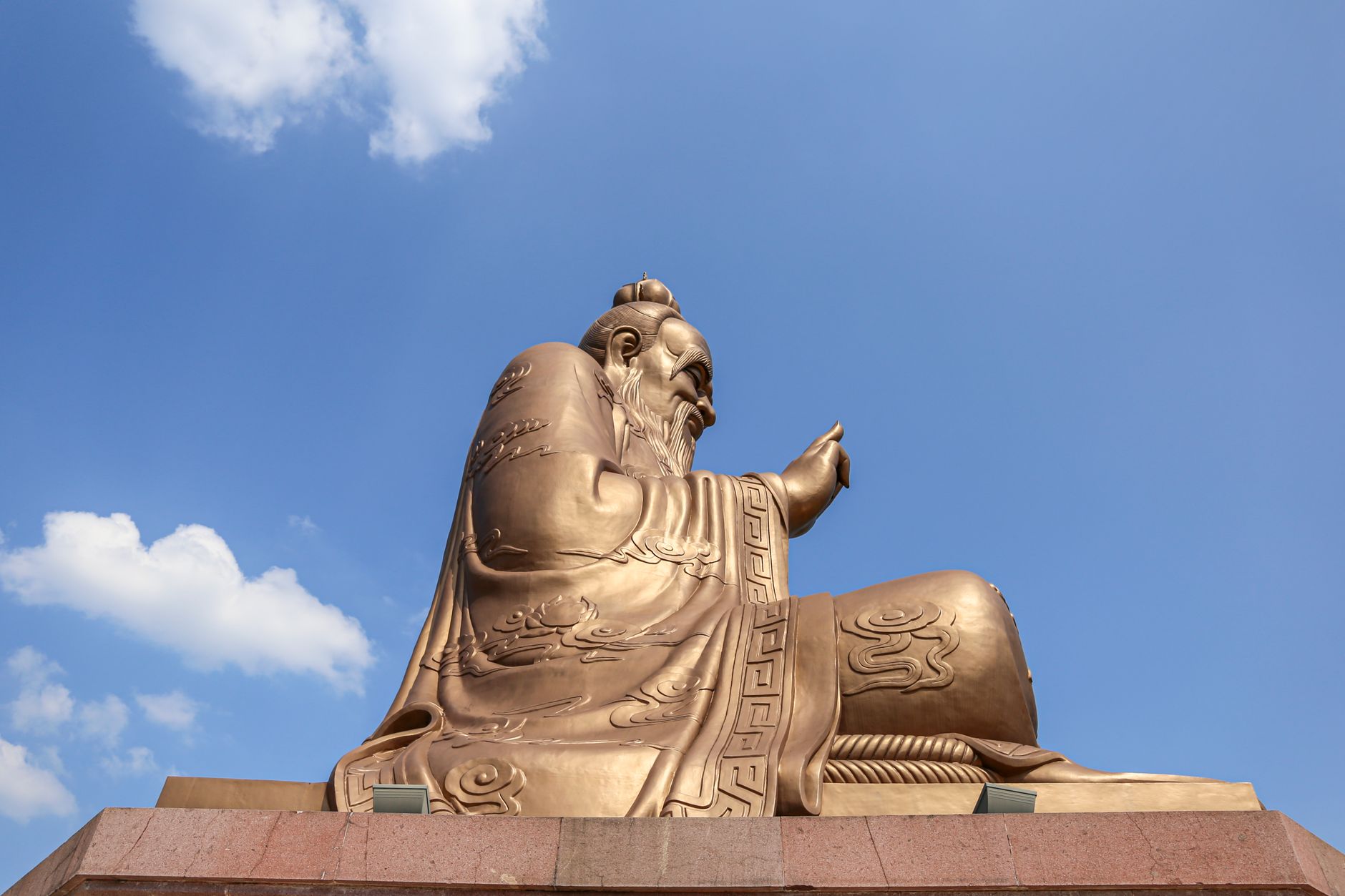
Photo by fei wang on Pexels
Mencius: The Philosopher Who Challenged Traditional Views on Human Nature
On a chilly autumn day in 319 BCE, in the state of Qi, China, Mencius, a prominent Chinese philosopher, met with King Xuan to discuss his radical ideas on human nature. Mencius argued that people are inherently good and that external factors, such as environment and education, shape their behavior. This notion was revolutionary, given the dominant philosophical views of the time.
What Everyone Knows
Most people think that the concept of human nature is a complex and multifaceted topic, and that philosophers have traditionally viewed humans as inherently flawed. The standard story goes that humans need laws, rules, and social norms to govern their behavior and prevent chaos. This understanding is deeply rooted in many cultures, with the idea that humans are inherently selfish and need to be controlled.
What History Actually Shows
Historians like Tu Wei-ming and scholars of Chinese philosophy, such as D.C. Lau, have extensively studied Mencius' works, including his magnum opus, "Mencius," which was compiled by his students in 300 BCE. In this text, Mencius actively engages with his contemporaries, challenging their views on human nature and arguing that people are born with an innate sense of morality. Mencius asserts that humans have a natural inclination towards goodness, which can be developed through education and self-cultivation. According to historian Meng Zhizhou, Mencius' ideas were heavily influenced by his teacher, Zisi, who was a grandson of Confucius. By 298 BCE, Mencius had gained significant recognition for his philosophical views, and his ideas were being widely discussed among Chinese intellectuals. Mencius believed that the primary goal of education should be to nurture this innate goodness, rather than to impose external controls, as stated in the "Mencius" text. Scholars like Philip J. Ivanhoe have analyzed Mencius' ideas in the context of Chinese philosophy, highlighting the significance of his contributions to the development of Confucian thought. In 313 BCE, Mencius traveled to the state of Wei, where he met with the ruler, King Hui, to discuss his philosophical ideas, further solidifying his position as a prominent thinker of his time. As Mencius continued to develop his ideas, he actively responded to criticisms from other philosophers, such as Yang Zhu, who argued that humans are primarily motivated by self-interest. By examining Mencius' responses to these criticisms, historians can gain a deeper understanding of his philosophical views and their significance in the context of Chinese thought.
The Part That Got Buried
The story of Mencius, a Chinese philosopher who argued that people are naturally good, was forgotten due to the actions of Emperor Qin Shi Huang and his successors, who sought to suppress any ideas that challenged their authoritarian rule. Emperor Qin Shi Huang ordered the burning of books and the execution of scholars who disagreed with his policies, which included the ideas of Mencius. The historian Sima Qian, who wrote one of the few surviving accounts of Mencius' life, was himself a victim of imperial persecution, and his work was nearly lost to history. One concrete reason why this history was not told is that the Qin dynasty's destruction of records and books made it difficult for later historians to reconstruct the life and teachings of Mencius. As a result, Mencius' ideas were largely overlooked in favor of the more authoritarian philosophy of Xunzi, which was more in line with the imperial ideology.
The Ripple Effect
The suppression of Mencius' ideas had a direct impact on the development of Chinese law and society. Without the influence of Mencius' philosophy, Chinese law became more punitive and focused on punishment rather than rehabilitation. The people of China were affected by this, as they lived under a system that assumed they were inherently bad and needed to be controlled. One specific modern thing that traces directly back to this event is the continued emphasis on social control in Chinese society, as seen in the country's strict laws and punishments for dissent. The lack of emphasis on rehabilitation and restorative justice in the Chinese legal system can be seen as a direct consequence of the suppression of Mencius' ideas.
The Line That Says It All
Mencius' philosophy was all but erased from the historical record, leaving behind only fragments of a theory that could have changed the course of Chinese history.
A Note on Sources
This article draws on historical records, documented accounts, and academic research related to ancient Chinese philosophy and the life of Mencius.


