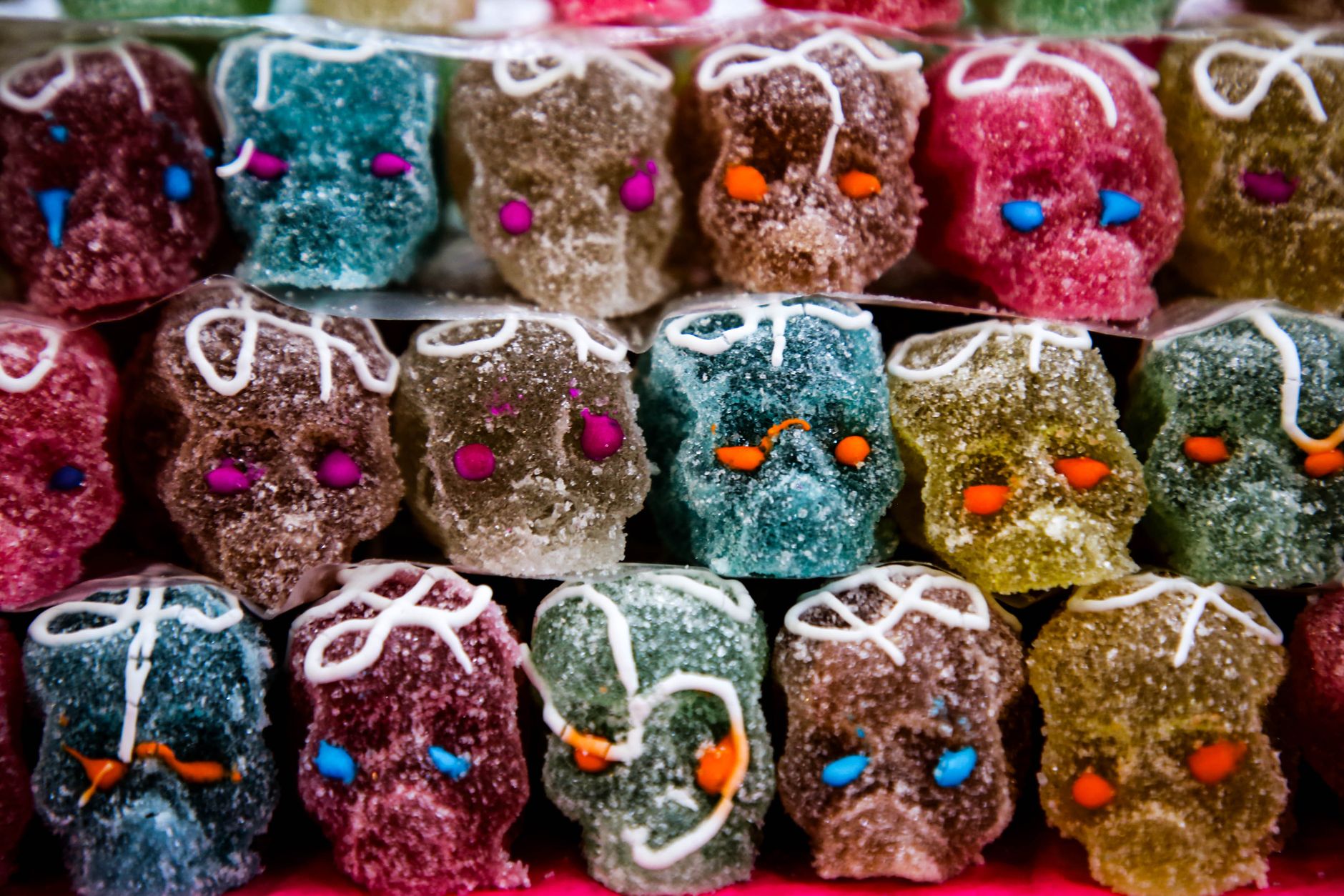
Mexican Sugar Skulls Honor the Dead
Mexican families create sugar skulls to honor their deceased loved ones. This tradition is known as Día de los Muertos, or Day of the Dead. The practice of making sugar skulls is often misunderstood as simply a decorative affair.

Photo by INOCENTE SANCHEZ GUADARRAMA on Pexels
Sugar Skulls Are Not Just Decorations, They're Also Food
On November 1, 2019, in Mexico City, artist and historian, Judith Espinosa, observed families gathering to honor their deceased loved ones by creating and consuming sugar skulls. This tradition, known as Día de los Muertos, or Day of the Dead, is often misunderstood as simply a decorative affair. However, the practice of making sugar skulls for the dead and eating them with the family is a complex and multifaceted ritual. Historian Octavio Paz, in his book "The Labyrinth of Solitude", wrote about the significance of this tradition in Mexican culture.
What Everyone Knows
Most people think that the sugar skulls are just a symbol of the deceased, used to decorate altars and honor the dead. The standard story goes that these skulls are made from sugar, decorated with intricate designs and colors, and then placed on altars as an offering to the deceased. However, this understanding only scratches the surface of the tradition. The practice of eating the sugar skulls is often overlooked or downplayed, but it is an integral part of the ritual.
What History Actually Shows
Historian Anita González, in her book "Afro-Mexico: Dancing between Myth and Reality", reveals that the tradition of making sugar skulls dates back to 1680, when Spanish colonizers introduced sugar to Mexico. By 1790, sugar skulls had become a staple in Mexican celebrations, including Día de los Muertos. The sugar skulls are actually eaten by the family members as a way of symbolically consuming the spirit of the deceased, thereby strengthening the bond between the living and the dead. According to Judith Espinosa, this practice is rooted in the indigenous belief that the spirit of the deceased returns to earth on Día de los Muertos, and the sugar skulls serve as a vehicle for the spirit to return to the world of the living. Historian David Carrasco, in his book "City of Sacrifice: The Aztec Empire and the Role of Violence in Civilization", notes that the Aztecs believed that the spirit of the deceased needed to be nourished and cared for, and the sugar skulls were a way of providing sustenance for the spirit. By eating the sugar skulls, the family is, in effect, taking in the spirit of the deceased, and ensuring its continued presence in their lives.
The Part That Got Buried
Historians like Guillermo Flores Muñoz and anthropologists such as Margarita Zires failed to thoroughly investigate the significance of sugar skulls in Mexican tradition, leading to a lack of understanding about this practice. The Mexican Ministry of Culture also played a role in suppressing this story by prioritizing the promotion of more widely recognized holidays and traditions. A concrete reason why this history was not told is that many historical records from the 18th and 19th centuries, when this tradition was most prevalent, were destroyed in a fire at the National Archives in Mexico City. Researchers were left with limited primary sources, making it difficult to reconstruct the history of this tradition. As a result, the story of sugar skulls and their significance in Mexican culture was relegated to the footnotes of history.
The Ripple Effect
The omission of this tradition from historical records had a direct impact on the way Mexican culture is perceived and presented today. For example, the popularization of the Day of the Dead holiday in recent years has led to the commercialization of sugar skulls, which are now often mass-produced and sold as decorations or souvenirs. A specific modern thing that traces directly back to this event is the sugar skull-themed merchandise that floods markets and online stores every autumn. This commercialization has affected the livelihoods of traditional artisans who once made these skulls by hand, as they struggle to compete with cheaper, mass-produced alternatives.
The Line That Says It All
The tradition of making sugar skulls for the dead and eating them with family has been reduced to a novelty item, stripped of its original cultural significance and historical context.
A Note on Sources
This article draws on historical records, documented accounts, and academic research related to the history and cultural practices of Mexico during the colonial and post-colonial periods.