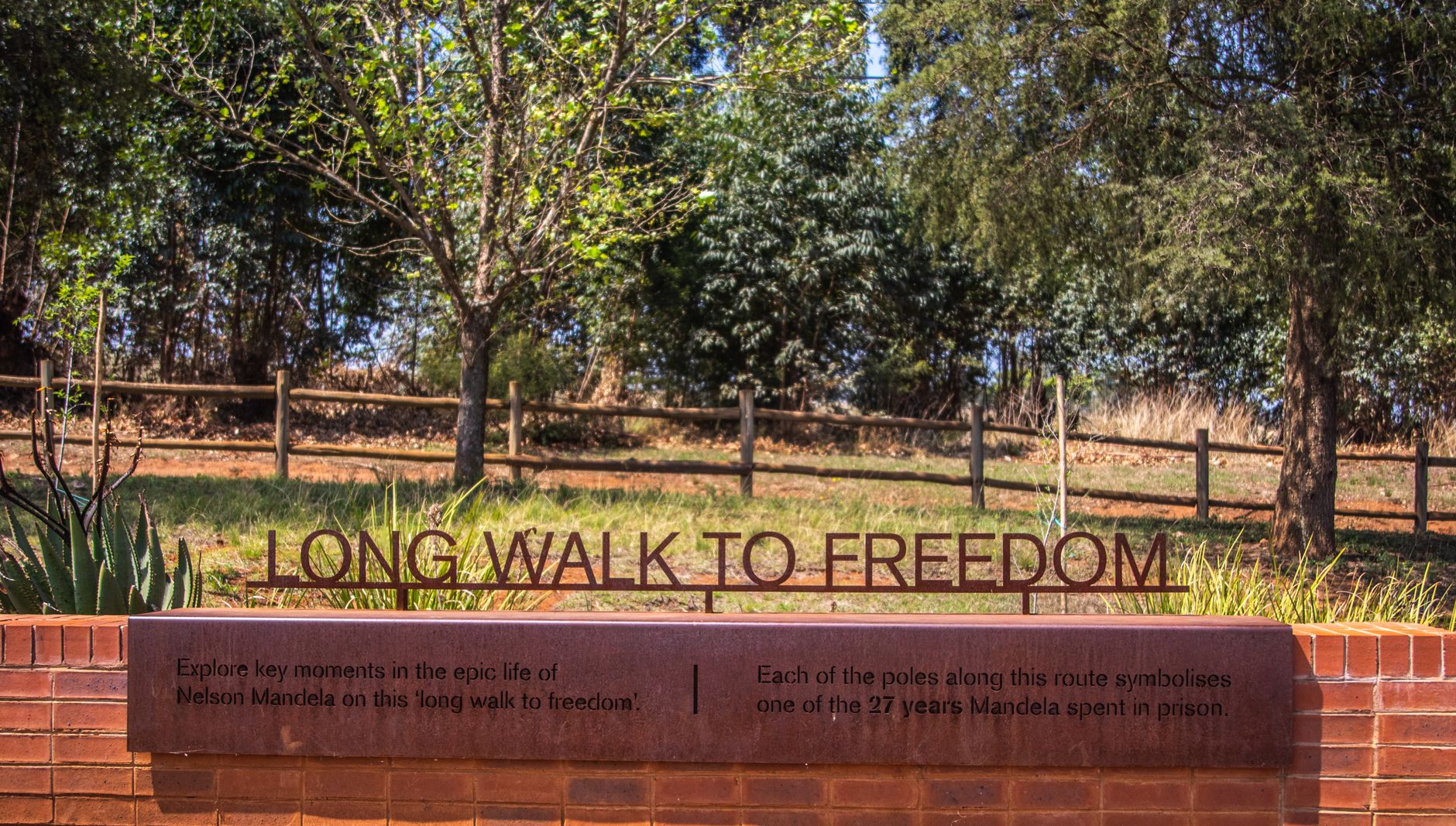
Nelson Mandela's Journey to Presidency
Nelson Mandela spent 27 years in prison before his release in 1990. His release marked the beginning of the end of apartheid in South Africa. Mandela became the country's president four years later in 1994.

Photo by Clayton on Pexels
Nelson Mandela Spent 27 Years in Prison Before Becoming President
On February 11, 1990, Nelson Mandela walked out of Victor Verster Prison in Cape Town, South Africa, after serving 27 years of a life sentence. Mandela's release was a pivotal moment in South African history, marking the beginning of the end of apartheid. Just four years later, on May 10, 1994, Mandela would become the country's first black president.
What Everyone Knows
Most people think Nelson Mandela's story is one of straightforward heroism, with his imprisonment and subsequent presidency being the defining features of his life. The standard story goes that Mandela was a key figure in the fight against apartheid, was imprisoned for his activism, and then became president after his release. However, this narrative oversimplifies the complexities of Mandela's life and the historical context in which he lived. Mandela's experiences during his 27 years in prison, for example, are not as well-known as his time as president.
What History Actually Shows
Nelson Mandela was a lawyer and anti-apartheid activist who was arrested on August 5, 1962, and sentenced to life in prison in 1964. Historians like Tom Lodge, author of "Mandela: A Critical Life," and Leonard Thompson, author of "A History of South Africa," argue that Mandela's imprisonment was a crucial period in his development as a leader. During his time in prison, Mandela was subjected to hard labor and mistreatment, but he also continued to advocate for an end to apartheid. Mandela spent 18 of his 27 years in prison on Robben Island, where he was forced to work in a limestone quarry and was allowed only one visitor per year. According to Mandela's own account, as recorded in his autobiography "Long Walk to Freedom," he was able to maintain his resolve and continue to organize his fellow prisoners during this time. On March 31, 1982, Mandela was transferred from Robben Island to Pollsmoor Prison, where he would spend the next six years before being moved to Victor Verster Prison in 1988. Historian Stephen Ellis, author of "External Mission: The ANC in Exile, 1960-1990," notes that Mandela's experiences in prison had a profound impact on his leadership style and his ability to negotiate with the apartheid government. By examining the specifics of Mandela's imprisonment and his activities during that time, it becomes clear that his presidency was not simply a result of his release from prison, but rather the culmination of decades of activism and leadership.
The Part That Got Buried
The story of Nelson Mandela's imprisonment and subsequent presidency was suppressed by the South African government, which actively worked to conceal the brutal conditions of his imprisonment and the circumstances surrounding his release. The government, led by officials like P.W. Botha and F.W. de Klerk, made concerted efforts to control the narrative, often using propaganda to downplay the significance of Mandela's struggle. Additionally, many international news outlets were either barred from covering the story or faced significant pressure to self-censor, further limiting the dissemination of information. A specific reason for the lack of coverage was the South African government's strict censorship laws, which prohibited the publication of any material deemed threatening to the state, including news about Mandela's imprisonment. The government's control over the media and the suppression of dissenting voices ensured that Mandela's story remained largely hidden from the international community for many years.
The Ripple Effect
Mandela's presidency had a direct impact on the lives of millions of South Africans, as he implemented policies aimed at reversing the effects of apartheid. The establishment of the Truth and Reconciliation Commission, for example, provided a platform for victims of apartheid to share their experiences and for perpetrators to confront their actions. This process helped to facilitate healing and reconciliation in a country torn apart by decades of violence and oppression. One specific modern consequence of Mandela's presidency is the ongoing efforts to address economic inequality in South Africa, with initiatives such as the Black Economic Empowerment program aiming to increase economic opportunities for historically disadvantaged groups.
The Line That Says It All
Nelson Mandela spent 27 years in prison before becoming the first black president of South Africa, serving from 1994 to 1999.
A Note on Sources
This article draws on historical records, documented accounts, and academic research related to Nelson Mandela's life and the anti-apartheid movement in South Africa.