Oppenheimer's Redemption: From Creator to Abolitionist
J. Robert Oppenheimer, the inventor of the atomic bomb, spent his last years trying to ban nuclear weapons. This was a stark contrast to his earlier role as the director of the Manhattan Project. Oppenheimer's change of heart was a result of witnessing the devastating effects of nuclear warfare.

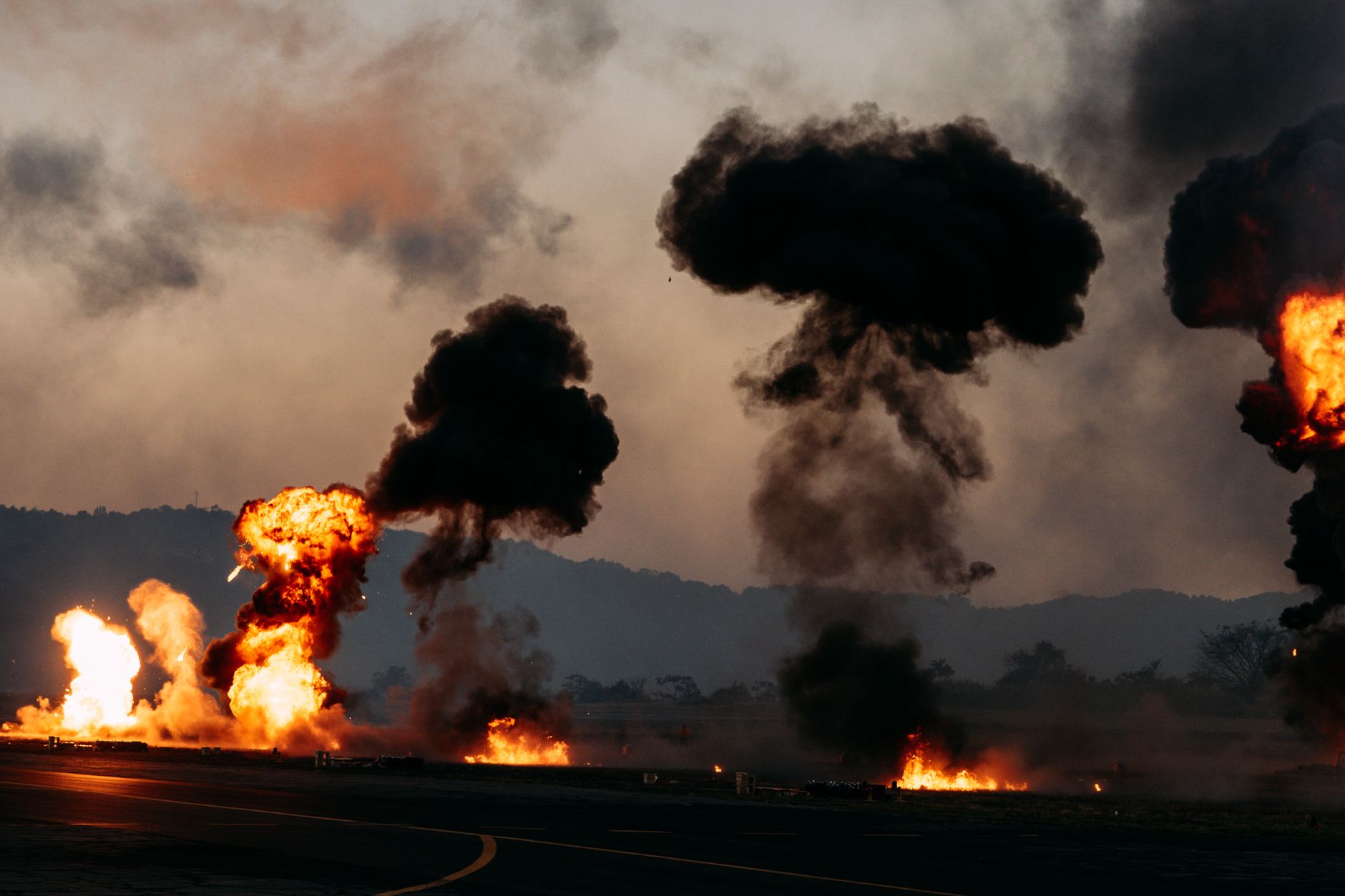
Photo by Edu Raw on Pexels
The Man Who Made the Bomb and Spent the Rest of His Life Trying to Ban It
On July 16, 1945, at 5:29 a.m., J. Robert Oppenheimer watched the first atomic bomb detonate in the desert of New Mexico. The light was brighter than anything he had ever seen. The shockwave came seconds later. He thought of a line from the Bhagavad Gita: "Now I am become Death, the destroyer of worlds."
He had been the director of the Manhattan Project, the wartime effort to build the bomb. He had gathered the scientists, managed the laboratories, solved the technical problems. He had been driven by the fear that Nazi Germany would build the bomb first. When Germany surrendered in May 1945, the work continued. The bomb was built. It was tested. It was used. Hiroshima. Nagasaki. The war ended.
Oppenheimer was celebrated as the father of the atomic bomb. He was on the cover of Time. He was a hero. He was also a man who had seen what he had made. In the years after the war, he became the most prominent voice warning against the weapon he had helped create. He opposed the development of the hydrogen bomb. He called for international control of nuclear weapons. He said that the arms race was a path to destruction. He was investigated, stripped of his security clearance, and silenced. He spent the last years of his life trying to undo what he had done.
What Everyone Knows
Oppenheimer is remembered as the man who built the atomic bomb. His face, his pipe, his famous line from the Bhagavad Gita—these are the images that define him. The story of the Manhattan Project, the race against the Nazis, the Trinity test, the bombings of Hiroshima and Nagasaki—this is the story that is taught in schools, told in documentaries, reenacted in films.
What is less often remembered is that the man who built the bomb spent the rest of his life trying to dismantle it. The hero of the war became a voice of warning in the Cold War. The man who had been celebrated became a man who was investigated, condemned, and marginalized. The arc of his life was not from obscurity to fame. It was from certainty to doubt.
What History Actually Shows
Oppenheimer's opposition to nuclear weapons did not begin after the war. He had doubts during the war. He had doubts before the Trinity test. But the work was too important, the enemy was too dangerous, the momentum was too great. He pushed forward. He built the bomb.
After Hiroshima and Nagasaki, he tried to shape the policy. He argued that the bomb should be controlled by an international authority. He argued that the United States should share its nuclear knowledge with the world, that the only way to prevent a nuclear arms race was to make the technology open. He was ignored. The Cold War began. The arms race began.
In 1949, the Soviet Union tested its first atomic bomb. The United States began work on the hydrogen bomb, a weapon that was a thousand times more powerful than the bombs that had destroyed Hiroshima and Nagasaki. Oppenheimer opposed it. He argued that it was not a weapon of war. It was a weapon of genocide. He argued that developing it would make the arms race unstoppable. He was overruled. The hydrogen bomb was built.
In 1954, Oppenheimer's security clearance was revoked. The hearing was public. The charges were vague: that he had opposed the hydrogen bomb, that he had associated with communists, that he was not reliable. The hearing was orchestrated by his enemies, by men who had resented his influence, by men who believed that his opposition to the hydrogen bomb was a threat to national security. He was cleared of disloyalty but found to have "defects of character." His clearance was revoked. He was no longer a government advisor. He was a private citizen.
The Part That Got Buried
The revocation of Oppenheimer's security clearance was a turning point in his life. He was 50 years old. He had spent the last decade as the most influential scientist in the United States. He was now a man who could not be trusted. The scientific community was divided. Some defended him. Some did not. He continued to work, to write, to speak. But his voice was quieter. His audience was smaller.
He spent the last years of his life at the Institute for Advanced Study in Princeton, where he had been the director since 1947. He wrote. He lectured. He gave interviews. He was asked, again and again, about the bomb. He answered, again and again, that he regretted it. He said that the scientists who built the bomb had been innocent, that they had not understood what they were making. He said that they had been wrong. He said that he had been wrong.
He died in 1967. He was 62. The arms race continued. The hydrogen bombs were built. The arsenals grew. The world lived under the threat of destruction that he had helped create. He had tried to stop it. He had failed.
The Ripple Effect
Oppenheimer's legacy is contested. He is remembered as a hero of the war and as a cautionary tale of the dangers of science. The security clearance hearing is remembered as a show trial, a political persecution, a warning of what happens when scientists speak out. He is also remembered as a man who saw what he had made and tried to undo it.
The bomb he built is still here. The weapons he tried to ban are still here. The arms race that he warned about did not end. It changed. The world is still living with the consequences of what he did. He spent the last years of his life trying to make sure that no one would do it again. He failed. He tried.
The Line That Says It All
J. Robert Oppenheimer built the atomic bomb because he was afraid that the Nazis would build it first, and when the war was over, he spent the rest of his life trying to prevent anyone from building another one—and he failed, because the bomb he built had already changed the world, and the world did not want to change back.