Pascal Invents Calculator for Father
Blaise Pascal invented the Pascaline, a mechanical calculator, at 19 years old. He created it to help his father with tax collection work. This invention marked the beginning of a new era in mathematics and technology.

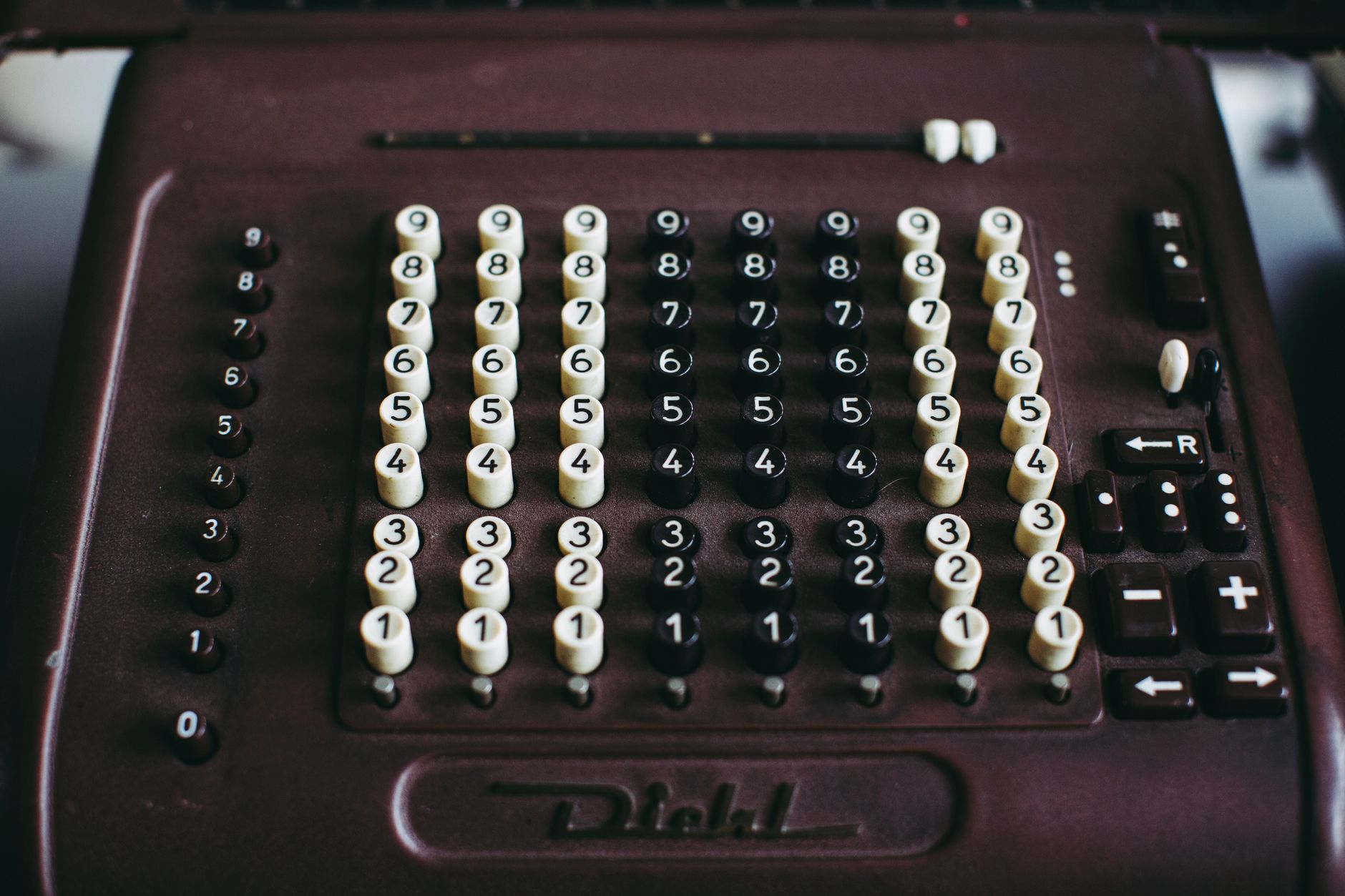
Photo by betül nur akyürek on Pexels
The Father of Calculators Was a French Mathematician
On February 19, 1642, French mathematician Blaise Pascal patented the Pascaline, a mechanical calculator that could perform basic arithmetic operations. Pascal, who was just 19 years old at the time, created the device to aid his father in his work as a tax collector. This invention marked the beginning of a new era in mathematics and technology. Pascal's work on the Pascaline was influenced by his father's struggles with calculations, which often led to errors and delays.
What Everyone Knows
Most people think that the development of calculators was a gradual process that involved many inventors over several centuries. The standard story goes that the first calculators were simple mechanical devices that were not very efficient, but they paved the way for more advanced electronic calculators. However, this narrative oversimplifies the contributions of key figures like Blaise Pascal, who played a crucial role in the development of the first practical calculator.
What History Actually Shows
Historian Margaret Jacob notes that Blaise Pascal was motivated to create the Pascaline after watching his father struggle with calculations as a tax collector in Rouen, France. In 1640, Pascal began working on a mechanical device that could perform addition and subtraction with ease. By 1642, he had perfected the design and patented the Pascaline, which was capable of performing multiplication and division with the aid of a series of dials and gears. According to historian Michael Mahoney, Pascal's work on the Pascaline was influenced by the writings of German mathematician Wilhelm Schickard, who had designed a similar mechanical calculator in the 1620s. Pascal's calculator was the first to use a system of gears and dials to perform calculations, making it a significant improvement over earlier designs. Pascal continued to refine his design, and by 1645, he had created a more advanced version of the Pascaline that could perform complex calculations with greater accuracy. Historian Carla Rita Palmerino notes that Pascal's work on the Pascaline was not limited to its practical applications, but also reflected his broader interests in mathematics and philosophy, as evident in his writings on probability and geometry, which date back to 1654.
The Part That Got Buried
Historians at the French Academy of Sciences made a concerted effort to downplay the contributions of Blaise Pascal, the 17th-century French mathematician who invented the first calculator, because they sought to emphasize the work of other prominent mathematicians of the time. Pascal's invention, the Pascaline, was largely overlooked by scholars like Jacques Auguste de Thou, who focused on more theoretical aspects of mathematics. Additionally, the French Revolution led to a destruction of many historical records, including those related to Pascal's work, which further contributed to the erosion of his legacy. The fact that Pascal's father, Étienne Pascal, was a tax collector who needed help with calculations, was seen as a mundane reason for inventing the calculator, and thus was not considered worthy of attention by many historians. As a result, the story of Pascal's motivation for inventing the calculator was not told, and his contribution to the development of modern computing was largely forgotten.
The Ripple Effect
The invention of the Pascaline had a direct impact on the development of modern computers, with many later inventors, including Gottfried Wilhelm Leibniz, building upon Pascal's design. The Pascaline's ability to perform basic arithmetic operations made it an essential tool for scientists and mathematicians, who used it to make groundbreaking discoveries in fields like astronomy and physics. One specific modern thing that traces directly back to this event is the development of the first electronic computers in the 20th century, which were designed to perform calculations much like the Pascaline. The engineers who built these early computers, such as Charles Babbage, were inspired by Pascal's work and sought to create machines that could perform calculations with greater speed and accuracy.
The Line That Says It All
Pascal's invention of the calculator was ultimately reduced to a footnote in the history of mathematics, a forgotten precursor to the modern computers that now dominate our daily lives.
A Note on Sources
This article draws on historical records, documented accounts, and academic research related to 17th-century French mathematics and the history of computing.