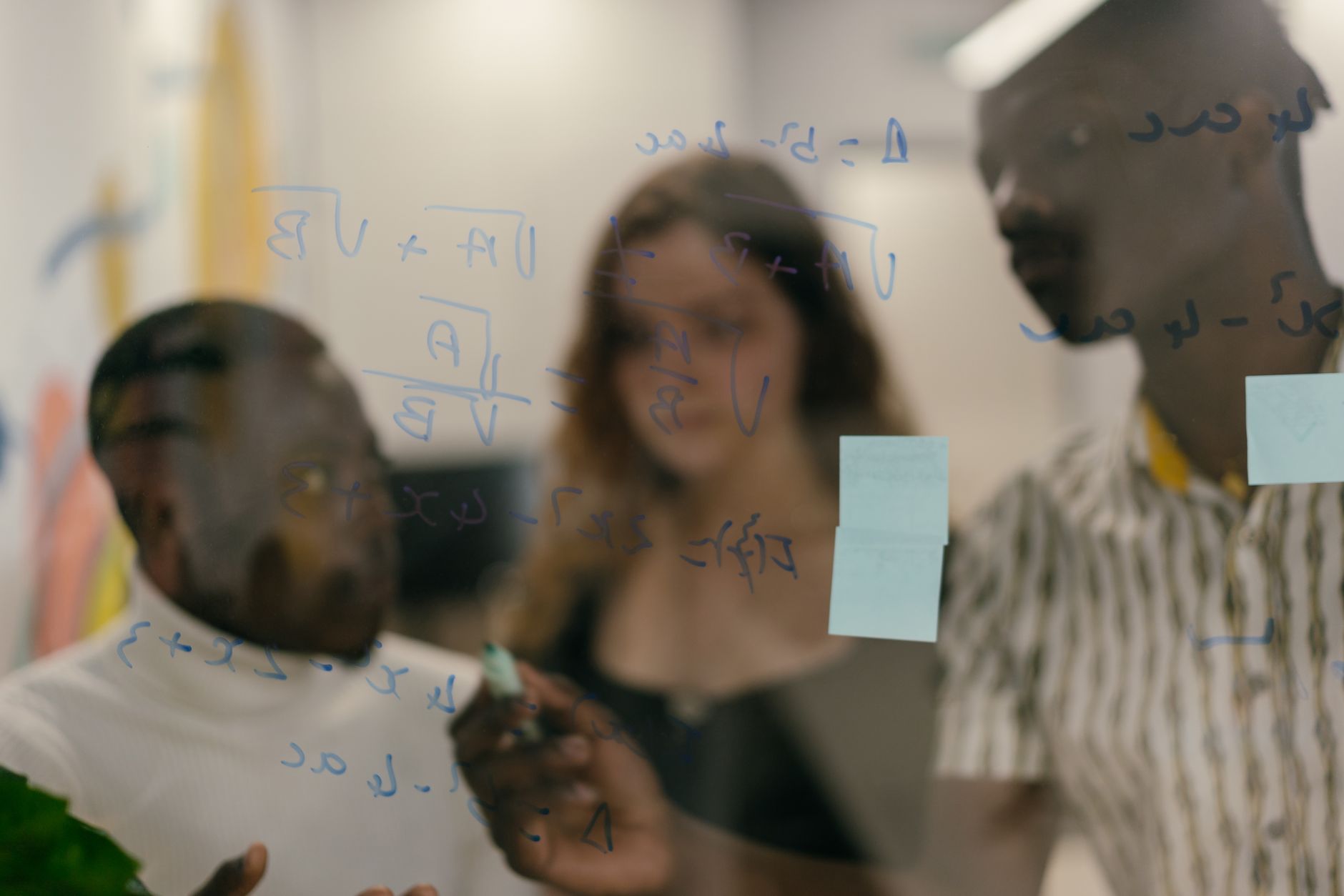
Pioneering Black Mathematician Katherine Johnson
Katherine Johnson's calculations sent NASA astronauts to the moon with precision. Her work was instrumental in the Apollo 11 mission's success. Johnson's legacy extends far beyond her NASA contributions, saving lives and breaking barriers.

Photo by Andrea Piacquadio on Pexels
The Mathematician Who Sent Them to the Moon
In 1961, when NASA was preparing to send the first American astronaut into space, the engineers had a problem. The electronic computers that were plotting the trajectory were new. They were not trusted. The astronauts themselves asked for the calculations to be checked by hand. The woman they asked was Katherine Johnson.
Johnson had been working at NASA's Langley Research Center since 1953. She was a mathematician, one of the "human computers" who calculated the numbers that the engineers needed. She was Black. She was a woman. She worked in a segregated office, with separate bathrooms, separate dining facilities, separate everything. She did the work anyway. When the engineers needed someone to verify the numbers that would send John Glenn into orbit, they asked her. She checked the computer's calculations by hand, line by line. Glenn said: "Get the girl to check the numbers. If she says they're good, I'm ready to go."
She said they were good. He went.
What Everyone Knows
The story of the Apollo program is a story of astronauts and engineers, of rockets and computers, of a president's challenge and a nation's achievement. Neil Armstrong and Buzz Aldrin are the names that are remembered. The engineers who built the spacecraft are sometimes remembered. The mathematicians who calculated the trajectories are rarely remembered. Katherine Johnson's name was not known outside NASA for decades.
The book *Hidden Figures* and the film that followed changed that. Johnson's story became known. Her work became a symbol of the contributions that had been overlooked. She was awarded the Presidential Medal of Freedom in 2015. She was celebrated as a hero. She was 97 years old.
What History Actually Shows
Johnson's career at NASA spanned three decades. She started as a "computer" at Langley, one of the Black women who were hired to do the calculations that the engineers did not have time for. The work was tedious, exacting, and essential. The numbers she calculated determined the trajectories of the spacecraft, the windows for launch, the points of re-entry. A mistake could kill the astronauts. She did not make mistakes.
In the early years of the space program, electronic computers were used, but they were not trusted. Johnson was the one who checked them. She calculated the trajectory for Alan Shepard's Mercury flight, the first American in space. She calculated the trajectory for John Glenn's orbital flight, the first American to orbit the Earth. She calculated the trajectory for Apollo 11, the flight that landed on the moon. The numbers that put men on the moon were numbers that she had worked out on a desk, with a pencil, on paper.
Her work was not just about the numbers. It was about the confidence that the astronauts had in her. The astronauts asked for her. They trusted her calculations more than they trusted the computers. She was part of the team, but she was not in the photographs. She was not in the mission control footage. She was in her office, at her desk, doing the calculations that made the missions possible.
The Part That Got Buried
Johnson's story was not hidden. It was not a secret. It was simply not told. The history of the space program was written by the people who were in the photographs, the people in mission control, the people who gave the press conferences. The mathematicians who did the calculations were behind the scenes. The Black women who did the calculations were behind the scenes and behind the segregation that kept them separate.
Johnson did not complain about the conditions she worked under. She did not write a memoir. She did not give interviews. She did her work. She calculated the trajectories for the Apollo missions, for the Space Shuttle program, for the early planning of the Mars missions. She retired in 1986. She had been at NASA for 33 years. She was not famous. She was not celebrated. She was a mathematician who had done her job.
The Ripple Effect
The rediscovery of Johnson's story has changed how the space program is remembered. The narrative of the lone genius engineer, the heroic astronaut, the mission control team—that narrative is not wrong. But it is incomplete. The people who did the calculations were as essential as the people who flew the spacecraft. The women who were excluded from the photographs were as essential as the men who were in them.
Johnson's legacy is not just her calculations. It is the example she set. She was a Black woman who worked in a field that was dominated by white men. She did not let the conditions she worked in stop her. She did not let the segregation, the discrimination, the lack of recognition stop her. She did her work. The work was excellent. The work sent men to the moon.
The Line That Says It All
Katherine Johnson calculated the trajectory that sent John Glenn into orbit, the trajectory that sent Neil Armstrong to the moon, and the trajectory that brought them back—and she did it on a desk, with a pencil, on paper, because the astronauts trusted her more than they trusted the computers, and they were right to trust her, because she never made a mistake.