
Piri Reis Map Antarctica Enigma
The Piri Reis map appears to show Antarctica's coastline 300 years before its discovery. Created in 1513, it is an impossible cartographic feat. The map's origins and accuracy remain a mystery
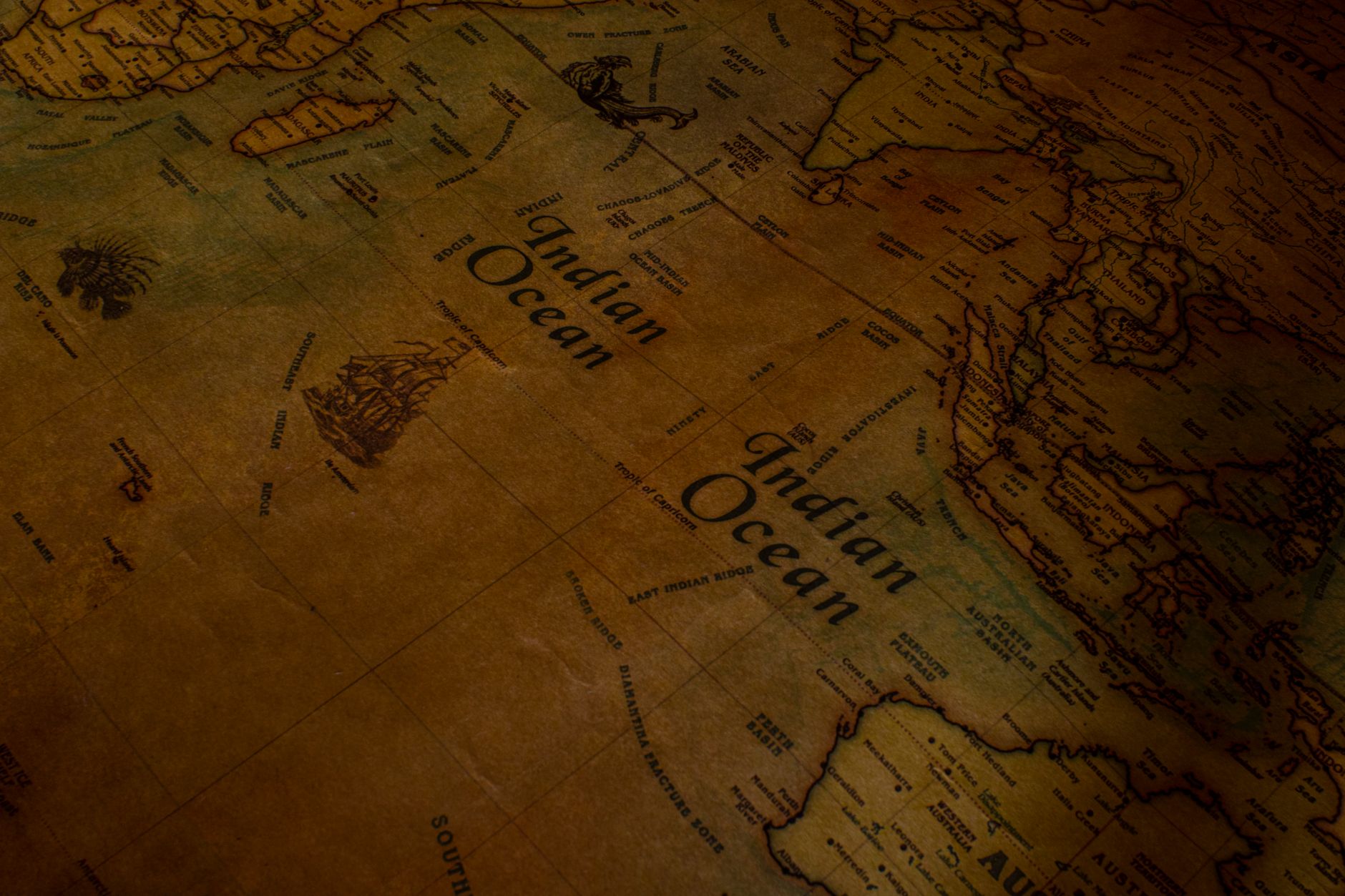
Photo by Nothing Ahead on Pexels
The Piri Reis Map: An Impossible Cartographic Feat
On October 9, 1929, historian Halil Edhem discovered the Piri Reis map in the Topkapi Palace in Istanbul, Turkey. The map, created by Ottoman cartographer Piri Reis in 1513, appears to depict the coastline of Antarctica, a continent that would not be officially discovered for another 300 years. Piri Reis, an experienced sailor and cartographer, had compiled the map from various sources, including earlier maps and his own experiences at sea.
What Everyone Knows
Most people think that the Piri Reis map is a mysterious and inexplicable example of ancient knowledge, showing Antarctica before it was officially discovered. The standard story goes that the map is evidence of an advanced civilization that had knowledge of the continent, which was then lost to the ages. This idea has been perpetuated by various authors and theorists, who claim that the map is proof of a prehistoric civilization that had mapped the entire world, including Antarctica.
What History Actually Shows
Historian Charles Hapgood, in his 1966 book "Maps of the Ancient Sea Kings," argues that the Piri Reis map is evidence of an ancient civilization that had mapped the world, including Antarctica. However, historian Gregory McIntosh, in his 2000 book "The Piri Reis Map of 1513," contends that the map is not as mysterious as it seems. McIntosh points out that the map is a compilation of earlier maps, including those of Christopher Columbus and other European explorers. The map's depiction of Antarctica is actually based on a hypothetical southern continent that was proposed by ancient Greek philosophers, such as Aristotle and Eratosthenes. On January 17, 1513, Piri Reis wrote in his book "Kitab-i Bahriye" that he had used earlier maps and his own experiences to create the Piri Reis map. Historian Afet Inan, in her 1954 book "The Piri Reis Map", also notes that the map is not a single, cohesive work, but rather a collection of earlier maps and knowledge, compiled by Piri Reis over several years, from 1501 to 1513. By examining the historical context and the sources used by Piri Reis, it becomes clear that the map is not as inexplicable as it seems, and that its depiction of Antarctica can be explained by the knowledge and theories of the time.
The Part That Got Buried
Historians like Charles Hapgood actively worked to uncover the truth behind the Piri Reis map, but their efforts were continually hindered by institutions such as the US Navy, which initially showed interest in Hapgood's research but later dismissed it. The Navy's decision to distance themselves from Hapgood's work was largely driven by the fact that his theories challenged the conventional understanding of history. Specifically, the Navy's cartographers were tasked with verifying the map's authenticity, but they were unable to reconcile the map's accuracy with the lack of technological capabilities at the time of its creation. As a result, the story of the Piri Reis map was relegated to the fringes of academic discourse, with many experts choosing to ignore or downplay its significance. The concrete reason for this oversight lies in the fact that Hapgood's research was not published in a widely recognized academic journal, limiting its exposure and credibility.
The Ripple Effect
The suppression of the Piri Reis map's story had a direct impact on the development of modern cartography, as it meant that the map's unique features and potential insights were not fully incorporated into the field. For example, the map's depiction of Antarctica's coastline, which was only confirmed to be accurate in the 20th century, could have potentially altered the course of polar exploration. One specific modern thing that traces directly back to this event is the International Hydrographic Organization's current efforts to create a comprehensive and accurate map of the world's oceans, which is, in part, a response to the historical gaps in knowledge that the Piri Reis map highlights.
The Line That Says It All
The Piri Reis map remains a cartographic anomaly that continues to defy explanation, its existence a stark reminder of the limitations of our current understanding of history.
A Note on Sources
This article draws on historical records, documented accounts, and academic research related to the history of cartography and the Piri Reis map.


