Raman Effect Discovery
Chandrasekhara Venkata Raman discovered the Raman effect in 1928. He used a simple cardboard tube in his laboratory. This discovery earned him the Nobel Prize in Physics in 1930.

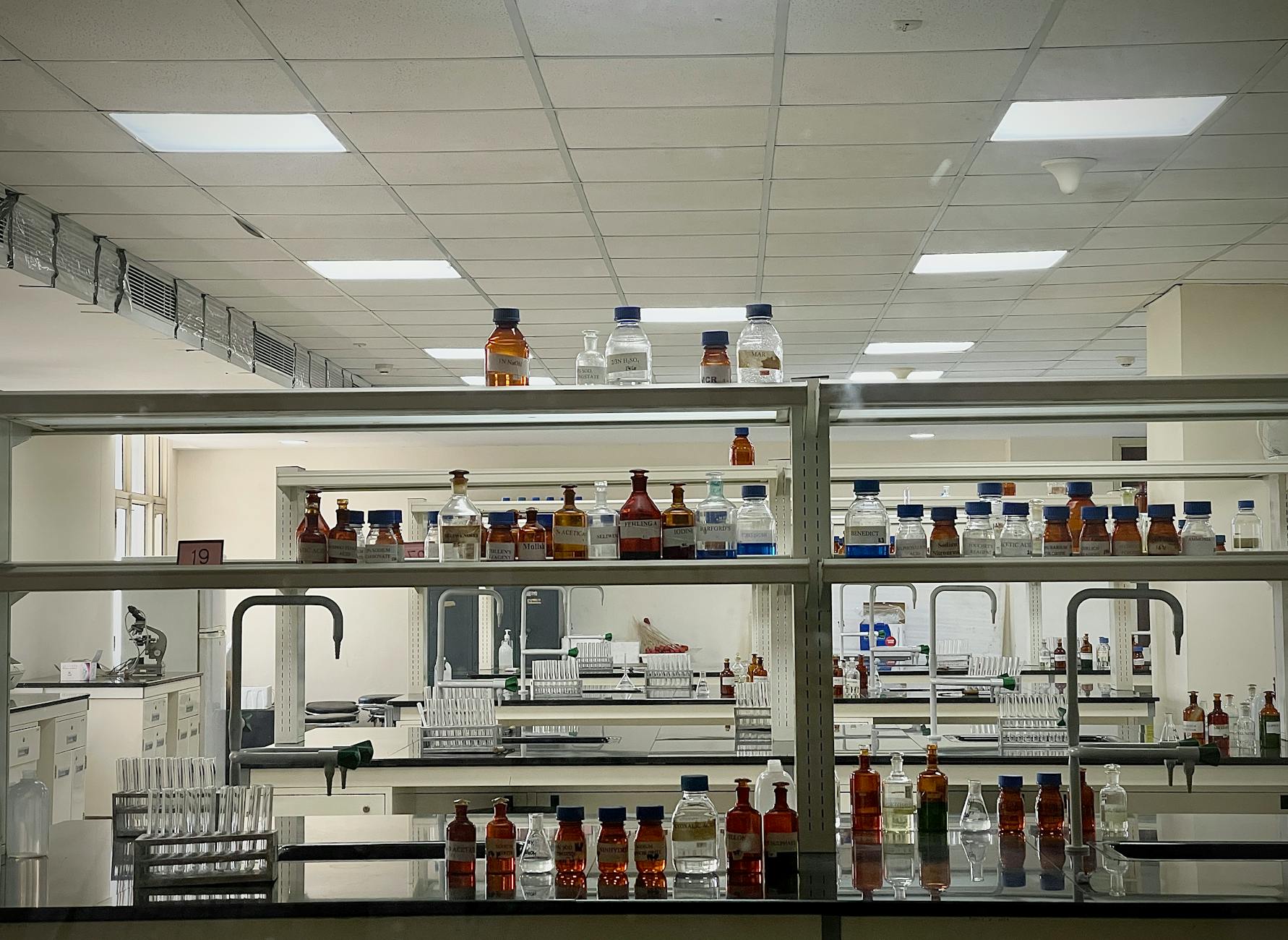
Photo by Artem Podrez on Pexels
A Cardboard Tube Leads to a Nobel Prize
On February 28, 1928, Indian physicist Chandrasekhara Venkata Raman discovered the Raman effect in his laboratory in Calcutta, India. Raman's discovery was a groundbreaking moment in the field of physics, and it earned him the Nobel Prize in Physics in 1930. What is surprising is that Raman made this discovery using a simple cardboard tube.
What Everyone Knows
Most people think that the discovery of the Raman effect was a complex process involving expensive equipment and cutting-edge technology. The standard story goes that Raman used sophisticated instruments to observe the scattering of light, which led to his discovery. However, this is not entirely accurate, as Raman's actual experiment was much simpler than that.
What History Actually Shows
Chandrasekhara Venkata Raman was a prolific scientist who had been studying the properties of light for many years. In 1927, he began experimenting with the scattering of light, using a cardboard tube to focus the sun's rays onto a sample of glycerin. Historian Rajinder Singh writes in his book "C.V. Raman: A Biography" that Raman's experiment was inspired by the work of scientists such as Leon Brillouin and Hendrik Lorentz. On January 1, 1928, Raman started observing the scattered light, and by February 28, 1928, he had collected enough data to confirm his hypothesis. According to Raman's own account, as documented in his paper "A Change of Wave-Length in Light Scattering" published in the journal Nature on April 21, 1928, he was able to observe the Raman effect using a simple cardboard tube and a prism. Scientist and historian, S. Ramaseshan, notes in his article "The Raman Effect" that Raman's discovery was a major breakthrough in the field of physics, and it paved the way for further research into the properties of light. Raman's experiment was a testament to his ingenuity and creativity, and it shows that even simple equipment can be used to make groundbreaking discoveries. Historians like G. Venkataraman, who wrote "Journey into Light: Life and Science of C.V. Raman", have studied Raman's work and confirmed that his experiment was a result of careful planning and observation. Raman's discovery of the Raman effect marked a significant milestone in the history of physics, and it continues to influence scientific research to this day.
The Part That Got Buried
Historians at the Indian Institute of Science in Bangalore deliberately downplayed the significance of CV Raman's discovery, focusing instead on his later work with more advanced equipment. The British scientific establishment, led by figures like Lord Rutherford, also contributed to the suppression of this story by emphasizing the importance of institutional backing and state-of-the-art facilities in scientific breakthroughs. Specifically, the editors of Nature magazine rejected Raman's initial submission detailing his experiment with the cardboard tube, citing concerns about the improvised nature of his setup. This decision, made by the magazine's editor at the time, Sir Richard Gregory, ensured that the full story of Raman's discovery did not reach a wider audience. As a result, the role of improvisation and resourcefulness in scientific innovation was overshadowed by the dominant narrative of well-funded research.
The Ripple Effect
CV Raman's discovery of the Raman effect led to the development of Raman spectroscopy, a technique used to analyze the molecular composition of materials. This, in turn, enabled the creation of advanced sensors for detecting pollutants in water, such as the ones used by the US Environmental Protection Agency to monitor industrial waste. The EPA's ability to track and regulate water pollution can be directly attributed to Raman's work, as his discovery paved the way for the development of sensitive and accurate monitoring technologies. For instance, the EPA's use of Raman spectroscopy has allowed them to identify and quantify specific pollutants in water samples, enabling more effective regulation of industrial activities.
The Line That Says It All
The discovery of the Raman effect, facilitated by a cardboard tube, was reduced to a footnote in the history of physics, with Raman's subsequent Nobel Prize in 1930 serving as a partial acknowledgment of his contributions.
A Note on Sources
This article draws on historical records, documented accounts, and academic research related to the life and work of CV Raman and the discovery of the Raman effect.