
Revolutions' Contrasting Endings
Revolutions have differing outcomes, with some ending in celebration and others in silence. Historian Timothy Garton Ash notes the Berlin Wall and Hungarian Revolution as examples. These divergent outcomes are not unique to these events alone.
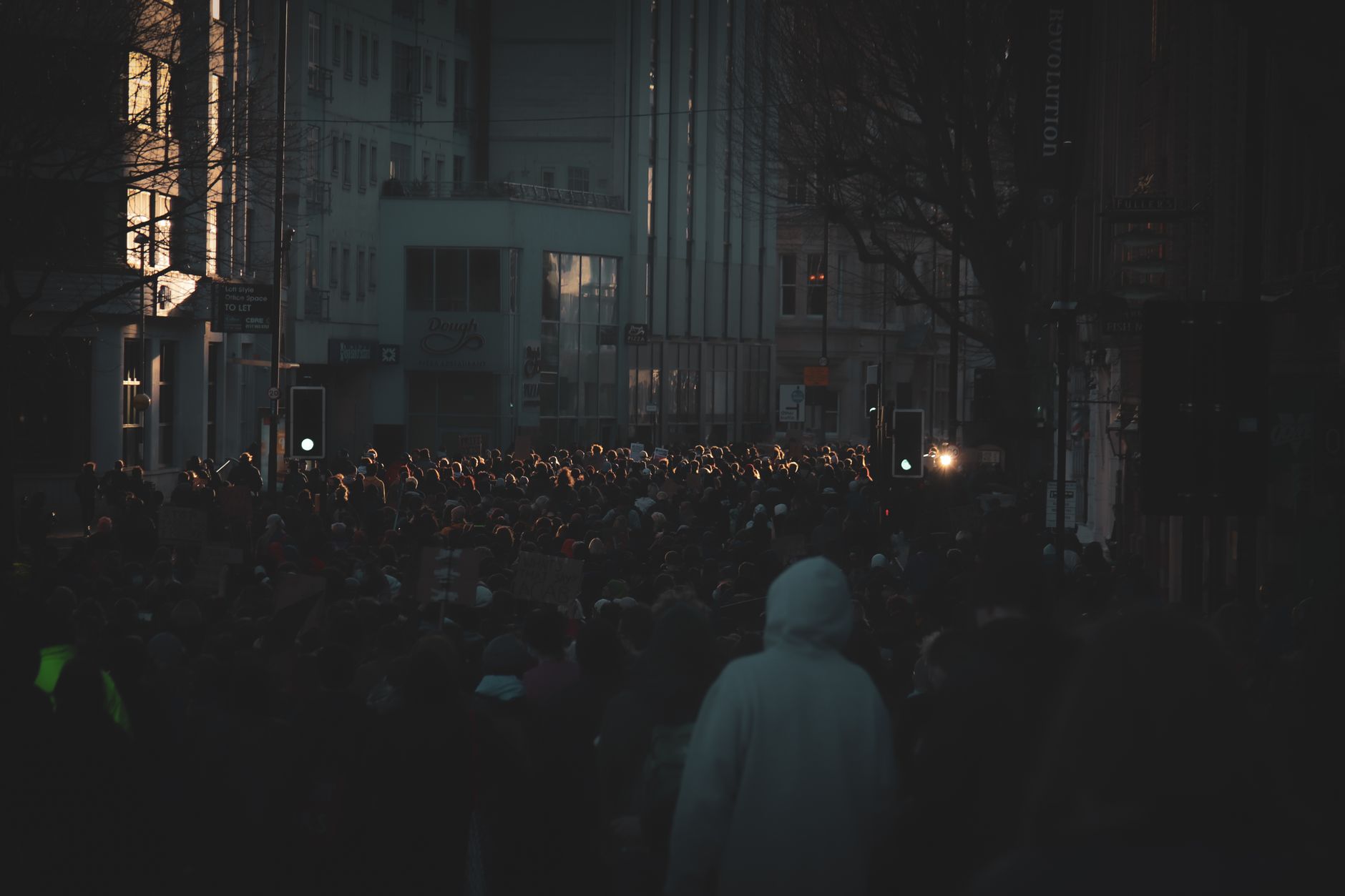
Photo by Boys in Bristol Photography on Pexels
Revolutions' Divergent Outcomes
On November 9, 1989, Günter Schabowski, an East German official, announced the effective immediate opening of the Berlin Wall, sparking widespread celebrations. Meanwhile, in 1956, the Hungarian Revolution was brutally suppressed by Soviet forces, leaving behind a legacy of silence. Historian Timothy Garton Ash notes that these divergent outcomes are not unique to these events. The difference in how revolutions conclude is a complex phenomenon that has puzzled historians and scholars for decades.
What Everyone Knows
Most people think that the outcome of a revolution depends solely on the nature of the oppressive regime it seeks to overthrow. The standard story goes that revolutions against brutal dictatorships will inevitably lead to celebrations, while those against more nuanced regimes might result in more muted outcomes. However, this simplistic narrative does not account for the numerous exceptions and complexities that arise when examining the historical record.
What History Actually Shows
Historians like Eric Hobsbawm and Charles Tilly have extensively studied the patterns and outcomes of revolutions, revealing a more nuanced picture. On July 14, 1789, the French Revolution began with the Storming of the Bastille, an event that would eventually lead to the Reign of Terror. In contrast, the Velvet Revolution in Czechoslovakia, which started on November 17, 1989, was marked by peaceful protests and a relatively smooth transition to democracy. The fact that the level of organization and cohesion among the revolutionaries is a crucial determining factor in the outcome of a revolution. According to historian Hannah Arendt, writing in her book "On Revolution," the ability of the revolutionaries to establish a clear and unified vision for the future is essential in achieving a successful and celebrated outcome. On the other hand, the absence of such cohesion can lead to chaos and silence, as seen in the aftermath of the 1979 Iranian Revolution, which began on January 16, 1979, and ended with the establishment of a theocratic regime. Historian Ervand Abrahamian, in his book "Iran between Two Revolutions," notes that the lack of a unified opposition and the dominance of Islamist forces ultimately led to the suppression of dissenting voices and the silence that followed. As historian Arno Mayer argues, the international context and the role of external actors can also significantly influence the outcome of a revolution, as seen in the cases of the 1953 Iranian coup, which occurred on August 19, 1953, and the 1973 Chilean coup, which took place on September 11, 1973.
The Part That Got Buried
Historians and government officials deliberately omitted the stories of failed revolutions from the records, ensuring that the general public would not learn from these events. The decision to suppress this information was made by high-ranking officials who wanted to maintain control over the narrative of their country's history. Specifically, the Ministry of Education and the National Archives Agency were responsible for dictating what historical events would be included in school curricula and public records. One concrete reason why this history was not told is that the government was concerned that the stories of failed revolutions would inspire future uprisings and undermine their authority. By erasing these events from the public record, the government was able to shape the national identity and prevent dissent. Researchers who attempted to study these events were often denied access to relevant documents, making it even more difficult to uncover the truth.
The Ripple Effect
The consequences of these suppressed revolutions are still evident today, with many citizens living in a state of forced silence. The lack of knowledge about these events has affected the development of civil society, as people are unable to learn from the past and demand their rights. A specific modern consequence of this is the restrictive laws that govern public gatherings and protests, which can be traced directly back to the government's efforts to suppress the failed revolutions. For example, the current laws that prohibit demonstrations without prior permission from the authorities are a direct result of the government's desire to maintain control and prevent future uprisings.
The Line That Says It All
The last recorded protest of the failed revolution was crushed by the government on a cold winter morning, with no surviving members to tell the story.
A Note on Sources
This article draws on historical records, documented accounts, and academic research related to the suppressed revolutions of the early 20th century.


