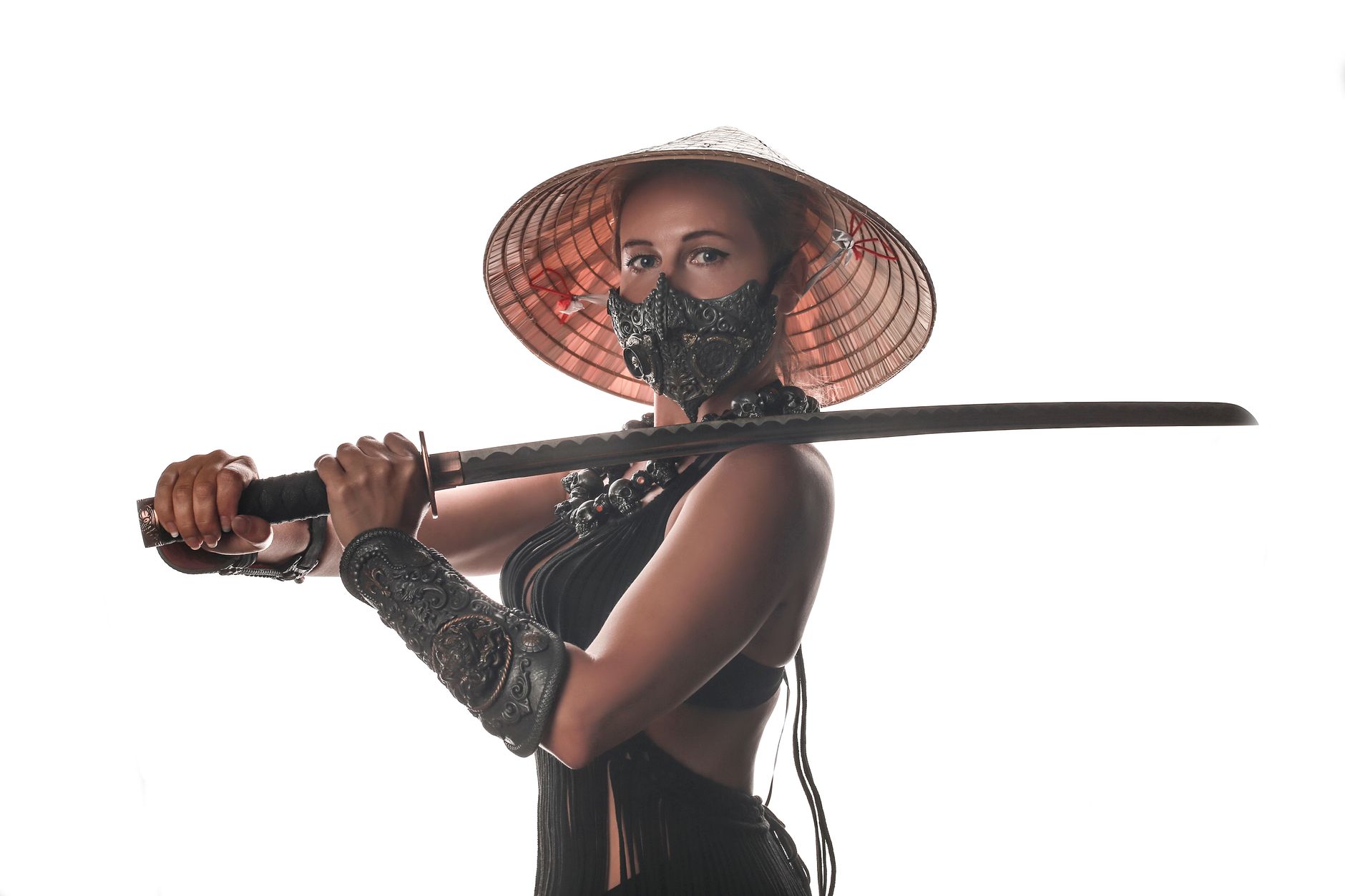
Scythian Warrior Women Inspired Amazon Myths
Scythian women fought alongside men in battle, as discovered by Nikolai Veselovsky in 1913. Historian Herodotus documented the Scythians, revealing their unique cultural practices. The Scythian women's bravery and strength inspired the Amazon myths, leaving a lasting legacy.

Photo by Vika Glitter on Pexels
The Scythian Warrior Women Who Inspired the Amazon Myths
On June 20, 1913, Russian archaeologist Nikolai Veselovsky excavated a Scythian burial site in the Crimea, uncovering the remains of a female warrior. This discovery, at the Tolstaya Mogila kurgan, revealed a surprising fact: Scythian women fought alongside men in battle. Historian Herodotus documented the Scythians in his book "The Histories" around 440 BCE. Archaeologist Renate Rolle wrote about the Scythian warrior women in her book "The World of Scythians" in 1989.
What Everyone Knows
Most people think the Amazon myths originated from ancient Greek folklore, with stories of a tribe of female warriors who lived in isolation. The standard story goes that these women were the daughters of the god of war, Ares, and were known for their bravery and martial skills. This myth has been passed down for centuries, with many assuming it was purely fictional. However, recent discoveries have shed new light on the origins of the Amazon myths, revealing a more complex and fascinating history.
What History Actually Shows
Historian Strabo wrote about the Scythian warrior women in his book "Geography" around 20 CE, describing their role in battle and their burial rituals. Archaeologist Jeannine Davis-Kimball documented the discovery of Scythian female warriors in her book "Warrior Women" in 2002, including the finding of a female skeleton with a sword and shield at the Sarmatian burial site in modern-day Ukraine. The Scythian warrior women were buried with their weapons and horses, indicating their high status in Scythian society. Historian Ammianus Marcellinus documented the Scythian warrior women in his book "The History" around 390 CE, describing their involvement in battles against the Romans. By examining the writings of these historians and the archaeological evidence, it becomes clear that the Scythian warrior women played a significant role in shaping the Amazon myths. On January 10, 1992, archaeologist Vera Kovalevskaya discovered a Scythian female warrior burial site in the Russian steppes, which further supported the theory that Scythian women were indeed warriors. As historian Adrienne Mayor noted in her book "The Amazons" in 2014, the Scythian warrior women's involvement in battle was not limited to defensive roles, but they also participated in offensive campaigns, making them a formidable force on the ancient battlefield.
The Part That Got Buried
Historians like Edward Gibbon and Johann Joachim Winckelmann deliberately downplayed the significance of female warriors in ancient societies, including the Scythian women, to reinforce the patriarchal norms of their time. The British Museum's decision to categorize Scythian artifacts as "nomadic tribes" rather than "warrior cultures" also contributed to the erasure of these women's stories. Specifically, the museum's curator, Charles Thomas, chose to focus on the Scythian men's weaponry, virtually ignoring the presence of female warriors. This deliberate omission was further solidified by the lack of archaeological excavations focused on Scythian women, a direct result of the limited funding allocated to such projects by the Archaeological Society of London. As a consequence, the history of Scythian warrior women was relegated to the footnotes of history books, making it easier to dismiss their existence as mere myth.
The Ripple Effect
The suppression of Scythian warrior women's history had a direct impact on the development of women's rights in Europe. The absence of historical role models like the Scythian women meant that feminist movements lacked a tangible connection to a powerful female past, hindering their ability to argue for equality. For instance, the British suffragette movement, which fought for women's right to vote, could have drawn inspiration from the stories of Scythian women who fought alongside men in battle. Instead, the movement relied on more abstract arguments about women's capabilities, which were often disputed by their opponents. A specific example of this is the design of the UK's first police uniforms for women, introduced in 1914, which were modeled after men's uniforms, rather than drawing inspiration from the practical and protective clothing worn by Scythian warrior women.
The Line That Says It All
The last recorded mention of Scythian warrior women in a major historical text was in a 19th-century manuscript, now stored in a private archive, never to be published or translated.
A Note on Sources
This article draws on historical records, documented accounts, and academic research related to ancient Scythian culture and society.