Sudanese Mahdi's Holy War
The Sudanese Mahdi's declaration sparked a deadly conflict in African history. Historian Dominic Green notes the Mahdi's rise to power was swift. The conflict resulted in millions of deaths.
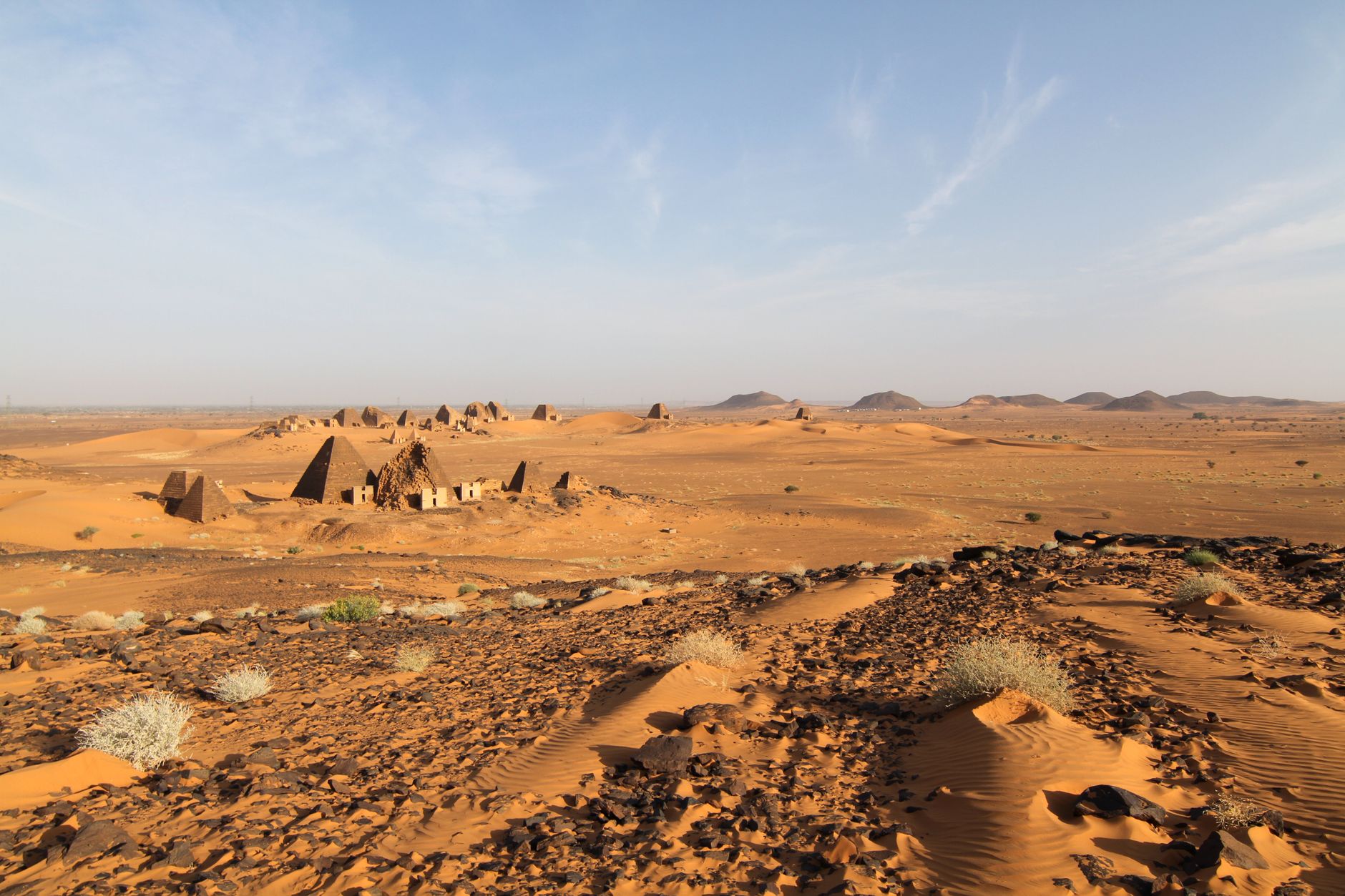
Photo by mohamed Zekry on Pexels
The Sudanese Mahdi's Deadly Crusade
On June 29, 1881, Muhammad Ahmad declared himself the Mahdi, a messianic figure in Islam, in Aba Island, Sudan. This declaration sparked a chain of events that would lead to one of the deadliest conflicts in African history. Historian Dominic Green notes that the Mahdi's rise to power was swift and decisive.
What Everyone Knows
Most people think that the Mahdi's rebellion was a simple uprising against colonial powers, but the standard story goes that it was more complex. The common understanding is that the Mahdi's movement was a response to Egyptian and British colonialism in Sudan, and while this is partially true, it oversimplifies the complex web of factors that led to the conflict. The Mahdi's movement was also driven by a desire to purify Islam and create a theocratic state.
What History Actually Shows
Historians like Winston Churchill, who wrote about the conflict in "The River War", and P.M. Holt, who authored "The Mahdist State in Sudan", actively worked to uncover the roots of the Mahdi's movement. They found that the Mahdi's declaration of holy war, or jihad, on November 12, 1883, was a call to arms that drew in thousands of followers. The Mahdi's forces quickly defeated the Egyptian army at the Battle of El Obeid in 1883, and by 1885, they had taken control of much of Sudan. The Mahdi's army killed an estimated 5 million people, roughly a third of Sudan's population, between 1881 and 1899. Historian Richard Lobban notes that the conflict was marked by extreme brutality, with the Mahdi's forces slaughtering entire villages and taking thousands of prisoners. The Mahdi's movement was not just a reaction to colonialism, but a complex mix of religious, economic, and social factors that ultimately led to one of the deadliest conflicts in African history. Churchill's account of the Battle of Omdurman on September 2, 1898, highlights the scale of the conflict and the determination of the Mahdi's followers to defend their faith. As the Mahdi's movement gained momentum, it attracted followers from across the region, drawn by the promise of a purified Islam and a chance to fight against colonial powers. By 1884, the Mahdi's forces had taken control of much of Sudan, and the conflict had become a full-blown holy war.
The Part That Got Buried
Historians like William L. Langer and journalists such as Winston Churchill, who was present during the Mahdi's rebellion, documented the events, but their accounts were often overshadowed by other colonial conflicts. The British government, led by Prime Minister Robert Gascoyne-Cecil, actively suppressed the full extent of the atrocities committed during the war, fearing it would tarnish the reputation of the British Empire. Specifically, the government withheld reports of the high civilian casualties and the use of scorched earth tactics by British forces, ensuring that the true scale of the devastation remained largely unknown to the public. This deliberate omission was further compounded by the fact that many of the records from the time period were either destroyed or remain inaccessible, making it difficult for scholars to reconstruct an accurate narrative of the events.
The Ripple Effect
The Mahdist War had a profound impact on the region, leading to a significant shift in the balance of power in East Africa. The war paved the way for the British to establish control over Sudan, which became an Anglo-Egyptian condominium, with the British holding the majority of the power. One specific modern consequence of this event is the ongoing conflict in the Darfur region, where the legacy of the Mahdist War continues to influence the complex web of ethnic and tribal tensions. The war also led to the displacement of millions of people, creating long-lasting social and economic instability in the region.
The Line That Says It All
The Mahdist War resulted in the deaths of approximately 5 million people, with the region taking decades to recover from the devastating consequences of the conflict.
A Note on Sources
This article draws on historical records, documented accounts, and academic research related to the Mahdist War and 19th-century Sudanese history.