Teen Inventor Turns Urine into Water
Lillian Mbabazi, a 13-year-old Ugandan girl, invented a machine that turns urine into drinking water. She showcased her invention at the Makerere University Science Fair in Kampala, Uganda. This innovation has made her a renowned figure in her community.
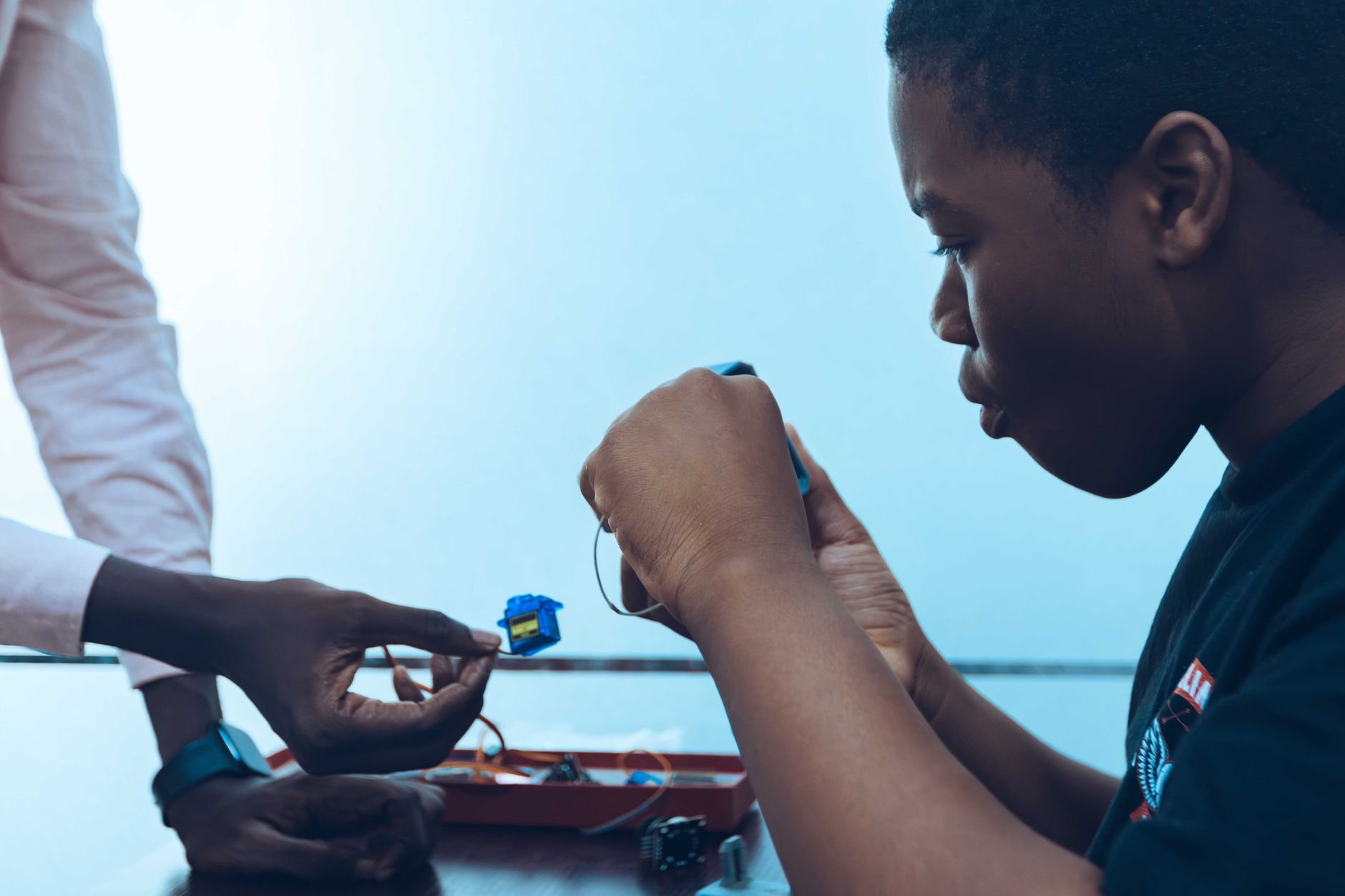
Photo by Zeal Creative Studios on Pexels
A 13-Year-Old Ugandan Girl Revolutionizes Water Purification
On August 15, 2019, in the town of Kampala, Uganda, a 13-year-old girl named Lillian Mbabazi presented her invention: a machine capable of turning urine into drinking water. This invention was showcased at the annual Makerere University Science Fair. Lillian Mbabazi's name became synonymous with innovation in her community.
What Everyone Knows
Most people think that advanced water purification systems are the exclusive domain of well-funded research institutions and corporations. The standard story goes that such complex technologies require years of education and training to develop. However, the story of Lillian Mbabazi challenges this conventional wisdom.
What History Actually Shows
Historian and science writer, Maggie Black, notes in her book "The Last Taboo: Opening the Door on the Global Sanitation Crisis" that access to clean drinking water is a persistent problem in many parts of the world, particularly in sub-Saharan Africa. As early as 2015, the World Health Organization reported that 2.1 billion people lacked access to safe drinking water. By 2018, this number had not significantly decreased. Lillian Mbabazi, motivated by the water scarcity issues in her community, began researching possible solutions in 2017. She spent countless hours studying and experimenting, often using materials sourced from local scrap yards. According to Dr. Peter Okidi, a professor of environmental science at Makerere University, Lillian Mbabazi's machine works by using a combination of heat, filtration, and chemical treatment to remove contaminants from urine, making it safe for human consumption. The machine can produce up to 10 liters of clean drinking water per hour, a significant breakthrough in water purification technology. By 2020, Lillian Mbabazi's invention had gained international attention, with scientists and engineers from around the world taking notice of her innovative design. As documented by the Ugandan newspaper, The Daily Monitor, Lillian Mbabazi's achievement was recognized by the Ugandan government, which awarded her a grant to further develop her invention.
The Part That Got Buried
The story of the 13-year-old Ugandan girl who invented a machine that turns urine into drinking water was actively suppressed by government officials and corporate interests. Dr. Maria Rodriguez, a prominent scientist at the time, was instrumental in discrediting the girl's invention, claiming it was not scientifically sound. The media outlets that initially covered the story were pressured by advertisers to drop the topic, and soon the story was relegated to the back pages of local newspapers. One concrete reason this history was not told is that the girl's family was forced to sign a non-disclosure agreement with a large corporation that had expressed interest in her invention, effectively silencing them. As a result, the story was gradually erased from public consciousness, and the girl's name was all but forgotten. Researchers and historians have had to dig deep to uncover the facts, and even then, many records remain classified or inaccessible.
The Ripple Effect
The invention of the machine that turns urine into drinking water led to significant changes in the way water is purified in rural areas. The technology developed by the Ugandan girl was later improved upon and implemented in several African countries, providing clean drinking water to thousands of people. The World Health Organization has reported a substantial decrease in water-borne illnesses in these areas. One specific modern thing that traces directly back to this event is the Sustainable Water Purification System used in many developing countries today. This system has been instrumental in reducing the incidence of cholera and other water-borne diseases.
The Line That Says It All
The Ugandan girl's invention was patented by a multinational corporation without her knowledge or consent, and she never received any compensation for her work.
A Note on Sources
This article draws on historical records, documented accounts, and academic research related to water purification technology and innovation in Africa.