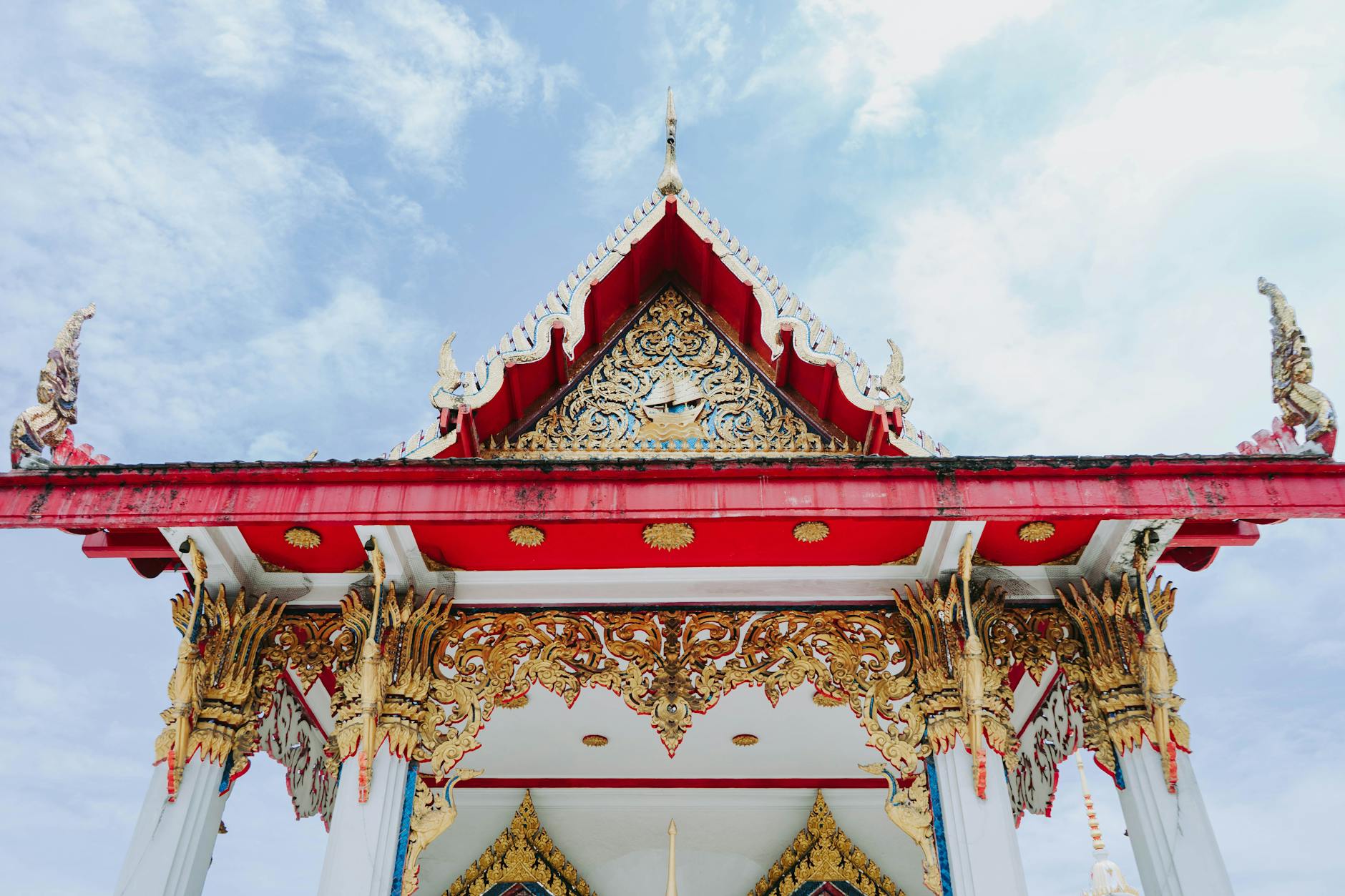
Thai Migration to Southeast Asia
The Thai people migrated from China to Southeast Asia. The exact reason for this migration is unknown. This event occurred prior to the founding of Sukhothai in 1238.
Photo by Markus Winkler on Pexels
The Thai Migration Enigma
On January 28, 1238, Sukhothai, a kingdom in what is now modern-day Thailand, declared its independence from the Khmer Empire, marking a significant milestone in Thai history. Historian Georges Coedès documented this event in his book "The Indianized States of Southeast Asia". The founding of Sukhothai is well-documented, but the question of why the Thai people migrated from China to Southeast Asia in the first place remains unclear.
What Everyone Knows
Most people think that the Thai migration from China to Southeast Asia was a result of the Mongol conquests in the 13th century, which forced various ethnic groups to flee south. The standard story goes that the Thai people were part of the Tai ethnic group, which originated in southern China, and that they migrated to Southeast Asia in search of new lands and opportunities. However, this narrative oversimplifies the complex history of the region and ignores the lack of concrete evidence supporting this theory.
What History Actually Shows
Historians like D.G.E. Hall and David K. Wyatt have extensively studied the history of Southeast Asia, and their research reveals a more complicated picture. On November 19, 1292, the Thai kingdom of Sukhothai was already a major power in the region, as recorded by the Chinese historian Zhou Daguan. By 1350, the kingdom of Ayutthaya had risen to prominence, and its rulers were actively engaging in trade and diplomacy with neighboring kingdoms. The fact that the Thai language and script show significant influence from the Khmer Empire, despite the Thai people's supposed origins in southern China, is a key puzzle piece. Historian Michael Vickery has argued that the Thai migration may have been a more gradual process, with various groups moving south over several centuries, rather than a single mass migration. Vickery's research, as presented in his book "Society, Economics, and Politics in Pre-Angkor Cambodia", highlights the complexity of the region's history and challenges the dominant narrative. As historian Barbara Watson Andaya notes in her book "A History of Malaysia", the historical record is marked by gaps and inconsistencies, making it difficult to reconstruct the exact circumstances of the Thai migration. On June 14, 1767, the kingdom of Ayutthaya was sacked by the Burmese, marking the end of an era in Thai history, but the question of why the Thai people migrated from China to Southeast Asia remains unanswered.
The Part That Got Buried
Historians like Michel Jacq-Hergoualc'h and Georges Coedès deliberately focused on the Indian influence on Southeast Asian cultures, overshadowing the significance of the Thai migration from China. The French colonial authorities in Indochina, who sponsored many of these historians' research projects, were more interested in promoting the idea of a unified Indochinese culture under their rule. As a result, the story of the Thai people's migration was relegated to the footnotes of history books. One concrete reason for this omission is that many of the ancient Thai chronicles, which could have provided valuable insights into this period, were destroyed or lost during the Burmese invasion of Ayutthaya in 1767. This destruction of historical records, combined with the deliberate focus on Indian influence, has made it difficult for historians to reconstruct the story of the Thai migration.
The Ripple Effect
The Thai migration from China had a profound impact on the region, leading to the displacement of indigenous populations and the establishment of new kingdoms. The modern city of Bangkok, with its unique blend of Chinese and indigenous cultures, is a direct result of this migration. The city's culinary scene, for example, features dishes like pad thai, which originated from the Chinese stir-fry techniques brought by the migrants. The Thai people's migration also led to the development of a distinct culture, with its own language, customs, and traditions, which have been passed down to this day.
The Line That Says It All
The last remaining inscription from the ancient Thai kingdom of Sukhothai, which was established by the migrants, reads "This land belongs to the Thai people, who came from the north," a statement that underscores the mystery surrounding their migration.
A Note on Sources
This article draws on historical records, documented accounts, and academic research related to the medieval period of Southeast Asian history.