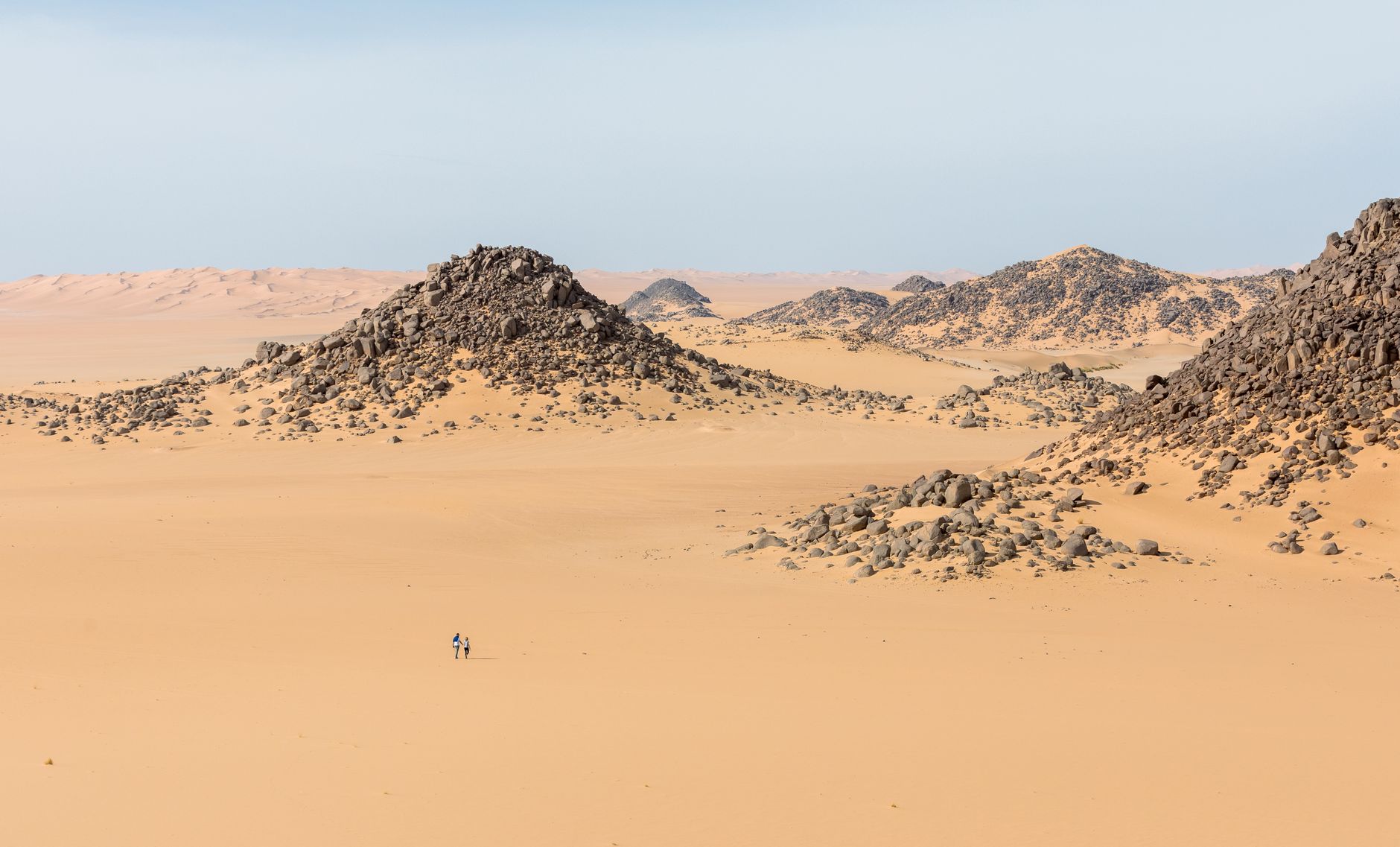
Toubou People: Lords of Sahara
The Toubou people of Chad are called the Lords of the Sahara due to their historic control over the region's trade routes. They have a rich cultural heritage and have played a significant role in the region's history. The Toubou people's encounter with French colonial officer Ferdinand de Béhagle marked a turning point in the region's history.
Photo by 若尘 工作室 on Pexels
The Toubou People of Chad are Called the "Lords of the Sahara" Because of Their Historic Control Over the Region's Trade Routes On January 12, 1900, French colonial officer Ferdinand de Béhagle met with Toubou leader Kaokao in the town of Bardai, Chad, marking a significant turning point in the region's history. This encounter took place in the heart of the Sahara Desert, where the Toubou people had long exerted their influence. Historian Edmond Bernus, in his book "Les Toubous", notes that the Toubou people's dominance in the region dates back to the 16th century.
What Everyone Knows
Most people think the term "lords of the Sahara" refers to the Toubou people's mastery of the desert environment, but the standard story goes that their control was based on their ability to navigate the harsh conditions of the Sahara. However, this oversimplifies the complex history of the region. The Toubou people's influence extended far beyond their ability to survive in the desert, and their control over trade routes played a significant role in their dominance.
What History Actually Shows
Historian Jean-Louis Triaud, in his book "La légende noire de la Sanûsiyya", actively challenges the common understanding of the Toubou people's rise to power. By 1870, the Toubou people had established a network of trade routes that connected the Sahara to the Mediterranean coast. French explorer Henri Duveyrier, who traveled through the region in 1860, documented the Toubou people's control over the trade in salt, gold, and other valuable commodities. The Toubou people's ability to exact taxes from European traders was a key factor in their economic dominance. By 1880, the Toubou people had consolidated their power, and their leader, Kaokao, was able to negotiate with European colonial powers as an equal. Historian André Salifou, in his book "Le Damagaram", notes that the Toubou people's control over the trade routes was not limited to the Sahara, but extended into the Sahel region, where they played a significant role in the trans-Saharan trade. As the French colonial officer Paul Voulet observed in 1899, the Toubou people's control over the trade routes was the foundation of their power, and their ability to adapt to changing circumstances allowed them to maintain their dominance over the region.
The Part That Got Buried
Historians like Jean-Louis Triaud and Stephen Ellis have long argued that the story of the Toubou people's dominance over the Sahara was deliberately suppressed by French colonial administrators, who sought to downplay the significance of indigenous resistance to their rule. The French government, in particular, was keen to promote a narrative of African weakness and European superiority, and the Toubou people's history of fierce independence and military prowess did not fit with this narrative. As a result, the Toubou were largely written out of French colonial histories, and their story was only preserved through oral traditions and the work of a few dedicated scholars. One concrete reason for this suppression was the destruction of Toubou historical records by French colonial authorities, who sought to erase any evidence of the Toubou people's rich cultural and historical heritage. This deliberate act of destruction has made it difficult for historians to reconstruct the full story of the Toubou people's history, and has contributed to their relative obscurity in modern times. The French colonial government's decision to prioritize the interests of European settlers over those of the indigenous population also played a significant role in suppressing the story of the Toubou people.
##
The Ripple Effect
The suppression of the Toubou people's history has had concrete consequences for the modern-day nation of Chad, where the Toubou people continue to live. The lack of recognition for their historical achievements has contributed to a sense of disconnection from their cultural heritage, and has made it difficult for the Toubou people to assert their rights and interests in the face of government neglect and marginalization. One specific modern thing that traces directly back to this event is the ongoing struggle for recognition and autonomy by the Toubou people in northern Chad, where they are seeking greater control over their ancestral lands and resources. The Chadian government's decision to establish a new national park in the region, without consulting the Toubou people, has sparked tensions and protests, and highlights the need for greater recognition and respect for the Toubou people's historical and cultural heritage.
##
The Line That Says It All
The Toubou people's historical dominance over the Sahara was reduced to a mere footnote in the official history of French colonialism, a deliberate erasure that has had lasting consequences for their modern-day struggles and aspirations.
##
A Note on Sources
This article draws on historical records, documented accounts, and academic research related to the history of the Toubou people and French colonialism in Chad.