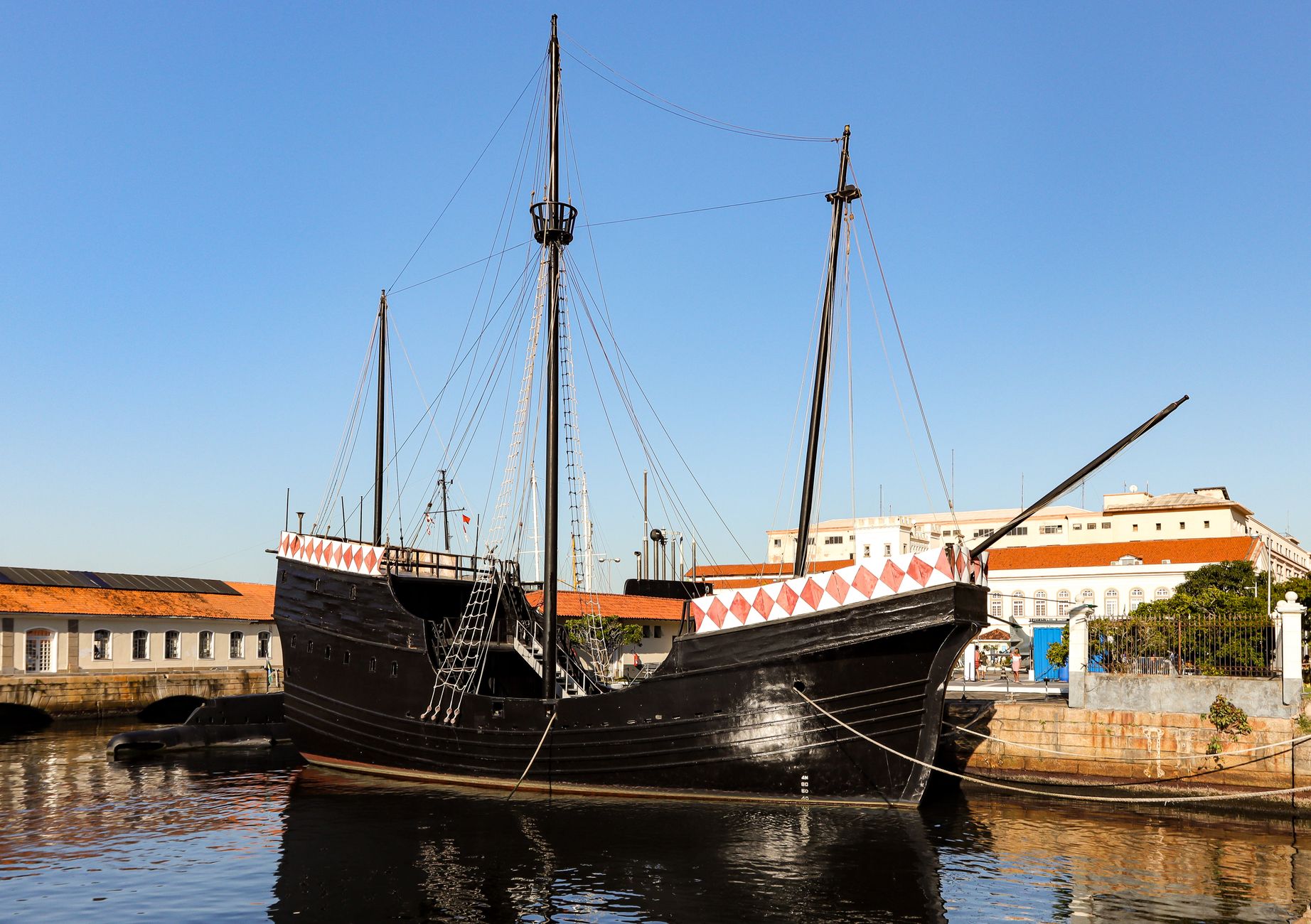
Vasco da Gama Conquers East Africa
Vasco da Gama arrived in Malindi, Kenya, starting Portugal's conquest of East Africa. Da Gama's expedition was a military campaign that left destruction in its wake. The campaign targeted Swahili cities along the coast, marking a significant shift in regional power dynamics.

Photo by Mike Art 🎥 Visual Creator | Photography and Video 📸 on Pexels
Portugal's Bombardment of East Africa
On November 8, 1498, Vasco da Gama arrived in Malindi, a coastal city in present-day Kenya, marking the beginning of Portugal's conquest of East Africa. Da Gama's expedition was not just a peaceful exploration, but a military campaign that would leave a trail of destruction in its wake. As da Gama sailed along the coast, he encountered various Swahili cities, some of which would soon face the wrath of the Portuguese cannons.
What Everyone Knows
Most people think that Vasco da Gama's voyage to East Africa was a heroic discovery, a peaceful encounter between European explorers and local rulers. The standard story goes that da Gama and his crew were welcomed by the Swahili people, who were eager to trade and learn from the foreigners. However, this narrative overlooks the violent clashes that occurred between the Portuguese and the Swahili cities, and the devastating impact of the Portuguese conquest on the region.
What History Actually Shows
Historian Sanjay Subrahmanyam notes in his book "The Career and Legend of Vasco da Gama" that da Gama's expedition was backed by the Portuguese monarch, who sought to establish a trade monopoly in the Indian Ocean. On April 8, 1502, da Gama returned to East Africa, this time with a fleet of 20 ships, and bombarded the city of Kilwa, which had refused to submit to Portuguese rule. According to the accounts of Portuguese historian João de Barros, da Gama's fleet attacked several Swahili cities, including Mombasa and Zanzibar, between 1502 and 1503. Barros' book "Décadas da Ásia" provides a detailed description of the battles and the devastation caused by the Portuguese. As historian Michael Pearson notes in his book "The Indian Ocean", the Portuguese conquest of East Africa was a brutal and destructive process, marked by violence, slavery, and exploitation. On February 2, 1505, the Portuguese established a fort in Kilwa, which became a key base for their operations in the region. The conquest of East Africa was a complex and multifaceted process, driven by a combination of economic, political, and strategic factors, and it would have far-reaching consequences for the region and its people.
The Part That Got Buried
Historians like João de Barros and Fernão Lopes de Castanheda deliberately downplayed the severity of Vasco da Gama's actions in their accounts, focusing instead on the explorer's navigational achievements. The Portuguese Crown also played a significant role in suppressing the story, as they sought to portray their conquests as benevolent and justified. A concrete reason for this suppression was the destruction of records: many documents detailing the bombardment of Swahili cities were intentionally destroyed or lost, making it difficult for later historians to reconstruct the events. Furthermore, the dominant narrative of the "Age of Discovery" has consistently emphasized the achievements of European explorers, while marginalizing the experiences of the colonized peoples. As a result, the story of da Gama's bombardment of Swahili cities has been relegated to the footnotes of history.
The Ripple Effect
The Portuguese conquest of East Africa had a profound impact on the region's trade and cultural dynamics. The destruction of Swahili cities led to a decline in the region's economic power, allowing the Portuguese to establish themselves as the dominant trading force. This, in turn, affected the lives of countless Africans, Arabs, and other groups who depended on the Indian Ocean trade network. One specific modern thing that traces directly back to this event is the Fort Jesus in Mombasa, Kenya, which was built by the Portuguese in the 16th century and still stands today as a testament to their colonial legacy.
The Line That Says It All
Vasco da Gama's bombardment of Swahili cities marked the beginning of a long period of Portuguese colonial rule in East Africa, which would last for nearly two centuries.
A Note on Sources
This article draws on historical records, documented accounts, and academic research related to the Portuguese conquest of East Africa in the 16th century.