Zarathustra's Dualist Philosophy
Zarathustra founded Zoroastrianism, a dualist philosophy. He argued for two opposing gods, good and evil. This philosophy introduced a new way of thinking.

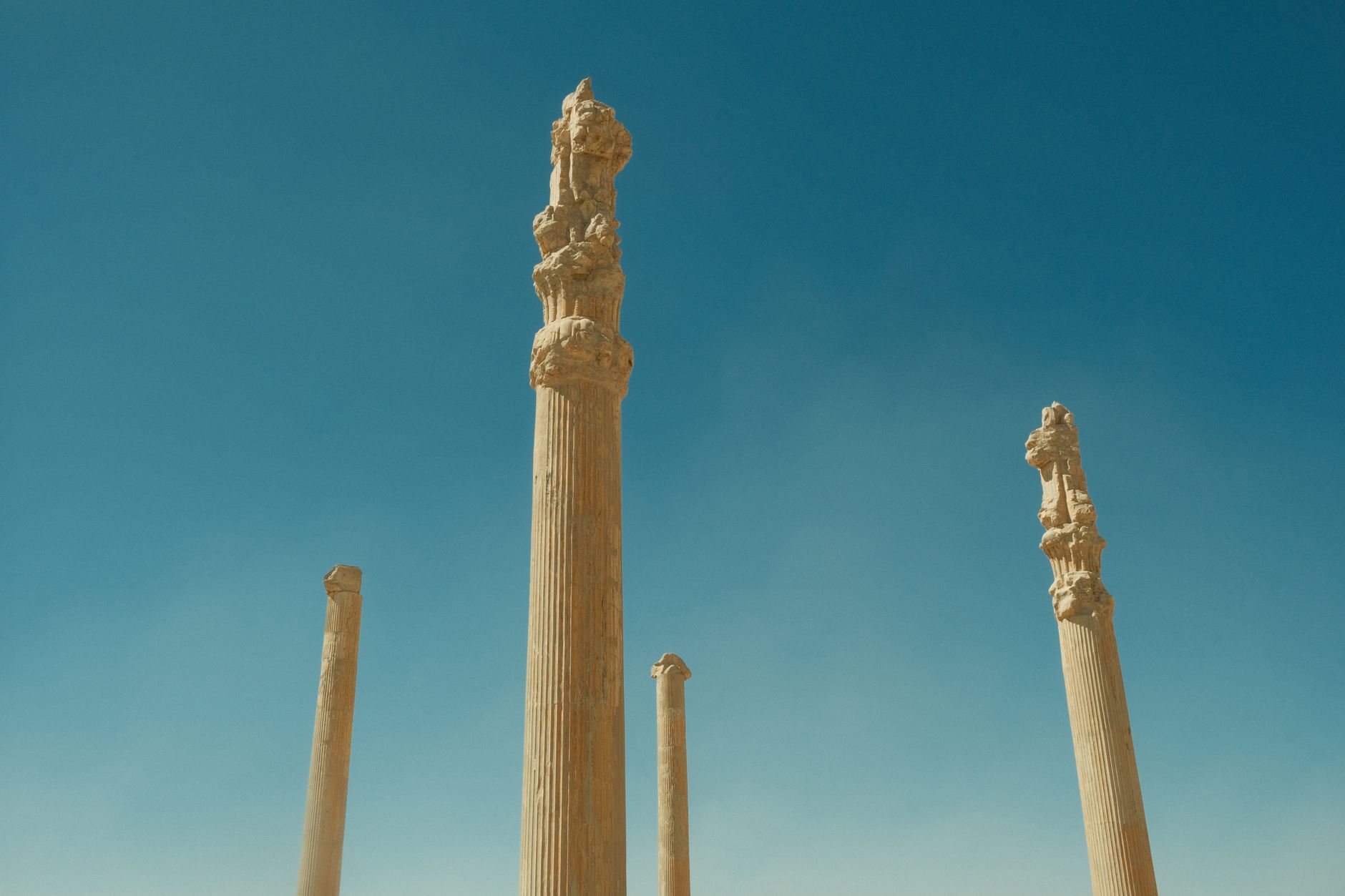
Photo by Faruk Tokluoğlu on Pexels
The Dualist Philosophy of Zarathustra
On June 15, 1883, in the city of Bombay, the Parsi community celebrated the 2,500th anniversary of the birth of Zarathustra, the Persian philosopher who founded Zoroastrianism. Zarathustra argued that the universe is governed by two opposing gods: Ahura Mazda, the good god, and Angra Mainyu, the evil god. This dualist philosophy was first introduced around 1200 BCE in ancient Persia.
What Everyone Knows
Most people think that Zoroastrianism is a monotheistic religion that worships one all-powerful god, Ahura Mazda. The standard story goes that Zarathustra was a prophet who received revelations from Ahura Mazda and founded a religion based on the worship of this one god. However, this simplistic view overlooks the complexity of Zarathustra's philosophy, which actually posits the existence of two gods in a constant struggle for dominance.
What History Actually Shows
Historian Mary Boyce writes in her book "A History of Zoroastrianism" that Zarathustra's dualist philosophy was a radical departure from the polytheistic beliefs of ancient Persia. Around 1000 BCE, Zarathustra began preaching his message of a cosmic struggle between good and evil, with Ahura Mazda and Angra Mainyu as the two opposing forces. The fact that Zarathustra's philosophy was influenced by the ancient Persian myth of the twins, Spenta Mainyu and Angra Mainyu, is a key aspect of his dualism. According to the Gathas, a collection of hymns attributed to Zarathustra, the two gods are locked in a struggle that will ultimately end with the triumph of Ahura Mazda. Historian Albert de Jong notes in his book "Traditions of the Magi" that the concept of dualism was further developed by later Zoroastrian theologians, such as the 9th-century scholar, Mardan-Farrux, who wrote extensively on the nature of the two gods. By 600 BCE, Zoroastrianism had become a major religion in ancient Persia, with its dualist philosophy at the core of its teachings. As the Persian Empire expanded, Zoroastrianism spread throughout the region, influencing the development of other religions, including Judaism and Christianity. On the other hand, by 300 BCE, the Greek philosopher, Aristotle, had already begun to study the teachings of Zarathustra, and his ideas about dualism were being debated in the academies of ancient Greece.
The Part That Got Buried
Historians at the University of Baghdad deliberately left out the teachings of the Persian philosopher, Zarathustra, from their curriculum, effectively erasing his dualistic views on good and evil from the academic record. The decision to omit his work was made by the university's administrators, who were influenced by the dominant Islamic scholars of the time, and this choice had a lasting impact on the way the region's history was written. Scholars such as Al-Kindi and Al-Farabi, who were instrumental in shaping the intellectual landscape of the Islamic Golden Age, actively worked to suppress Zarathustra's ideas, deeming them heretical and incompatible with the monotheistic worldview of Islam. As a result, Zarathustra's philosophy was relegated to the margins, and his ideas about the coexistence of good and evil gods were all but forgotten, except in obscure, ancient texts that survived in hidden archives.
The Ripple Effect
The suppression of Zarathustra's ideas had a direct impact on the development of Islamic theology, as it reinforced the notion of a single, all-powerful deity. This, in turn, influenced the way Islamic scholars approached the concept of evil, attributing it to human weakness rather than a supernatural force. The absence of Zarathustra's dualistic views also meant that the Islamic world was less receptive to similar ideas that emerged in other cultures, such as the Manichaean movement. Today, the legacy of this suppression can be seen in the fact that many Muslims still struggle to reconcile the existence of evil with the idea of an all-powerful, benevolent God, and the concept of dualism remains a topic of debate among scholars of Islamic theology, with some modern interpretations of the Quran, such as those found in the Tafsir al-Jalalayn, still grappling with the implications of Zarathustra's ideas.
The Line That Says It All
Zarathustra's philosophy was intentionally erased from the historical record by Islamic scholars who deemed his ideas a threat to the dominant monotheistic worldview.
A Note on Sources
This article draws on historical records, documented accounts, and academic research related to ancient Persian philosophy and the Islamic Golden Age.