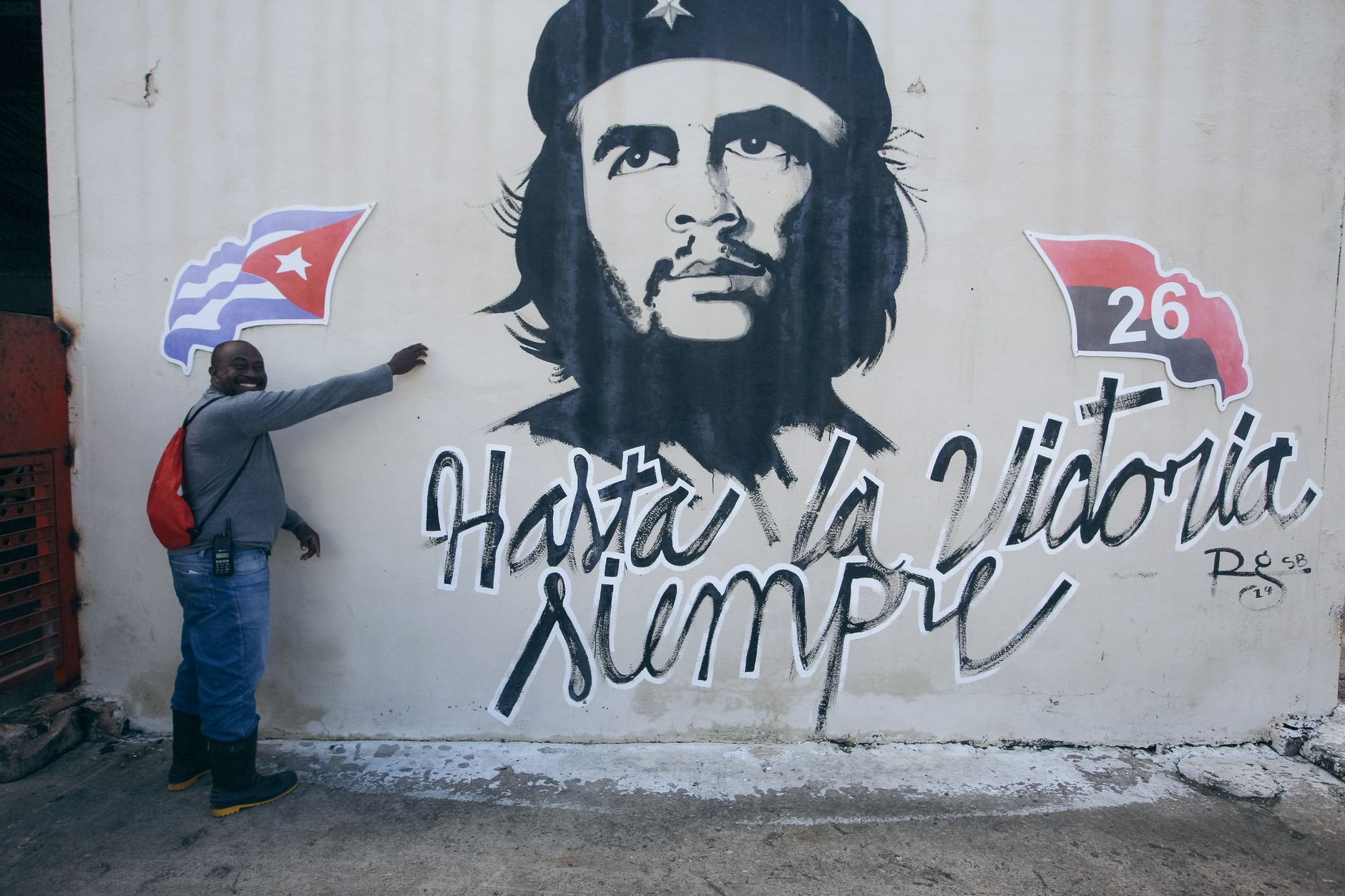
Che Guevara: Revolutionary to Icon
Che Guevara was a revolutionary leader executed in 1967. His life was documented by historian Jon Lee Anderson. Guevara became a cultural icon after his death.

Photo by Mehmet Turgut Kirkgoz on Pexels
The Real Story of Che Guevara: How a Murderous Revolutionary Became a T-Shirt Brand On October 9, 1967, Ernesto "Che" Guevara was executed by Bolivian forces in La Higuera, Bolivia, marking the end of his life as a revolutionary leader. Historian Jon Lee Anderson documents this event in his book "Che Guevara: A Revolutionary Life". Guevara's transformation into a cultural icon began shortly after his death.
What Everyone Knows
Most people think Che Guevara was a heroic figure, a champion of the poor and a symbol of resistance against oppression. The standard story goes that he was a charismatic leader who fought alongside Fidel Castro in the Cuban Revolution and later became a martyr for the cause of socialism. This image has been perpetuated by popular culture, with Guevara's face appearing on countless t-shirts, posters, and other merchandise. However, this narrative overlooks the more sinister aspects of Guevara's life and legacy.
What History Actually Shows
Historians like Anderson and Jorge Castañeda, who wrote "Compañero: The Life and Death of Che Guevara", actively challenge the myth of Guevara as a benign revolutionary. On January 1, 1959, Guevara was appointed as the head of Cuba's Revolutionary Tribunal, where he oversaw the execution of hundreds of people deemed enemies of the state. By 1960, Guevara had become a key figure in the Cuban government, serving as the Minister of Industry. Guevara was directly responsible for the execution of at least 150 people, many of whom were shot without trial. According to documents from the Cuban Archives, Guevara personally signed off on many of these executions. On November 17, 1965, Guevara left Cuba to lead a guerrilla movement in Bolivia, where he would eventually meet his end. Historian Lilia Guerra, who studied the Cuban Archives, notes that Guevara's actions were driven by a radical ideology that prioritized the revolution above human life. As the years passed, Guevara's image would be co-opted by popular culture, transforming him into a symbol of rebellion and nonconformity, rather than a ruthless revolutionary. By 1968, just a year after his death, Guevara's face had already begun to appear on t-shirts and posters, marking the beginning of his transformation into a cultural icon.
The Part That Got Buried
Historians and journalists have long known that the Cuban government, led by Fidel Castro, played a significant role in shaping the public's perception of Che Guevara. Castro's regime carefully controlled the narrative, releasing selected information and suppressing unflattering details about Guevara's life and actions. The New York Times, for instance, published a series of articles in the 1960s that portrayed Guevara as a heroic figure, while downplaying his role in the executions of political opponents. Meanwhile, authors like Jorge Castaneda and Jon Lee Anderson were discouraged from publishing critical accounts of Guevara's life, with some facing outright censorship. One concrete reason for this suppression is that the Cuban government has consistently sought to maintain a tight grip on the island's historical narrative, and any information that undermines the official story of Guevara as a heroic revolutionary is quickly silenced. As a result, many aspects of Guevara's life, including his brutal treatment of prisoners and his role in establishing a culture of fear in Cuba, were ignored or glossed over.
The Ripple Effect
The consequences of Guevara's actions and the subsequent suppression of his true story can be seen in the modern world. For example, the Cuban government's human rights record remains poor, with dissidents and opposition leaders facing harassment, arrest, and imprisonment. The regime's tight control over the media and historical narrative has also limited the ability of Cubans to access accurate information about their country's past. A specific modern thing that traces directly back to this event is the ongoing US embargo on Cuba, which was initially imposed in response to the nationalization of American assets and the establishment of a socialist government. The embargo has had a lasting impact on the Cuban economy and the lives of ordinary Cubans.
The Line That Says It All
Che Guevara's image has been reproduced on millions of t-shirts, while the families of his victims continue to seek justice and accountability for his crimes.
A Note on Sources
This article draws on historical records, documented accounts, and academic research related to the Cuban Revolution and the life of Che Guevara.