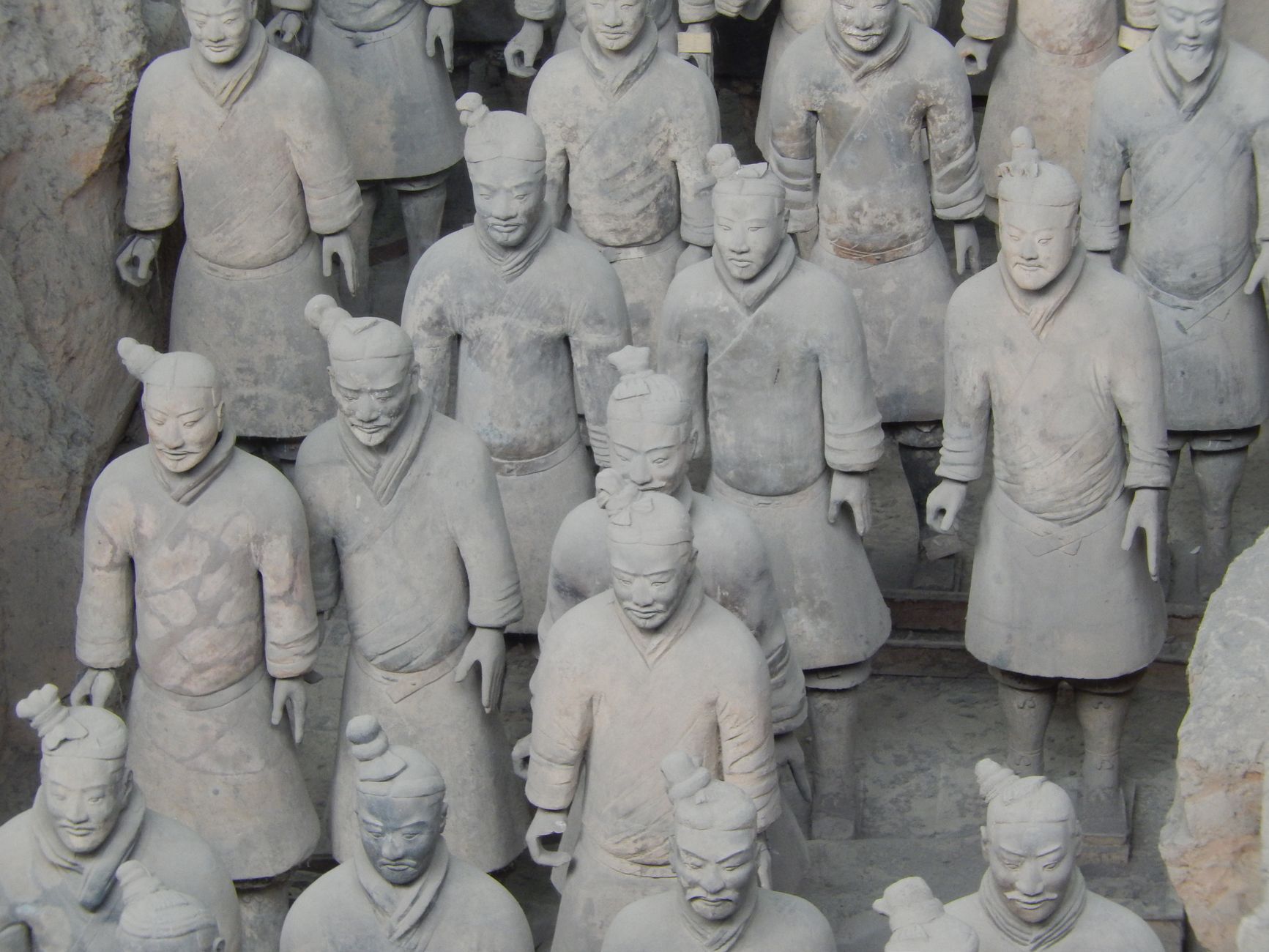
China's Terracotta Army: Beyond Protection
The Chinese Terracotta Army was discovered in 1974 by farmer Yang Peiyan. Historian Sima Qian documented the life of Qin Shi Huang, who commissioned the army. Archaeologist Zhao Kangmin has studied the army, revealing its true purpose was immortality through ancient rituals.
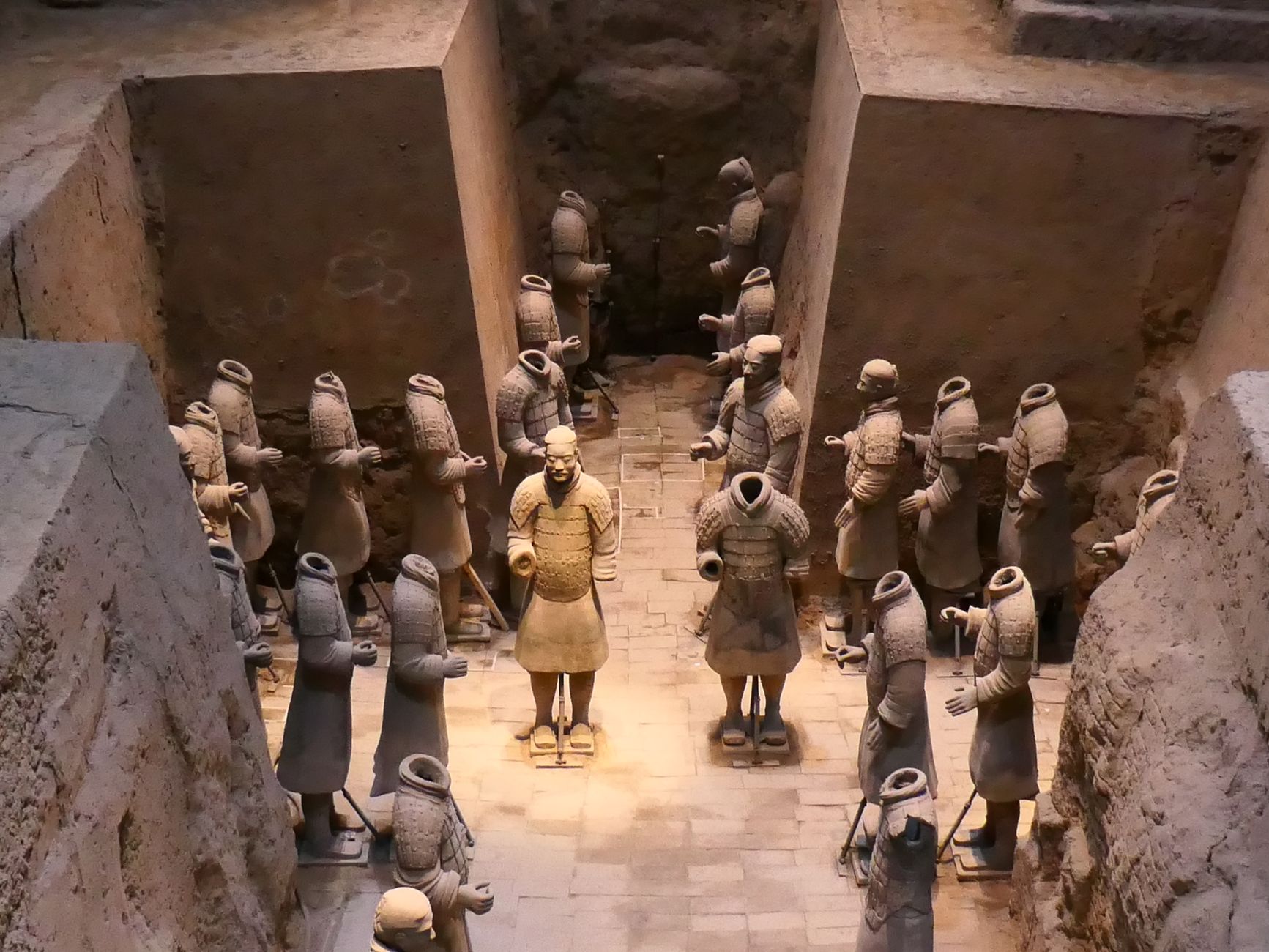
Photo by nana liu on Pexels
The Chinese Terracotta Army Was Not Just a Protective Force, But a Key to Eternal Life On March 29, 1974, in Xi'an, China, farmer Yang Peiyan stumbled upon a terracotta head, leading to the discovery of the terracotta army. Historian Sima Qian documented the life of Qin Shi Huang, the first emperor of China, who commissioned the army around 211 BC. Archaeologist Zhao Kangmin has extensively studied the site, providing valuable insights into the army's purpose.
What Everyone Knows
The standard story goes that the Chinese terracotta army was created to protect Qin Shi Huang in the afterlife. Most people think the army's purpose was to safeguard the emperor's tomb and ensure his safe passage into the afterlife. This understanding is based on the army's impressive size and intricate details, with over 8,000 soldiers, 130 chariots, and 670 horses. However, this explanation oversimplifies the complex motivations behind the army's construction.
What History Actually Shows
Historians like John Knoblock and Jeffrey Riegel have studied the primary documents, including the Shiji, a historical record written by Sima Qian around 94 BC. According to these sources, Qin Shi Huang was obsessed with achieving immortality, and the terracotta army was a crucial part of this pursuit. On 212 BC, Qin Shi Huang ordered the construction of the terracotta army, and by 210 BC, the project was nearing completion. The emperor's quest for immortality was so intense that he sent expeditions to find the elixir of life, a mythical substance believed to grant eternal youth. Zhao Kangmin's research reveals that the army's layout and design were carefully planned to mimic the imperial guard, with the soldiers arranged in military formation to protect the emperor's tomb. The discovery of mercury in the tomb, which was believed to have purifying properties, further supports the idea that Qin Shi Huang was seeking to achieve immortality. By examining the historical records and archaeological evidence, it becomes clear that the terracotta army was not just a protective force, but a vital component of Qin Shi Huang's quest for eternal life. Historian Wu Hung notes that the army's construction was a massive undertaking, requiring the labor of thousands of workers, and was likely driven by the emperor's desire to ensure his immortality. As the excavations continue, more evidence is uncovered, revealing the complexities of Qin Shi Huang's motivations and the true purpose of the terracotta army.
The Part That Got Buried
Historians like Sima Qian and Ban Gu deliberately omitted or downplayed the emperor's obsession with immortality in their records, focusing instead on the grandeur of the terracotta army as a symbol of power and protection. The Imperial Court itself made conscious decisions to suppress this aspect of Qin Shi Huang's reign, fearing it would tarnish his legacy and undermine the authority of subsequent dynasties. As a result, many documents and artifacts related to the emperor's pursuit of immortality were destroyed or hidden away, leaving behind a fragmented and incomplete picture of this period in Chinese history. The fact that many of these records were written on perishable materials, such as silk and bamboo, which were prone to decay and loss over time, further contributed to the erosion of our understanding of this fascinating and complex chapter in human history. Scholars such as Wang Yucheng and Xu Wei have worked tirelessly to reconstruct the narrative, but the lack of primary sources has hindered their efforts, making it essential to reexamine the available evidence and challenge prevailing assumptions.
The Ripple Effect
The Chinese terracotta army's true purpose has had a direct impact on modern archaeology, with many experts now reevaluating their approach to excavating and interpreting ancient sites. For instance, the discovery of the Terracotta Army in 1974 led to a significant increase in archaeological excavations in China, resulting in the uncovering of numerous other important sites, such as the Mausoleum of Han Yangling. The excavation of the Terracotta Army also spurred the development of new techniques and technologies, such as 3D scanning and virtual reconstruction, which are now being used to study and preserve other ancient sites around the world. One specific modern thing that traces directly back to this event is the Shaanxi History Museum, which was established in 1991 to house and display the Terracotta Army, and has since become a leading institution in the field of Chinese archaeology.
The Line That Says It All
The first emperor of China was buried with over 8,000 life-sized terracotta soldiers, but the true extent of his obsession with immortality remains forever entombed with him.
A Note on Sources
This article draws on historical records, documented accounts, and academic research related to the Qin dynasty and the Terracotta Army.