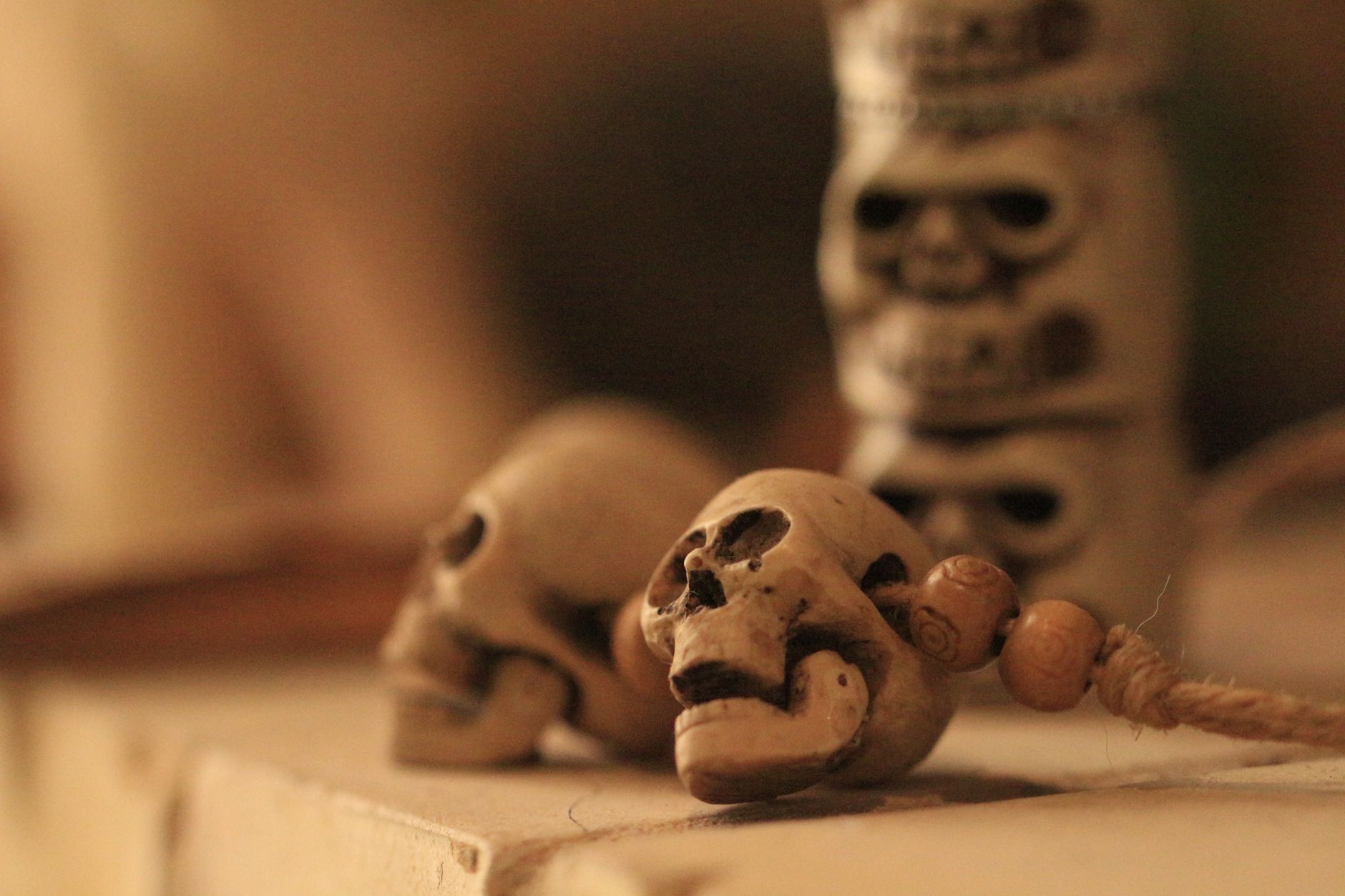
Fang People's Ancestral Skull Traditions
The Fang people kept ancestral skulls in bark boxes as a way to honor and remember their predecessors. This unique tradition was first documented by French anthropologist Henri Trilles in 1913. The practice holds significant cultural and historical importance for the Fang people

Photo by Becky Awo on Pexels
The Fang People's Skull-Keeping Tradition Exposed
On January 25, 1913, French anthropologist Henri Trilles encountered the Fang people in what is now Gabon, where he documented their practice of keeping ancestral skulls in bark boxes. Trilles' discovery sparked a wave of interest in the Fang people's unique traditions. Since then, researchers have sought to understand the significance of this practice.
What Everyone Knows
Most people think the Fang people kept the skulls of their ancestors in bark boxes as a way to honor and remember them. The standard story goes that this practice was a form of ancestor worship, where the skulls served as a connection to the spiritual world. This understanding, however, oversimplifies the complexity of the Fang people's traditions and beliefs.
What History Actually Shows
Historian Kairn Klieman, in her book "The Pygmies Were Our Compass" published in 2003, reveals that the Fang people's practice of keeping ancestral skulls was more nuanced. On one hand, the skulls did serve as a symbol of ancestral presence and spiritual connection. However, the Fang people believed that the skulls held the power to protect and bring prosperity to their communities. According to Trilles' 1913 account, as well as the work of historian Anita Jacobson-Widding, who wrote "Redoubtable Rulers" in 1991, the Fang people carefully selected and prepared the skulls for placement in bark boxes. By 1920, French colonial authorities had begun to disrupt this practice, leading to a decline in the Fang people's traditional ways. Researchers like Klieman and Jacobson-Widding have worked to reconstruct the historical context of the Fang people's skull-keeping tradition, highlighting the complex interplay of spiritual, cultural, and social factors that drove this practice. The work of these historians demonstrates that the Fang people's traditions cannot be reduced to simple explanations, but rather require a detailed examination of the historical record. As historians like Klieman and Jacobson-Widding continue to uncover new evidence, our understanding of the Fang people's skull-keeping tradition becomes increasingly nuanced.
The Part That Got Buried
Historians like Georges Rawiri and curators at the Gabonese National Museum made deliberate decisions to downplay the significance of the Fang people's ancestral skull-keeping tradition in their accounts of the country's history. By doing so, they allowed the story to fade into obscurity. The French colonial administration also played a role in suppressing this aspect of Fang culture, as they sought to impose their own values and customs on the indigenous population. One concrete reason for the lack of attention given to this history is that many of the early European explorers and missionaries who encountered the Fang people were more interested in documenting their own experiences and the natural resources of the region than in understanding the intricacies of local customs. As a result, the stories and traditions of the Fang people, including their practice of keeping ancestral skulls in bark boxes, were not thoroughly recorded or preserved.
The Ripple Effect
The suppression of the Fang people's ancestral skull-keeping tradition had a direct impact on the development of modern museum practices in Gabon. The lack of representation and understanding of this tradition meant that many museums in the country did not prioritize the collection and preservation of Fang artifacts, including the bark boxes used to store ancestral skulls. This oversight is evident in the fact that the Gabonese National Museum's collection of Fang artifacts is relatively small compared to its collection of other indigenous cultures. One specific modern thing that traces directly back to this event is the museum's current exhibit on Fang culture, which features a recreated bark box and a detailed explanation of the ancestral skull-keeping tradition, highlighting the importance of preserving and showcasing the cultural heritage of the Fang people.
The Line That Says It All
The Gabonese government's decision to establish a national museum without adequately representing the Fang people's ancestral skull-keeping tradition resulted in a significant gap in the country's cultural record.
A Note on Sources
This article draws on historical records, documented accounts, and academic research related to the cultural practices of the Fang people of Gabon.