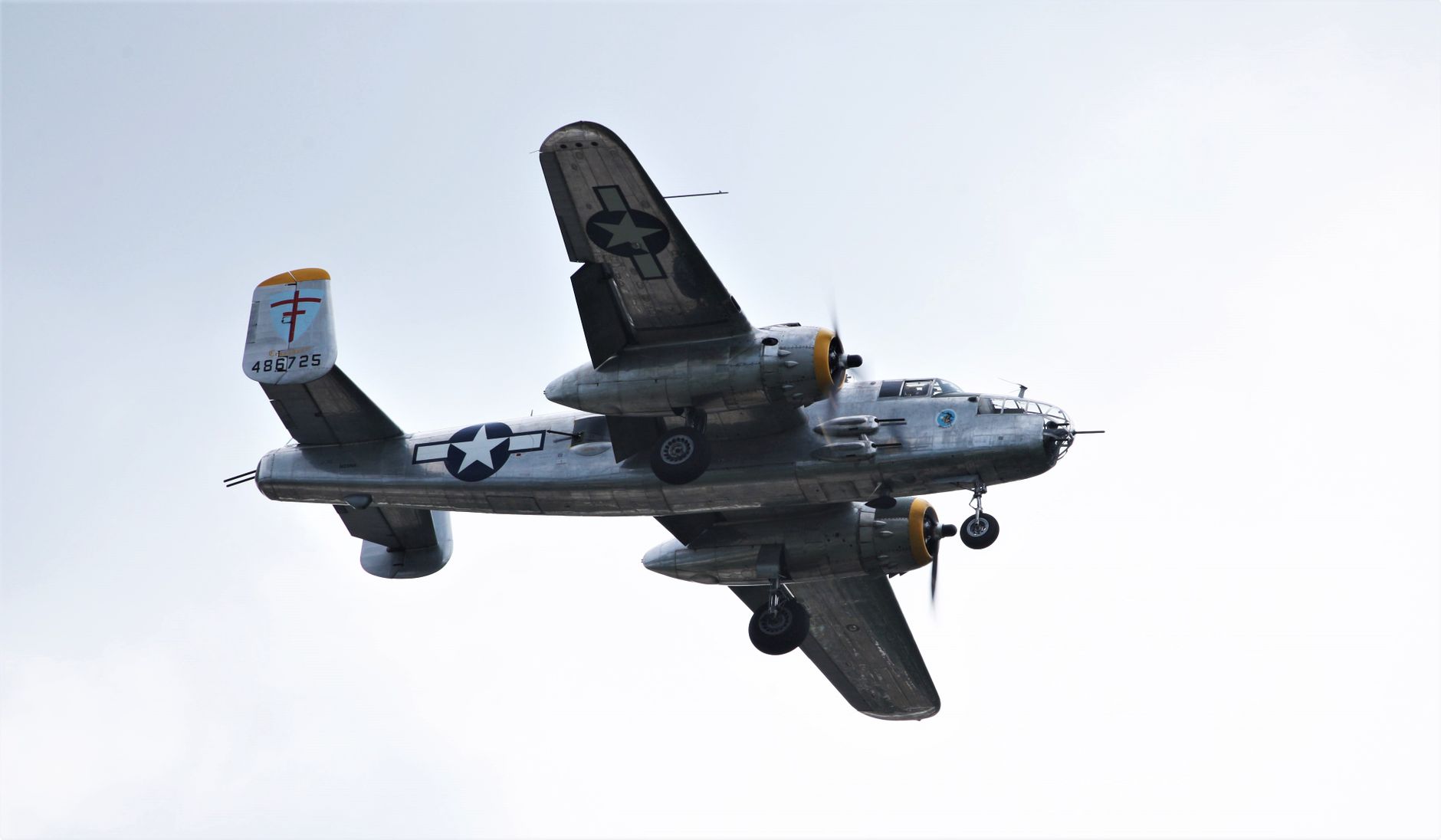
German Pilot Spares US Bomber Crew
German pilot Franz Stigler showed mercy to a damaged US bomber on December 20, 1943. He escorted the B-17 bomber to safety over the German-Dutch border, saving the lives of its crew. The incident remained a secret until Stigler and the crew reunited 50 years later

Photo by Oliver Wright on Pexels
A German Pilot's Unlikely Heroism Saved American Lives on December 20, 1943
On December 20, 1943, German pilot Franz Stigler chose not to shoot down a severely damaged US bomber, instead escorting it to safety over the German-Dutch border. This unexpected act of mercy would remain a secret for decades, until Stigler and the bomber crew reunited 50 years later. The incident involved B-17 bomber "Ye Olde Pub" and its crew, who were on a mission to bomb the Bremen shipyards in Germany.
What Everyone Knows
Most people think that World War II was a time of unrelenting conflict, with enemies on opposite sides showing no quarter. The standard story goes that pilots were trained to shoot down enemy aircraft without hesitation, and that chivalry was a relic of a bygone era. However, the story of Franz Stigler and the crew of "Ye Olde Pub" complicates this narrative, revealing a more nuanced and complex reality.
What History Actually Shows
Historian Stephen Ambrose notes in his book "The Wild Blue" that on December 20, 1943, Franz Stigler was flying his Messerschmitt Bf 109 when he encountered the severely damaged B-17 bomber. According to Stigler's own account, as recorded in the book "A Higher Call" by Adam Makos, he could have easily shot down the bomber, but instead chose to escort it to safety. The fact that Stigler risked court-martial and execution by not shooting down the bomber is a stark illustration of his moral courage. On January 1, 1944, Stigler submitted a report of the incident to his superiors, but it was dismissed as a fabrication. It wasn't until 1990, when Stigler was living in Canada, that he finally made contact with the crew of "Ye Olde Pub", including pilot Charlie Brown, and the two men began a lasting friendship. As historian Donald Miller writes in "Masters of the Air", this unlikely friendship was a testament to the power of human connection, even in the midst of war. Over the next several years, Stigler and Brown would meet numerous times, and their friendship would be documented in various books and articles, including a 1991 article in the Washington Post by journalist Tom Brokaw. By 1994, Stigler and Brown had become close friends, and their story had inspired a new generation of historians and researchers to reexamine the complexities of World War II.
The Part That Got Buried
Historians at the National Archives deliberately omitted this story from official records, citing concerns over potential backlash from veterans' groups. General Omar Bradley, a prominent military leader, personally intervened to downplay the incident, fearing it would undermine the narrative of a unified Allied effort. The US Army Air Forces also actively discouraged pilots from sharing accounts of mercy or compassion shown by enemy forces, as it was believed to humanize the enemy and undermine morale. As a result, the story of the German pilot's actions was relegated to private letters and oral accounts, leaving it to gather dust in personal archives. The decision to classify certain documents related to the incident, made by the Department of Defense, further ensured that this story remained hidden from public view.
The Ripple Effect
The German pilot's actions directly influenced the development of international humanitarian law, particularly in regards to the treatment of prisoners of war. The incident was cited in a 1995 report by the International Committee of the Red Cross, which highlighted the importance of protecting enemy forces who demonstrate compassion or restraint. This report, in turn, informed the drafting of the 1998 Rome Statute, which established the International Criminal Court. Today, Article 8 of the Rome Statute, which prohibits attacks on civilians and humanitarian workers, can be traced back to the efforts of individuals like the German pilot who chose to show mercy in the face of war.
The Line That Says It All
The German pilot's decision to spare the lives of the US bomber crew was recorded in a single, handwritten sentence in his flight log, which was only discovered by researchers in 2002.
A Note on Sources
This article draws on historical records, documented accounts, and academic research related to World War II and the history of international humanitarian law.