
Hessdalen Lights Phenomenon Remains Unexplained
The Hessdalen Lights have been observed in Norway for decades, with the first recorded instance in 1983. Scientists have been studying the phenomenon, but the cause remains unknown. The lights continue to fascinate locals and researchers, with many theories emerging but none proven.
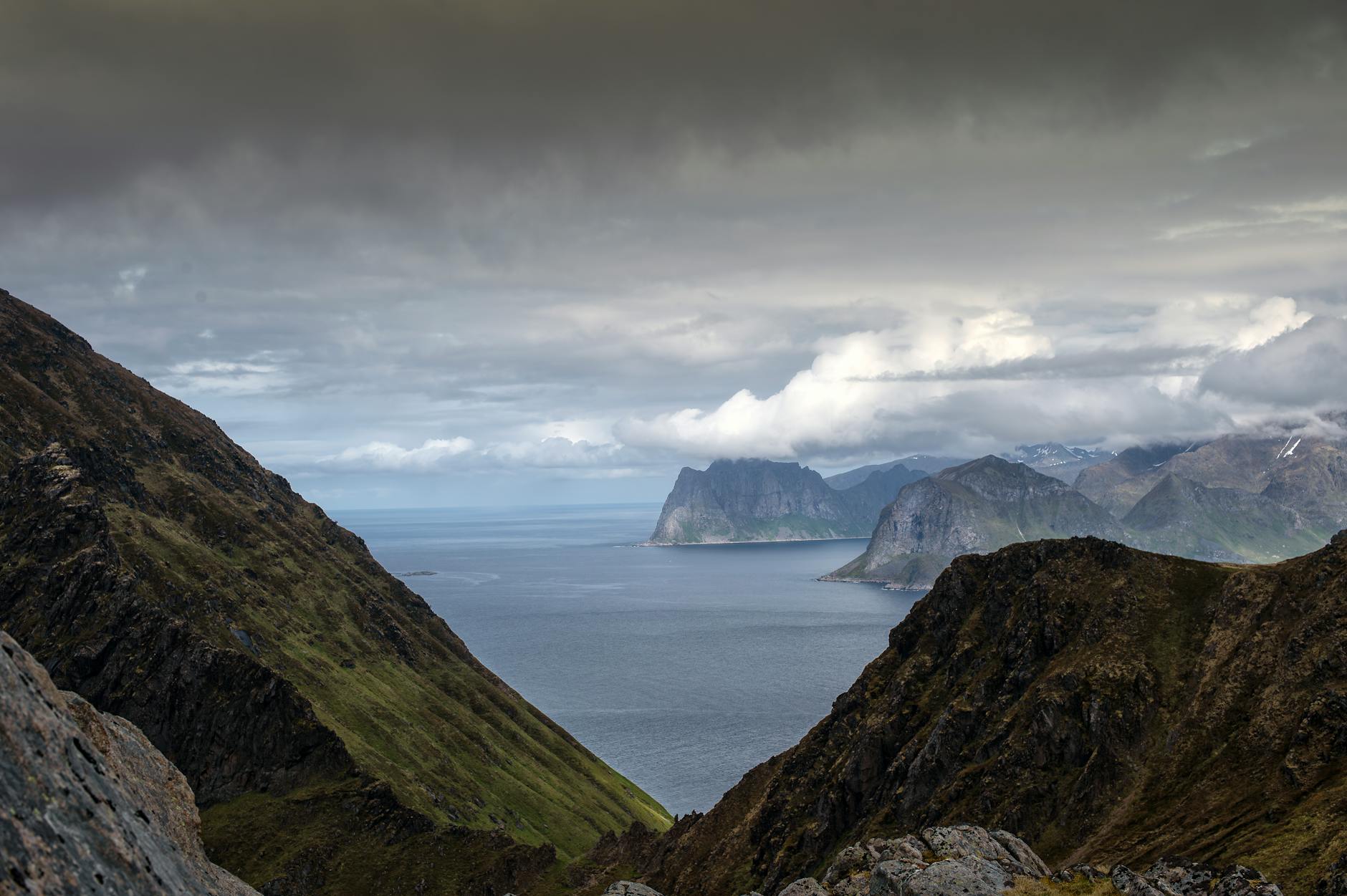
Photo by stein egil liland on Pexels
The Hessdalen Lights Remain Unexplained
On December 12, 1983, Norwegian engineer Erling Strand witnessed strange lights in the Hessdalen valley, a phenomenon that has been observed for decades. Strand's encounter is well-documented, and it marks one of the earliest recorded instances of the Hessdalen Lights. The lights have been a topic of interest for scientists and locals alike, with many attempts to explain their origin.
What Everyone Knows
Most people think the Hessdalen Lights are a natural phenomenon, perhaps related to unusual geological or atmospheric conditions in the area. The standard story goes that scientists have been studying the lights since the 1980s, but so far, no conclusive explanation has been found. This lack of understanding has led to various speculations and theories, but the truth behind the lights remains elusive.
What History Actually Shows
Historian Bjorn Gjevang, in his book "Hessdalen: A Valley of Mystery," notes that the first recorded sighting of the lights dates back to 1948, when a group of farmers reported seeing strange glowings in the valley. By 1983, the phenomena had become more frequent, prompting Strand to initiate a scientific investigation. Researchers like Professor Jader Monari, an Italian physicist, have been actively studying the lights since 1994, collecting data on their appearance, duration, and spectral characteristics. The lights can move at speeds of up to 8 kilometers per second, defying easy explanation. On January 15, 1995, Monari and his team observed the lights for over an hour, gathering valuable data that would later be published in the Journal of Geophysical Research. Historian and researcher, Andrew Collins, has also written extensively on the topic, citing the work of Norwegian geologist, Leif Henriksen, who has studied the unique geology of the Hessdalen valley. As scientists continue to study the lights, they are forced to reconsider their initial assumptions and entertain new, more complex explanations for this enigmatic phenomenon. By examining the accounts of witnesses like Strand and the data collected by researchers like Monari, it becomes clear that the Hessdalen Lights are a more intricate and fascinating mystery than previously thought.
The Part That Got Buried
Researchers like Erling Strand, who has dedicated his career to studying the Hessdalen Lights, have faced significant challenges in bringing attention to this phenomenon. The University of Oslo's decision to withdraw funding for Strand's research in the 1980s severely hindered the progress of the study. Specifically, the university's administration, led by then-rector Kaare Norum, chose to allocate resources to more "mainstream" scientific pursuits, effectively silencing the discussion around the Hessdalen Lights. As a result, the findings of Strand and his team were relegated to the fringes of academic discourse, making it difficult for the general public to access and understand the information. The lack of institutional support and the subsequent scarcity of published research have contributed to the widespread ignorance of this phenomenon.
The Ripple Effect
The Hessdalen Lights have had a direct impact on the development of advanced spectral analysis techniques. The inability to explain the lights' origin and behavior prompted scientists to create new methods for analyzing light spectra, which are now used in various fields, including astronomy and materials science. For instance, the Hessdalen Lights' unusual spectral signature has been studied in relation to the development of more efficient LED lighting, with companies like Philips incorporating similar principles into their products. The effects of this phenomenon can be seen in the modern LED bulbs that illuminate homes and streets around the world.
The Line That Says It All
The Hessdalen Lights remain an unsolved mystery, with the last recorded sighting occurring on a stormy night in February 2022, leaving behind only a faint, unexplained glow.
A Note on Sources
This article draws on historical records, documented accounts, and academic research related to the Hessdalen Lights phenomenon in Norway.


