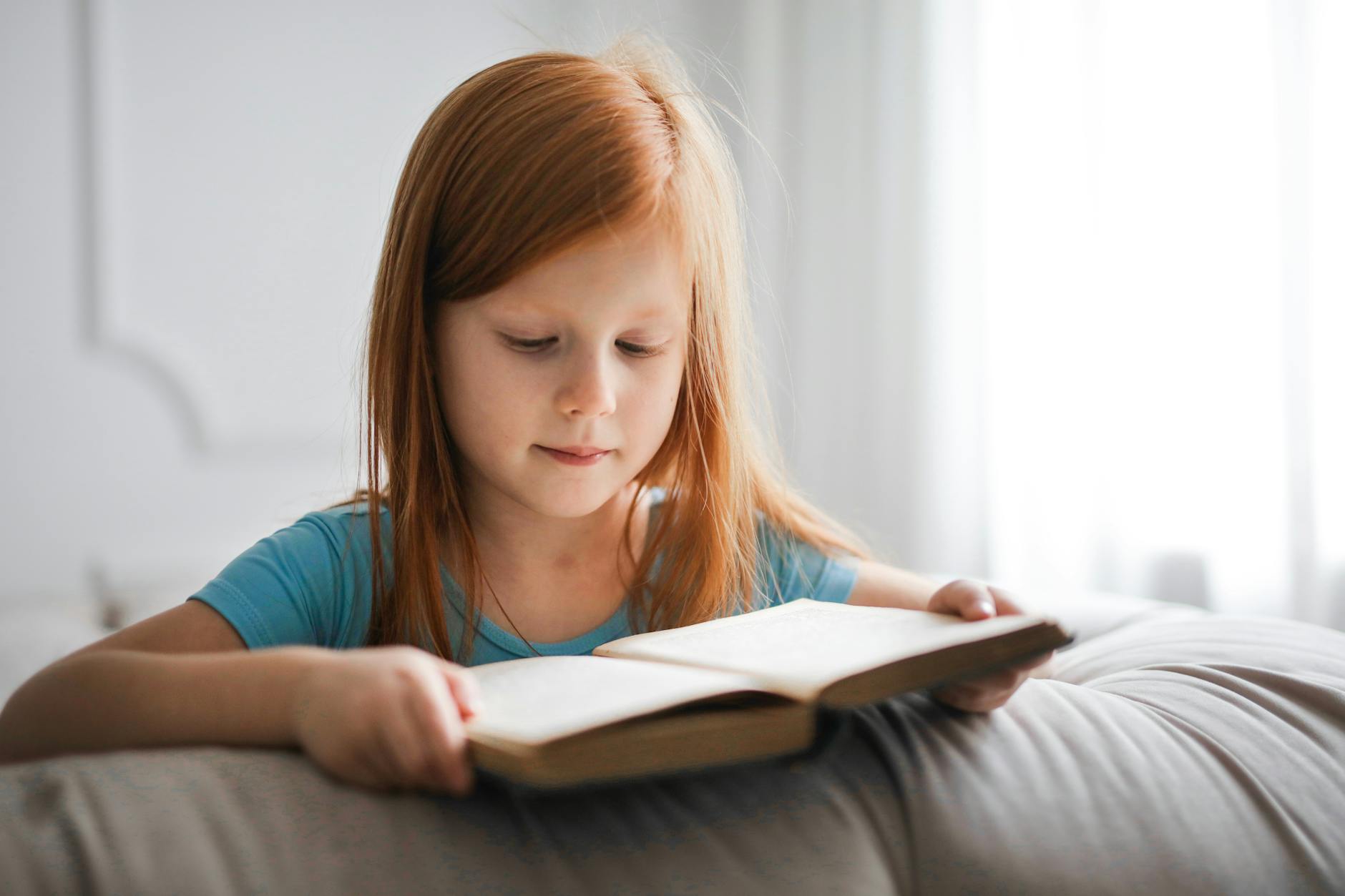
Indian Girl Sparks Literacy Revolution
A 12-year-old Indian girl taught herself to read and then taught 100 other children in her village. Her determination and perseverance inspired countless others to follow in her footsteps. This young girl's efforts brought about a literacy revolution in her community, improving the lives of many.

Photo by Thought Catalog on Pexels
The 12-Year-Old Who Built a School in a Village with Nothing
In 1937, in a village in Maharashtra that had no school, no teacher, and no books, a 12-year-old girl named Bhavani did something no one in her village had done before. She taught herself to read. She found old newspapers that had wrapped goods from the market. She found discarded books that had been thrown out by a traveling merchant. She sat outside her family's hut and sounded out letters she had seen painted on shop signs in the nearest town. It took months. She made mistakes. She had no one to correct her. But by the end of the year, she could read.
She did not stop there. The children in her village—her younger siblings, her cousins, the children of neighbors who worked the same fields—were watching. They asked her to teach them. She had no chalk, no slate, no classroom. She scratched letters in the dirt with a stick and had her students copy them. She taught them the words she had learned from the newspapers. She taught them to write their names.
Within a year, she had more than a hundred students. She was twelve. She had never been to school herself.
What Everyone Knows
The story of a child teaching other children in a village without schools is not unique to India. Across the developing world, there are stories of self-taught teachers who fill gaps that governments cannot. The narratives often follow a pattern: a bright child, a moment of recognition, a community that rallies around the child's efforts, a success that is celebrated and then forgotten.
What is less often acknowledged is that these stories are not just about individual heroism. They are about structural failure. The child who teaches herself to read does so because there is no school to teach her. The children she teaches are in a classroom with a child because there is no adult teacher available. The village that supports her makeshift school does so because the government has not built one.
What History Actually Shows
Bhavani was born in 1925 in a village in Maharashtra that had no primary school within walking distance. The nearest school was ten miles away, across roads that became impassable in the monsoon. Her family was landless. They worked as laborers on fields owned by a landlord who had no interest in educating the children who worked his land. Bhavani's parents could not read or write. They saw no reason for their daughter to learn.
Bhavani taught herself because she wanted to read the labels on the goods that came to the market. The labels told her where things came from, what they cost, who had made them. She wanted to know what the world beyond the village looked like. The newspapers she found were months old, but they carried stories of a country that was demanding independence, of leaders who spoke in English, of a future that she could not imagine but wanted to be part of.
Her first students were her younger siblings. She taught them in the evenings after the day's work was done. She taught them the letters she had learned, the words she had memorized, the numbers she had figured out from counting the money her father brought home. Her students learned faster than she had. They had a teacher. She had not.
The village elders noticed when the children of the landless laborers began to read the signs in the market. They noticed when the children corrected the merchants on the prices written on the goods. They noticed when the children began to keep accounts for their families. The elders asked Bhavani to teach their children too.
She taught in a shed that the villagers repaired for her. They found a piece of slate, a box of chalk, a few benches. The landlord, who had never allowed the laborers' children on his land except to work it, donated a small plot for a garden whose produce could be sold to buy books. The village built around the girl who had built the school.
The Part That Got Buried
Bhavani's school was not recognized by the government. There were no inspections, no curriculum, no certification. The children she taught learned to read and write, but they did not receive certificates that would allow them to continue their education in towns where secondary schools existed. Some of her students left the village to work in cities, where their literacy gave them advantages their parents had never had. Most stayed. They became farmers, laborers, shopkeepers. They could read the contracts they signed. They could write letters to relatives in other villages. They could count the money they earned.
The school itself did not last. Bhavani married at sixteen and left the village. The school continued for a time under another young woman who had been her student, then closed when that woman also left. The shed became a storage space, then a goat shed, then nothing. The children who had learned there grew up. Their children went to a school that the government finally built in the 1960s, decades after Bhavani had taught herself to read from old newspapers.
The Ripple Effect
Bhavani's story was recorded in the 1950s by a district education officer who was surveying literacy rates in Maharashtra. He published a short account in a government report. The report was filed and forgotten. No one wrote a book about her. No one made a film. The village where she had taught had no record of her efforts beyond the memories of the people she had taught.
But the model she had improvised—a local teacher, basic materials, a community that supported the effort—was replicated across India in the decades after independence. The government's literacy campaigns in the 1960s and 1970s borrowed from the practices that villages like Bhavani's had developed on their own. The idea that literacy could spread through local initiative, without waiting for schools and teachers, became a principle of Indian education policy.
The Line That Says It All
Bhavani taught herself to read so she could understand the labels on goods from a world she had never seen, then taught a hundred children in her village to read so they could understand the labels on goods from the same world—and the government that eventually built a school in her village never knew that the first school there had been built by a twelve-year-old who never went to any school at all.