Indonesian Ancestor Mummy Parade Tradition
The Ma'nene ritual in Sulawesi, Indonesia, involves exhuming and cleaning ancestor corpses. The Torajan people parade the corpses around the village, showcasing their unique cultural heritage. This ancient custom has been shrouded in mystery for centuries, fascinating outsiders with its mystique.
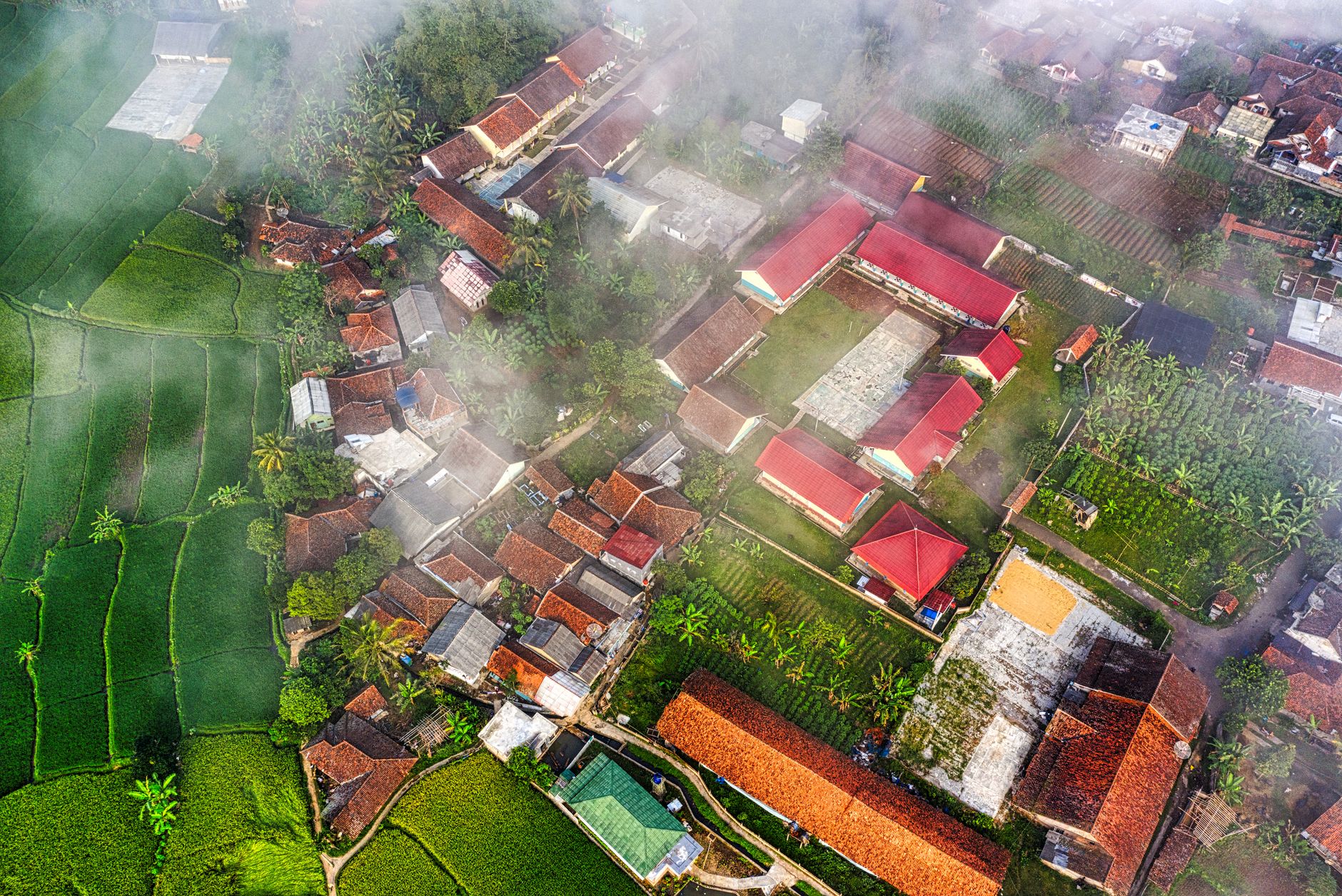
Photo by Tom Fisk on Pexels
The Torajan People Who Walk with Their Dead
In the mountains of Sulawesi, Indonesia, death is not a single event. A person dies. Then they are buried. Then, every few years, their family returns to the grave, opens it, lifts out the body, and dresses it in new clothes. They clean the corpse, inspect the condition of the remains, and walk the body through the village. They talk to it. They pose for photographs with it. Then they wrap it again, return it to the grave, and wait for the next exhumation.
The ritual is called Ma'nene, meaning "the cleaning of corpses." It has been practiced by the Torajan people for at least four centuries. Outsiders often describe it as macabre. The Toraja describe it as love.
What Everyone Knows
The Toraja are known in anthropological literature for their elaborate funeral rituals. A Torajan funeral is a multi-day event involving the sacrifice of dozens of buffalo, the construction of temporary towers called lakian, and the participation of hundreds of relatives who travel from across Indonesia and abroad. The cost of a funeral can bankrupt a family. The social obligation to hold one is absolute.
Ma'nene is less well known outside Indonesia. When it appears in travel documentaries or photo essays, it is usually presented as a curiosity—a "mummy parade" in a remote corner of the world where people do strange things with their dead. The framing emphasizes the spectacle, not the meaning.
What History Actually Shows
The Torajan practice of preserving the dead predates Ma'nene by centuries. Before Dutch colonization in the early 20th century, Torajan elites were mummified through a process involving the application of tea, betel nut, and resin. The bodies were placed in wooden coffins shaped like water buffalo or pigs, then stored in caves carved into limestone cliffs. Some of these caves contain hundreds of coffins, some dating to the 14th century.
Ma'nene evolved from this tradition. The ritual is not a single practice but a set of local variations across Torajan villages. In some communities, exhumations occur every three years. In others, they happen when a family can afford the associated costs—new clothes, food for visitors, offerings. In recent decades, Ma'nene has become more frequent, partly because the Toraja have embraced tourism and partly because families want to see their dead more often.
The exhumation itself follows a protocol. Family members enter the grave site—usually a cave or a family tomb built into a hillside. They remove the coffin, open it, and lift out the body. If the body has deteriorated, they may replace missing parts with cloth or wood. They clean the remains with brushes and cloths, remove mold and moisture, then dress the body in new clothes. The dead are dressed in contemporary fashions—shirts, jackets, sunglasses, hats. Women are given jewelry. Men may be given cigarettes.
Once dressed, the body is walked through the village. Family members carry it, or support it, or walk beside it. They talk to it, telling it news of the family, introducing new grandchildren, asking for continued protection. Photographs are taken. Visitors, including tourists, may be invited to view the body. After several hours, the body is returned to the coffin, the coffin sealed, and the grave closed until the next Ma'nene.
The Part That Got Buried
The Torajan relationship with death is often described in Western accounts as "death-obsessed." This misreads the practice. The Toraja do not fear death or dwell on it obsessively. They treat death as a transition that does not end the relationship between the living and the dead. A person who has died is still a family member. They still have opinions, preferences, and obligations. They still need to be cared for.
This understanding of death is reflected in the Torajan language. The word for "dead" is to mate. But the dead are not to mate. They are to makula—"still asleep." They are not gone. They are waiting.
Ma'nene is the practice of caring for the waiting. The new clothes are not for the corpse. They are for the person who still exists, who still belongs to the family. The conversation is not a ritual performance. It is a conversation.
Christianity, which spread through the Toraja region in the 20th century, has complicated this understanding. The Dutch Reformed Church, followed by later Catholic and Protestant missionaries, condemned Ma'nene as pagan ancestor worship. Some Torajan Christians stopped practicing it. Others adapted it, framing Ma'nene as a form of remembrance rather than a spiritual act. The result is that Ma'nene today exists in a space between tradition and religion, practiced by some Christian Toraja, abandoned by others, but still central to the identity of the community.
The Ripple Effect
The Toraja region has become a tourist destination, and Ma'nene is now a scheduled event. Tourists pay to observe the exhumations, to photograph the dead, to attend the processions. The Toraja have adapted to this, incorporating tourism into the ritual without abandoning its core meaning.
The visibility has also led to criticism. Indonesian Muslim groups have condemned Ma'nene as un-Islamic. Some Christian Toraja have called for its abolition. But the ritual persists, partly because it is economically valuable, partly because it is culturally essential. A Torajan who does not participate in Ma'nene is seen as having abandoned their family.
For the Toraja diaspora—those who have moved to Jakarta, Surabaya, or abroad—Ma'nene is a reason to return. Families coordinate exhumations to coincide with the Indonesian Independence Day holiday in August, when relatives can travel. The ritual has become a gathering, a reunion, a way of maintaining connection across distance.
The Line That Says It All
A Torajan woman whose mother's body she has just dressed in a new blouse and walked through the village for the seventh time since her mother died, when asked why she does it, said: "She likes to see the children. She never liked to miss anything. So we bring her out so she doesn't miss anything."