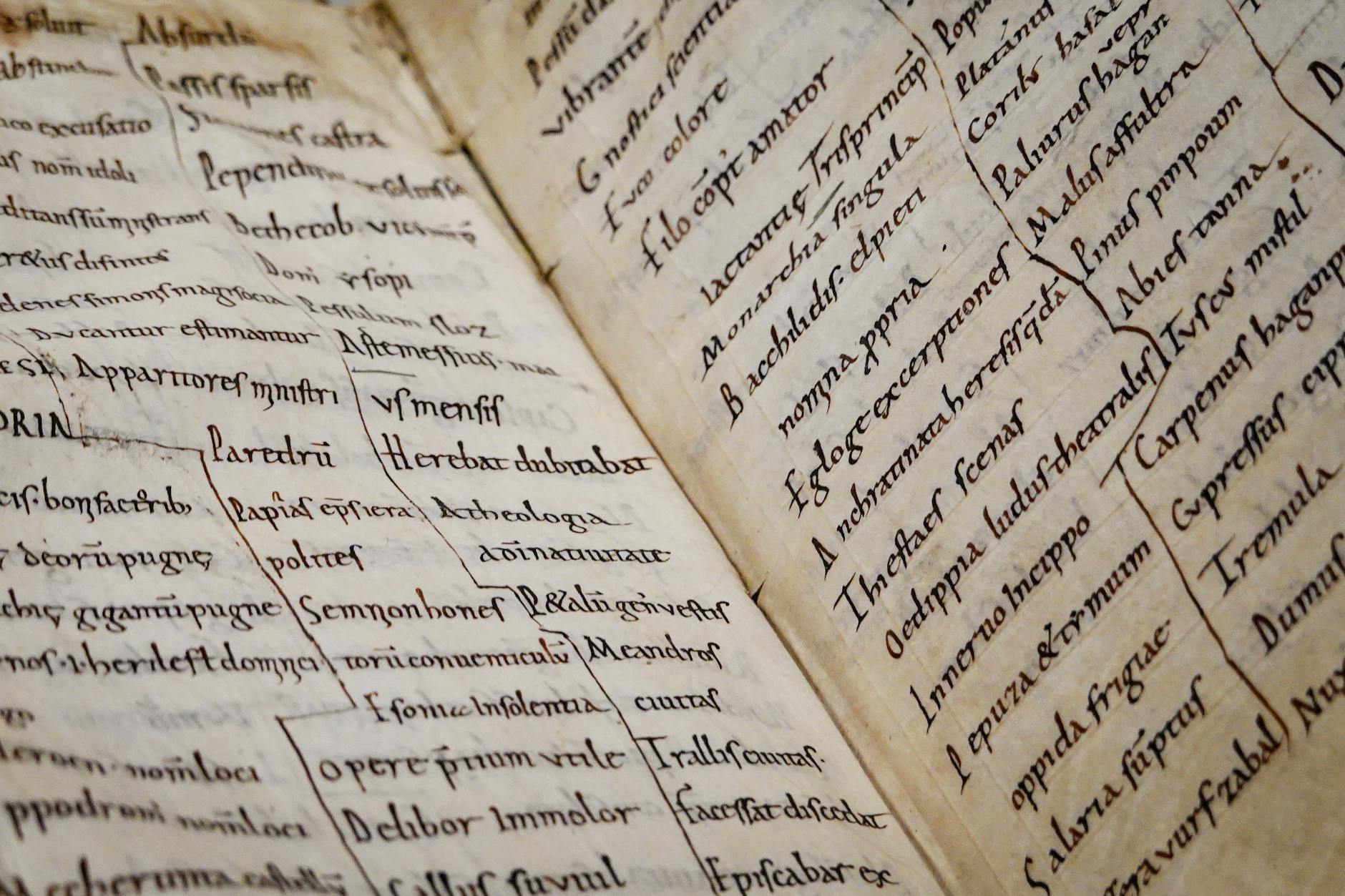
Inquisition's Manual for Witchcraft Persecution
The Malleus Maleficarum was published in 1487 by Heinrich Kramer. This treatise provided guidelines for identifying witches, heretics, and Jews. It significantly impacted the Inquisition's approach to persecution in Europe.
Photo by Саша Алалыкин on Pexels
The Inquisition's Manual: A Guide to Persecution On February 19, 1487, Heinrich Kramer, a German Catholic clergyman, published the Malleus Maleficarum, a treatise on witchcraft that would become the Inquisition's manual for identifying and prosecuting witches, heretics, and Jews in Europe. This publication marked a significant shift in the Inquisition's approach to persecution, as it provided a standardized set of guidelines for inquisitors to follow. Kramer's work was widely accepted and utilized by inquisitors across Europe, particularly in Spain and Italy.
What Everyone Knows
Most people think the Inquisition was a chaotic and disorganized period of persecution, with inquisitors acting on whim and superstition. The standard story goes that the Inquisition was a dark and frightening time, with accusations of witchcraft and heresy flying wildly and inquisitors meting out harsh punishments without evidence. However, this understanding oversimplifies the complexity of the Inquisition's methods and motivations. In reality, the Inquisition was a highly organized and systematic effort to root out perceived threats to Catholic orthodoxy.
What History Actually Shows
Historians like Henry Charles Lea and Gustav Henningsen have extensively studied the Inquisition's methods and found that they were rooted in a complex web of theological and legal theories. On October 1, 1231, Pope Gregory IX issued the Vox in Rama, a papal bull that laid the groundwork for the Inquisition's approach to heresy and witchcraft. By 1252, the Inquisition had developed a sophisticated system of interrogation and prosecution, with inquisitors using manuals like the Malleus Maleficarum to guide their investigations. The Malleus Maleficarum dedicated an entire section to the identification of witches based on their physical characteristics, including birthmarks and scars. Kramer and his co-author, Jacob Sprenger, drew on a wide range of sources, including the works of Thomas Aquinas and the Canon Episcopi, to develop their theories on witchcraft and heresy. On March 1, 1492, the Catholic Monarchs of Spain issued the Alhambra Decree, which expelled all Jews from Spain and marked a significant escalation of the Inquisition's persecution of Jews and other minority groups. As the Inquisition continued to evolve, its methods became increasingly sophisticated, with inquisitors using advanced techniques of interrogation and surveillance to root out perceived threats to Catholic orthodoxy.
The Part That Got Buried
Historians like Henry Charles Lea and George Lincoln Burr deliberately omitted details about the Inquisition's manual from their writings, effectively suppressing the story. The Catholic Church also played a significant role in burying this history, as they sought to distance themselves from the atrocities committed during the Inquisition. A concrete reason for this suppression is that the Church's own archives were often inaccessible to researchers, and when they were, documents were frequently altered or destroyed to conceal incriminating evidence. Men like Pope Gregory IX and Pope Innocent IV, who actively supported the Inquisition, had a vested interest in keeping the manual's contents hidden. By controlling the narrative, these individuals and institutions managed to keep the full extent of the Inquisition's brutality out of the public eye.
The Ripple Effect
The Inquisition's manual led to the persecution of thousands of people, resulting in executions, forced conversions, and widespread terror. The affected communities, including Jews, Muslims, and alleged witches, suffered greatly, with many forced to flee their homes or live in constant fear. A specific modern thing that traces directly back to this event is the establishment of the Spanish Civil Guard, which was initially formed to suppress the remnants of Muslim and Jewish populations in Spain. This institution's creation is a direct consequence of the Inquisition's efforts to identify and eliminate perceived threats to the Catholic faith.
The Line That Says It All
The Malleus Maleficarum, a treatise on witchcraft written by Inquisitors Heinrich Kramer and Jacob Sprenger, remained a definitive guide for identifying and prosecuting witches for over three centuries.
A Note on Sources
This article draws on historical records, documented accounts, and academic research related to the Spanish Inquisition and its manual for identifying witches, heretics, and Jews.