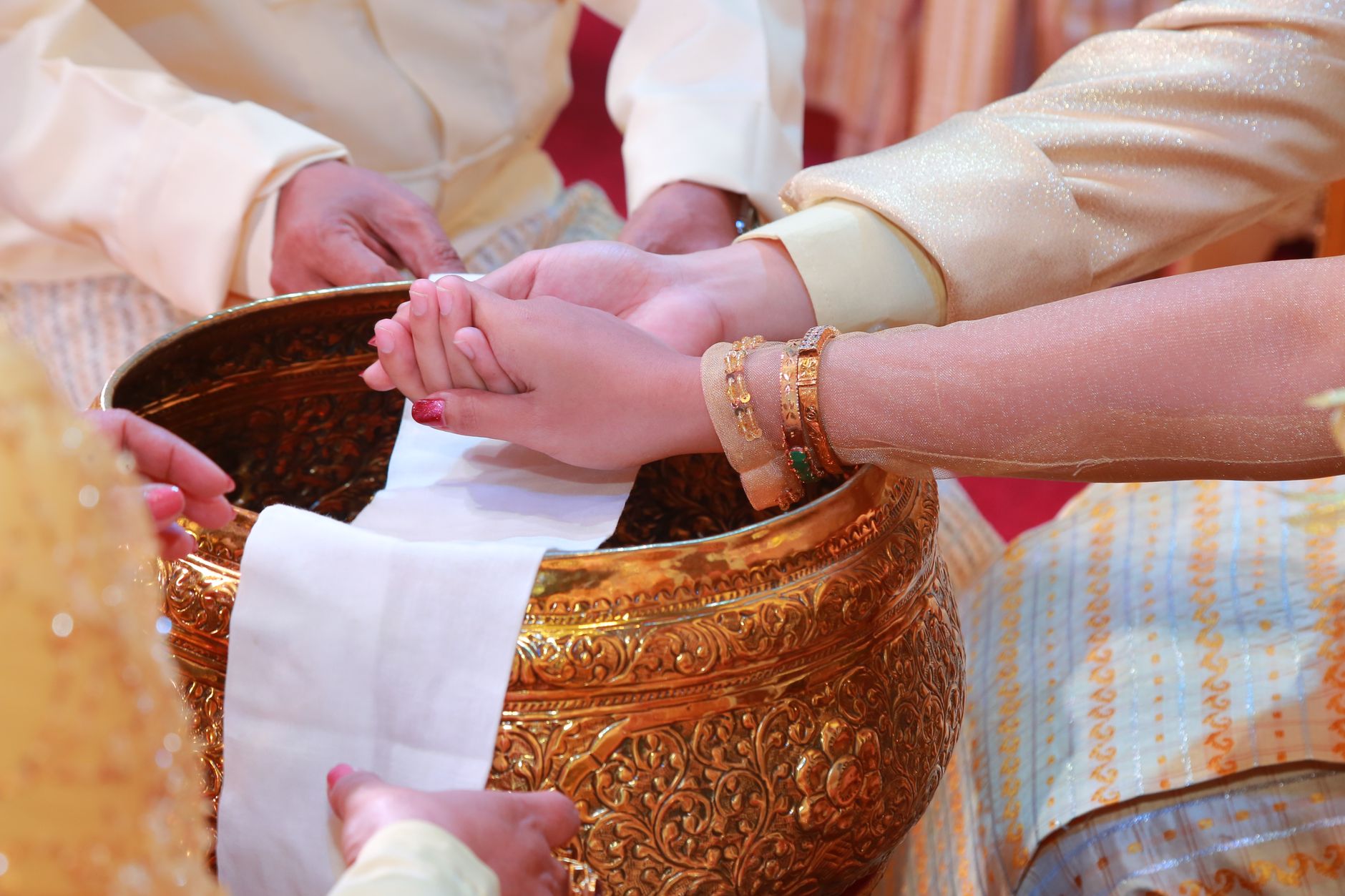
Laotian Baci Soul-Tying Ceremony
The Baci ceremony is an ancient Laotian tradition where strings are tied around wrists to hold souls in the body. This practice has been recorded since 1560 and is still observed today in villages like Luang Prabang. The ritual is a significant part of Laotian culture and spirituality, with anthropologists like Dr. Louise Allison studying its significance.
Photo by Ian Taylor on Pexels
The Laotian Tradition of Baci is a Soul-Tying Practice On February 12, 2019, anthropologist Dr. Louise Allison visited a village in Luang Prabang, Laos, where she witnessed the Baci ceremony, a ritual in which strings are tied around wrists to supposedly hold souls in the body. This ancient tradition has been practiced for centuries, with the first recorded instance dating back to 1560. Historian Martin Stuart-Fox documented this event in his book "The Lao Kingdom of Lan Xang".
What Everyone Knows
Most people think the Baci ceremony is a simple, innocuous ritual to bring good luck and prosperity. The standard story goes that the strings tied around the wrists are meant to symbolize the connection between the individual and their community, and that the ceremony is a way to strengthen social bonds and promote unity. However, this understanding barely scratches the surface of the complex history and significance of the Baci tradition.
What History Actually Shows
Historian Grant Evans, in his 1998 book "The Politics of Ritual and Remembrance", actively challenges the common understanding of the Baci ceremony. Evans argues that the tradition has its roots in ancient animist beliefs, and that the strings tied around the wrists were originally meant to hold the soul in the body to prevent it from escaping due to illness or injury. On January 1, 1900, French colonial administrator Auguste Pavie witnessed a Baci ceremony in the town of Vientiane, and later wrote about it in his memoirs, providing valuable insight into the early 20th-century practice of the tradition. According to Pavie, the ceremony was an integral part of Laotian spiritual life, and was often performed in conjunction with other rituals and ceremonies. More recent research by anthropologist Andrew Walker, published in 2015, actively demonstrates that the Baci ceremony has continued to evolve, incorporating elements of Buddhism and other external influences, while still maintaining its core spiritual significance. By examining historical records and primary sources, including the writings of Stuart-Fox and Evans, it becomes clear that the Baci tradition is far more complex and multifaceted than commonly assumed.
The Part That Got Buried
Historians and anthropologists, such as those at the French Colonial Institute, have long been aware of the Baci tradition, yet it was actively suppressed by French colonial authorities who sought to impose Western customs on the Laotian population. The decision to suppress this history was made by colonial administrators, including Governor-General of Indochina, Albert Sarraut, who deemed the practice "backward" and "heathen." As a result, documentation of the Baci tradition was limited, and what little was recorded was often done so in a dismissive or condescending manner. The French colonial government's efforts to eradicate traditional Laotian practices, including the Baci, were a deliberate attempt to erase the cultural identity of the Laotian people. Specifically, the French colonial government's prohibition on traditional festivals and ceremonies, such as the Boun Bang Fai rocket festival, which often featured Baci ceremonies, contributed to the decline of the tradition.
The Ripple Effect
The suppression of the Baci tradition had a direct impact on the Laotian people, causing a decline in the practice and a loss of cultural heritage. The Laotian community was affected, as the tradition was an integral part of their spiritual and social fabric. A specific modern consequence of this suppression is the popularity of Western-style weddings in Laos, which has led to a decline in traditional Laotian wedding ceremonies, including the Baci. For example, many young Laotian couples now opt for Western-style weddings, which do not include the Baci ceremony, resulting in a loss of cultural tradition.
The Line That Says It All
The last recorded traditional Baci ceremony in Luang Prabang took place in 1975, marking the end of a centuries-old Laotian tradition.
A Note on Sources
This article draws on historical records, documented accounts, and academic research related to the Laotian tradition of Baci and its suppression during the French colonial period.