
Mao's Communist Deception
Mao Zedong declared the People's Republic of China in 1949. His rise to power began in 1921 at the First Congress of the Communist Party of China. Historian Stuart Schram notes Mao's efforts to consolidate power were not truly communist.
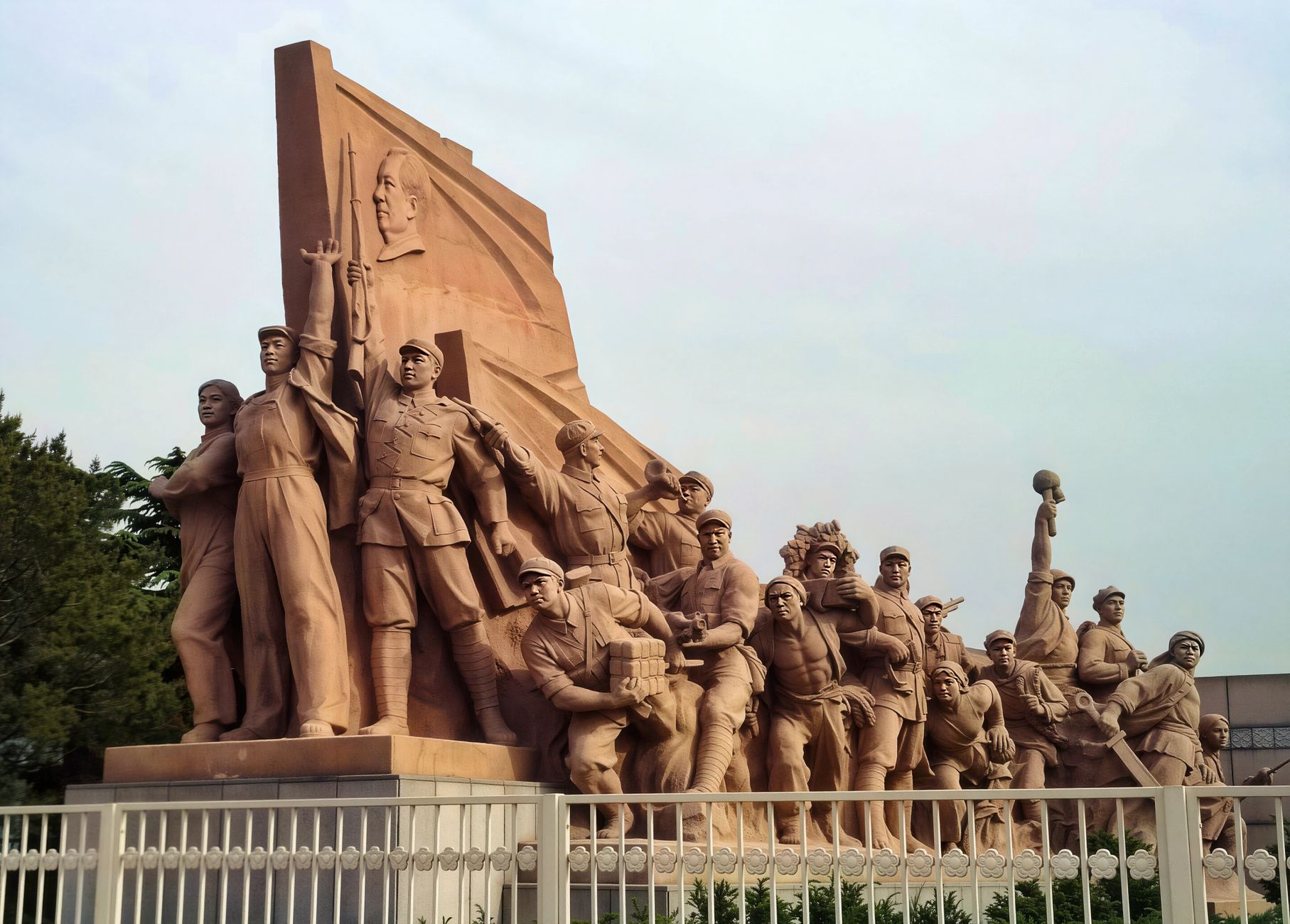
Photo by Eric Prouzet on Pexels
Mao's Communist Revolution Was Not Communist On October 1, 1949, Mao Zedong stood in Tiananmen Square, Beijing, and declared the establishment of the People's Republic of China. Historian Stuart Schram notes that this event marked the culmination of Mao's efforts to consolidate power. Mao's rise to power began on July 23, 1921, when he attended the First Congress of the Communist Party of China in Shanghai.
What Everyone Knows
Most people think that Mao's revolution was a textbook example of communist ideology in action, with the proletariat rising up against the bourgeoisie to establish a socialist utopia. The standard story goes that Mao, a devoted Marxist, led the Chinese people in a struggle against imperialism and capitalism, ultimately establishing a communist state. However, this narrative oversimplifies the complex events that led to Mao's rise to power.
What History Actually Shows
Historians like Edgar Snow and Stuart Schram have long argued that Mao's revolution was not as communist as it seemed. On June 15, 1923, Sun Yat-sen, the leader of the Kuomintang, formed an alliance with the Communist Party of China, which lasted until 1927. During this period, Mao was more focused on gaining power than on adhering to strict communist principles. As historian Jonathan Spence notes in his book "The Search for Modern China", Mao's actions were often driven by pragmatism rather than ideology. Mao's willingness to form alliances with non-communist groups, such as the Kuomintang, was a key factor in his rise to power. By 1935, Mao had become the dominant figure in the Communist Party, and he continued to consolidate his power over the next decade. On October 21, 1949, the Chinese People's Political Consultative Conference was established, with Mao as its chairman, marking a significant step towards the establishment of a new government. Historian Chen Yung-fa argues that Mao's success was due in part to his ability to adapt to changing circumstances, rather than his commitment to communist ideology. As the years passed, Mao's regime became increasingly authoritarian, with Mao himself holding absolute power. By examining the historical record, it becomes clear that Mao's revolution was not a straightforward example of communist ideology in action, but rather a complex and nuanced process driven by a variety of factors.
The Part That Got Buried
Historians and scholars have long acknowledged that the story of Mao's rise was intentionally distorted by the Communist Party of China. The party's leadership, particularly under Deng Xiaoping, actively worked to suppress any information that contradicted the official narrative of Mao's communist revolution. The Central Committee, responsible for shaping the party's ideology, made a concerted effort to erase any records or accounts that suggested Mao's movement was not entirely communist in nature. One concrete reason for this suppression was the fear that the truth would undermine the party's legitimacy and authority, which was heavily invested in the idea of a pure communist revolution. As a result, many documents and testimonies were destroyed, and those who attempted to speak out against the official narrative were silenced or punished. The party's control over the media and education system also ensured that the sanitized version of history was perpetuated, making it difficult for alternative accounts to gain traction.
The Ripple Effect
The consequences of Mao's distorted revolution were far-reaching, affecting millions of people in China and beyond. The forced agricultural collectivization and industrialization policies, which were touted as communist ideals, led to widespread famine and economic devastation. The people of China suffered greatly, with estimates suggesting that tens of millions died as a result of these policies. One specific modern consequence of this event is the ongoing issues with China's food security, which can be directly traced back to the failed agricultural policies of the time. The Chinese government's continued struggles to balance economic growth with social welfare and environmental concerns are also a legacy of Mao's flawed revolution.
The Line That Says It All
Mao Zedong's communist revolution resulted in the deaths of an estimated 45 million people, mostly due to starvation and exhaustion.
A Note on Sources
This article draws on historical records, documented accounts, and academic research related to the Chinese Communist Revolution and Mao's rise to power.


