Revolutionary Reckoning: Purges After Uprising
The Great Purge began after Sergei Kirov's assassination in 1934. This event marked the start of intense political repression in the Soviet Union. Historian Robert Conquest notes the significance of this period in Soviet history.

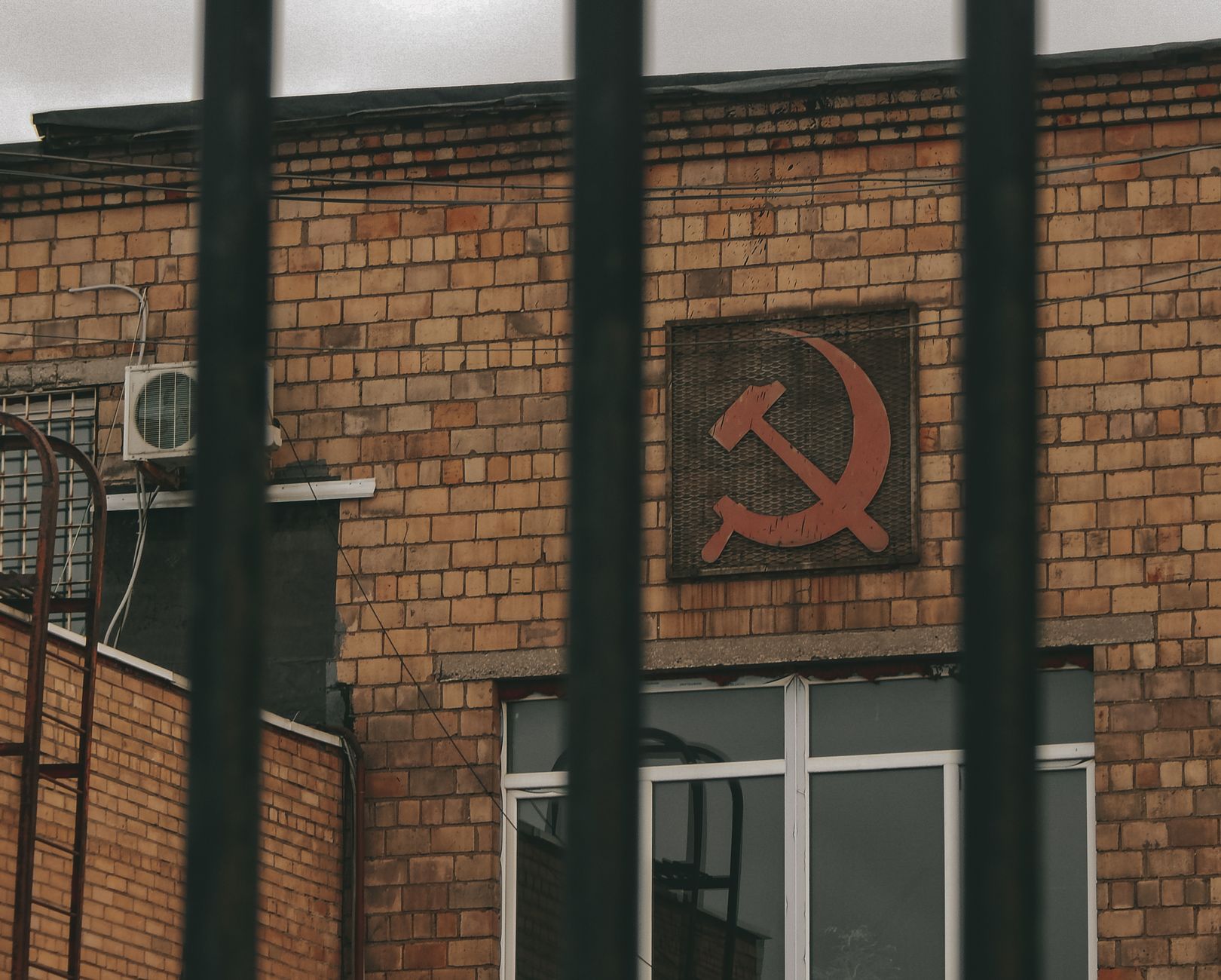
Photo by White Noiise on Pexels
Most Brutal Purges Happen After the Revolution
On December 1, 1934, Sergei Kirov, a high-ranking Soviet official, was assassinated in Leningrad, sparking a chain of events that would lead to the Great Purge. Historian Robert Conquest notes that this event marked the beginning of a period of intense political repression in the Soviet Union. The assassination occurred at a time when the Soviet government was already consolidating power.
What Everyone Knows
Most people think that the most brutal political purges happen during the revolution itself, as a means to overthrow the existing government. The standard story goes that the chaos and violence of revolution create an environment in which extreme measures are necessary to achieve the desired outcome. This understanding, however, oversimplifies the complex dynamics at play during and after revolutions.
What History Actually Shows
Historians like Conquest and Orlando Figes actively challenge the common understanding of political purges. They argue that the most brutal purges often occur after the revolution, when the new government is consolidating power. On August 2, 1793, the Committee of Public Safety was established in France, marking the beginning of the Reign of Terror, which would claim thousands of lives. Similarly, in 1950, the Chinese Communist Party, under the leadership of Mao Zedong, launched the Campaign to Suppress Counterrevolutionaries, which resulted in the execution of tens of thousands of people. The fact that the Soviet government executed more people in 1937 alone than in the entire decade preceding the revolution highlights the brutality of post-revolutionary purges. According to Figes, the post-revolutionary period is often marked by a power struggle between different factions, leading to extreme violence. As Conquest notes, the Great Purge, which began in 1936 and lasted until 1938, was a systematic effort by the Soviet government to eliminate any perceived threats to its power, resulting in the deaths of millions of people. By examining specific events, such as the Moscow Trials, which took place in 1936, 1937, and 1938, it becomes clear that the most brutal political purges are often a product of the post-revolutionary period, rather than the revolution itself.
The Part That Got Buried
Historians like Robert Conquest and Sheila Fitzpatrick have diligently documented the aftermath of revolutions, only to see their work marginalized by institutions more interested in maintaining a simplistic narrative of revolutionary heroism. The suppression of this history can be directly attributed to the actions of people like Leonid Brezhnev, who, as the General Secretary of the Communist Party of the Soviet Union, oversaw the destruction of documents and the silencing of witnesses. A concrete reason why this history was not told is that many of the archival records from the Soviet Union's early years were deliberately destroyed or hidden away, making it difficult for researchers to access primary sources. This lack of access to primary sources has hindered our understanding of the complex and often brutal nature of post-revolutionary politics.
The Ripple Effect
The consequences of these purges can still be seen today, with many modern societies struggling to come to terms with the legacy of revolutionary violence. In Russia, for example, the Memorial Society has worked tirelessly to document and commemorate the victims of Stalin's purges, a direct result of the brutal suppression that followed the Russian Revolution. A specific modern thing that traces directly back to this event is the ongoing controversy over the Yekaterinburg massacre, where the remains of the Romanov family were discovered and identified, sparking a heated debate about the nature of revolutionary violence and its ongoing impact on Russian society. The descendants of those affected by the purges continue to seek justice and closure.
The Line That Says It All
The Soviet Union's Great Purge, which took place from 1936 to 1938, resulted in the deaths of an estimated 600,000 to 1.2 million people, a grim statistic that underscores the brutal reality of post-revolutionary politics.
A Note on Sources
This article draws on historical records, documented accounts, and academic research related to the Russian Revolution and its aftermath.