Medieval Church's Fake Relics Scam
The medieval church sold fake relics to pilgrims, amassing billions in revenue. This scheme solidified their power and tapped into deep-seated desires. The church's audacity was unparalleled, conjuring up fragments and vials to deceive travelers.

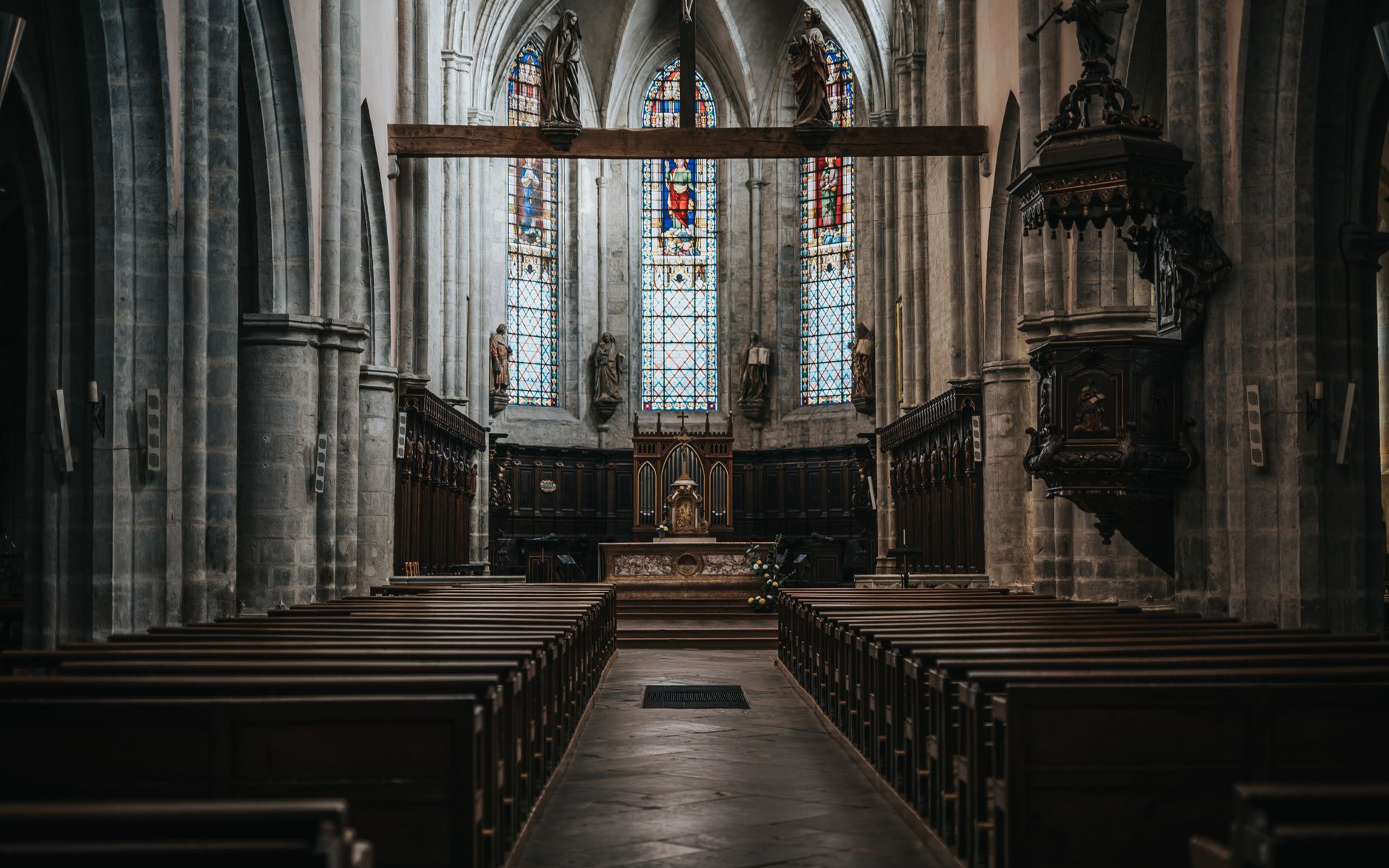
Photo by Phuc Tran on Pexels
The Fake Relics That Built Medieval Europe
In the 11th century, the abbey of Vézelay in Burgundy announced that it possessed the remains of Mary Magdalene. Pilgrims came by the thousands. The abbey grew rich. A new basilica was built. The town became a major stop on the pilgrimage route to Santiago de Compostela. The only problem was that the abbey had no idea where Mary Magdalene's remains actually were. A monk had simply claimed to have found them. The claim was never verified. The relics were almost certainly fake. It did not matter. The revenue was real.
Vézelay was not an exception. Across medieval Europe, cathedrals, monasteries, and churches competed for the most prestigious relics. A church with a major relic could attract thousands of pilgrims a year. Pilgrims spent money on food, lodging, souvenirs, and donations. A single relic could make a town wealthy. The church that held it became powerful. The system was so lucrative that the supply of relics—authentic or otherwise—expanded to meet the demand. By the 13th century, there were enough fragments of the True Cross in circulation to build a small forest. Every major cathedral claimed something: a piece of the cross, a vial of the Virgin's milk, the bones of an apostle, the head of a saint who had lived and died hundreds of miles away.
What Everyone Knows
The medieval church is remembered for its spiritual authority. It was the institution that guided Europe through the collapse of the Roman Empire, preserved learning in its monasteries, and built the cathedrals that still dominate European city centers. The narrative emphasizes faith, devotion, and the unifying power of Christianity across a fractured continent.
What is often left out of this narrative is the commercial engine that made the church's cultural dominance possible. The cathedrals were not built by faith alone. They were built by the revenue from pilgrims, who came to see relics that were often fabricated, misidentified, or stolen from other churches. The church was not just a spiritual authority. It was a tourism industry.
What History Actually Shows
The relic trade was well established by the 4th century, when the Empress Helena, mother of Constantine, reportedly discovered the True Cross in Jerusalem. Fragments of the cross were distributed across Christendom. By the Middle Ages, the supply had been supplemented by thousands of other relics: bones, teeth, hair, blood, clothing, and objects associated with saints and martyrs. The church never systematically authenticated them. The demand was too great. A church that could claim a major relic gained a permanent revenue stream.
The economics of the relic trade are documented in the accounts of major pilgrimage sites. Canterbury, where Thomas Becket was murdered in 1170, received an estimated 100,000 pilgrims a year by the early 13th century. Each pilgrim spent an average of several days' wages on lodging, food, and offerings. The cathedral's income from pilgrim donations exceeded its income from landholdings. Santiago de Compostela, which claimed the remains of the Apostle James, generated similar revenue. The pilgrimage routes across Europe became commercial networks, with inns, markets, and money changers servicing the flow of travelers.
The fabrication of relics was common enough that medieval writers complained about it. Guibert of Nogent, a 12th-century abbot, wrote a treatise attacking the trade in false relics. He noted that some churches claimed to have multiple heads of the same saint. Others displayed relics that were obviously modern. But Guibert's objections had no effect. The profit from relics was too great for any church to voluntarily surrender its most valuable asset.
The Part That Got Buried
The relic trade was not a fringe activity of the medieval church. It was central to the church's economy and its political power. The great cathedrals of Chartres, Reims, and Amiens were built with revenue from pilgrim traffic. The pilgrimage routes connected local economies across Europe, creating a network of commerce that the church controlled. The sale of indulgences, which reformers like Martin Luther would later condemn, was closely tied to the relic trade. Pilgrims who visited a major relic were often granted indulgences—remissions of temporal punishment for sin—by the church that held it. The relic and the indulgence were packaged together as a product.
The church also used relics to assert political authority. A church that held the relics of a local saint could claim jurisdiction over the saint's cult. Bishops who controlled major relics could influence local politics. The translation of relics—the ceremonial movement of a saint's remains from one location to another—was a political event, often staged to assert the primacy of one church over another.
The Ripple Effect
The relic trade left a physical legacy that survives today. The cathedrals built with pilgrim revenue are still standing. The pilgrimage routes, like the Camino de Santiago, are still walked. The relics themselves are still displayed in many European churches, though the Vatican has quietly removed the most obviously fraudulent ones from public veneration.
The trade also left a less tangible legacy: a model of religious tourism that has been replicated across cultures and centuries. The business of attracting pilgrims to holy sites, selling them souvenirs, and extracting donations for the privilege of seeing sacred objects did not end with the Reformation. It continued in Catholic Europe, and it spread to other religious traditions. The mechanics of the medieval relic trade are the same mechanics that drive modern religious tourism in Lourdes, in Mecca, in Varanasi.
The Line That Says It All
The medieval church built its greatest cathedrals with money from pilgrims who traveled hundreds of miles to see fragments of the True Cross, and there were so many fragments in circulation that a 16th-century theologian calculated that if all of them were assembled, they would fill a ship's cargo hold—but no one ever assembled them, because no one wanted to know how much of what they were selling was real.