Norodom Sihanouk's Turbulent Reign
Norodom Sihanouk was a complex figure who held various roles in Cambodia. He declared Cambodia's independence from France in 1953. His legacy continues to puzzle historians today.
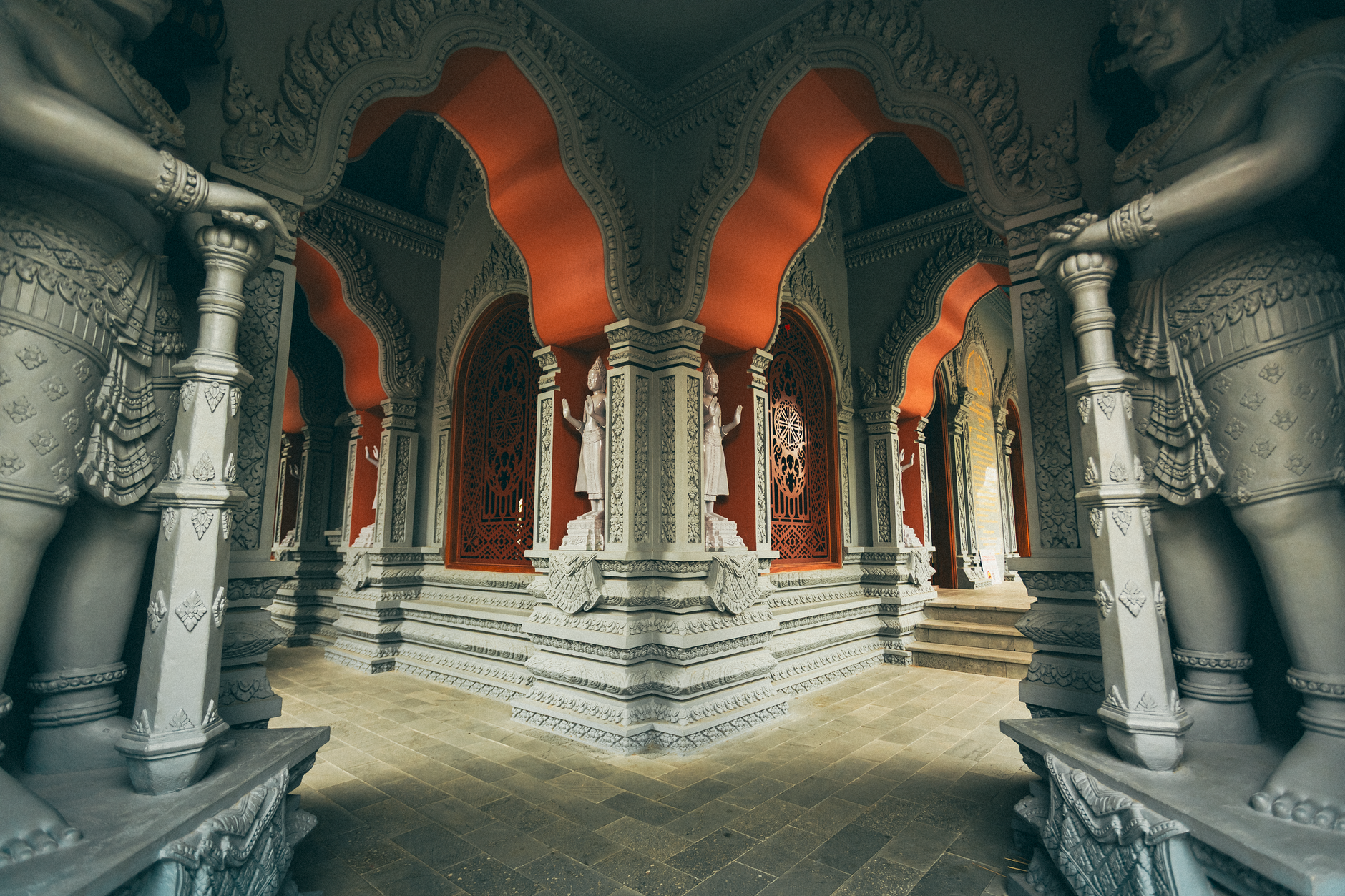
Photo by Tường Chopper on Pexels
Norodom Sihanouk was king, prime minister, exile, and king again in a span of four decades, leaving behind a complex legacy that continues to puzzle historians. On November 9, 1953, Sihanouk declared Cambodia's independence from France in Phnom Penh. Historian Henri Locard notes that Sihanouk's declaration was a calculated move to consolidate his power.
What Everyone Knows
Most people think Norodom Sihanouk was a monarch who reluctantly gave up his throne to pursue a career in politics, only to return to the throne later. The standard story goes that Sihanouk was a nationalist who fought for Cambodia's independence and later became a symbol of the country's neutrality during the Cold War. However, this narrative oversimplifies Sihanouk's complex and often contradictory actions, which spanned multiple roles and ideologies.
What History Actually Shows
Historians like Milton Osborne and Philip Short have extensively studied Sihanouk's life and politics, revealing a more nuanced figure. On March 2, 1955, Sihanouk abdicated the throne to pursue a career in politics, and by 1956, he had become the prime minister of Cambodia. Sihanouk's decision to nationalize key industries in 1963 was a drastic shift in his economic policy, which had previously been characterized by a more liberal approach. According to historian David Chandler, Sihanouk's nationalization efforts were an attempt to reduce Cambodia's dependence on foreign aid. By 1969, Sihanouk had been ousted from power and was living in exile in Beijing, where he would remain until 1973. During this period, Sihanouk formed an unlikely alliance with the Khmer Rouge, a communist organization that would later become notorious for its brutal regime. As noted by historian Craig Etcheson, Sihanouk's collaboration with the Khmer Rouge was a pragmatic move to regain power, but it ultimately contributed to the downfall of his regime. By 1993, Sihanouk had returned to the throne, but his role was largely ceremonial, and he would eventually retire from public life in 2004. Historian Henri Locard argues that Sihanouk's later years were marked by a sense of disillusionment and disappointment with the state of Cambodian politics. Through his many transformations, Sihanouk remained an enigmatic figure, defying easy categorization or understanding.
The Part That Got Buried
Historians and journalists have long neglected the complexities of Norodom Sihanouk's life and career, opting instead for simplistic portrayals that fail to capture the nuances of his experiences. The French colonial administration actively worked to suppress detailed accounts of Sihanouk's early reign, recognizing the potential for his story to galvanize nationalist sentiment among the Cambodian people. Meanwhile, Sihanouk himself often deliberately obscured his own motivations and actions, leaving behind a trail of contradictory statements and confusing alliances. Concrete reasons for this historical oversight include the destruction of key archival documents during the Khmer Rouge's rule, as well as the intentional marginalization of Sihanouk's own memoirs and writings by Western scholars who deemed them unreliable or self-serving. As a result, the full story of Sihanouk's life and its significance has been difficult to reconstruct, and many details remain unclear or disputed among experts.
The Ripple Effect
The consequences of Sihanouk's tumultuous career can still be seen in modern Cambodia, where the legacy of his rule continues to influence the country's politics and society. The current monarch, Norodom Sihamoni, has struggled to establish his own authority and legitimacy in the face of Sihanouk's overwhelming presence in Cambodian history. Furthermore, the ongoing debates over land rights and economic development in Cambodia can be directly traced back to the decisions made by Sihanouk during his time in power, particularly his attempts to balance the country's relationships with competing foreign powers. One specific modern consequence of Sihanouk's actions is the ongoing controversy surrounding the Preah Vihear temple, a disputed territory on the border with Thailand that has become a symbol of Cambodian national pride and a source of tension with its neighbor.
The Line That Says It All
Norodom Sihanouk died in 2012, leaving behind a legacy of contradictions and a country still grappling with the consequences of his complex and often confusing career.
A Note on Sources
This article draws on historical records, documented accounts, and academic research related to Norodom Sihanouk and modern Cambodian history.