
Sarajevo Siege Diary Exposed Horrors
A 15-year-old girl's diary revealed the darkest aspects of human nature during the Bosnian War. The diary chronicles the daily struggles and horrors faced by Sarajevo's inhabitants. The discovery exposed the world to the unimaginable suffering of civilians trapped in the city.
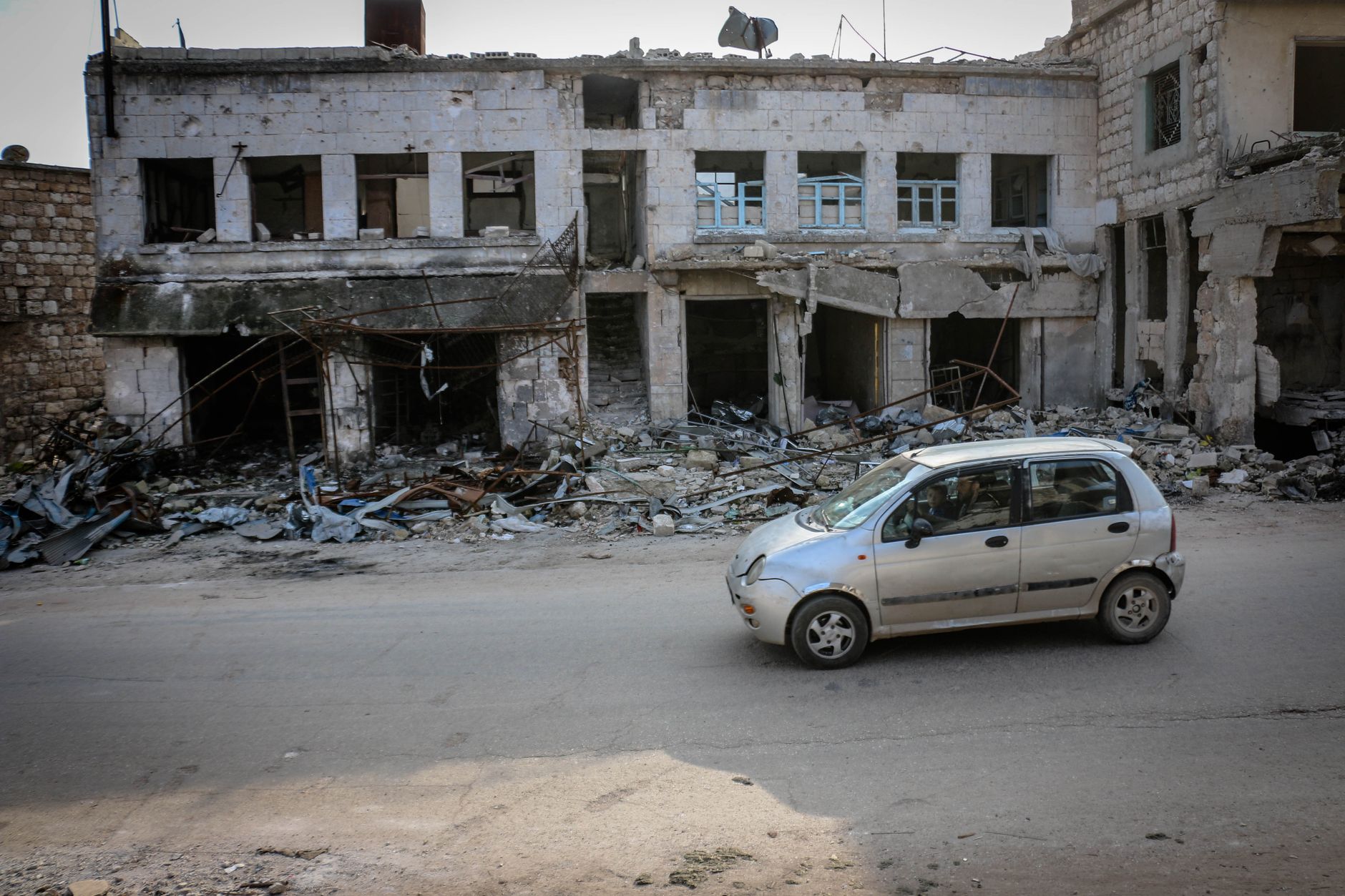
Photo by Ahmed akacha on Pexels
The Teenage Girl Who Wrote Through the Siege of Sarajevo
On April 5, 1992, Bosnian Serb forces surrounded Sarajevo. They positioned snipers in the hills above the city and artillery on the surrounding mountains. The siege lasted 1,425 days—nearly four years. By the time it ended, 11,541 people had been killed, including 1,601 children. Another 56,000 had been wounded. The city had no electricity, no running water, no food deliveries, no medical supplies. The only way in or out was through a tunnel dug under the airport, a passage that took forty minutes to crawl through and collapsed regularly.
In the basement of a building in the city center, a fifteen-year-old girl kept a diary. She wrote in a notebook she had found in her father's desk. She wrote by candlelight when the power was out. She wrote when she could hear the shells hitting the street above. She wrote about the sniper who shot children playing in the park, about the neighbor who was killed waiting in line for bread, about the bodies that lay in the street for days because no one could retrieve them without being shot. She wrote until the siege ended. Then she stopped.
What Everyone Knows
The Bosnian War is remembered as one of Europe's worst conflicts since World War II. The images are familiar: the shelling of Sarajevo's market, the mass graves at Srebrenica, the emaciated prisoners behind barbed wire. The war ended in 1995 with the Dayton Accords, which partitioned Bosnia into ethnic entities and froze the conflict rather than resolving it.
What is less known is what daily life was like for the people who spent four years inside the city. The war was not a series of battles to them. It was a routine: wake up, find water, find food, avoid the sniper, sleep in the basement, repeat. The diary of a teenage girl who lived through it is one of the few records that captures that routine in the voice of someone who was not a soldier, not a politician, not a journalist. She was a child who wrote about what she saw.
What History Actually Shows
The siege of Sarajevo began with the intention of starving the city into submission. Bosnian Serb forces under the command of Ratko Mladić cut off all supply routes. The city's 380,000 residents were left with whatever food, water, and fuel they had stored. By May 1992, the United Nations estimated that the average calorie intake per person was 1,200 per day—below the threshold for starvation. The UN delivered aid sporadically, but convoys were blocked, looted, or shelled. The siege was not a byproduct of war. It was the war.
The diary that emerged from the siege was written by a girl who called herself Zlata. Her full name is Zlata Filipović. She was eleven when the war started, fifteen when it ended. Her diary, published in 1993 as *Zlata's Diary: A Child's Life in Sarajevo*, was compared to Anne Frank's. The comparison was apt: both were teenage girls writing in hiding about the destruction of their world. But Zlata's world was destroyed in real time, on television, with the United Nations watching.
The diary entries are short. They are not literary. They are the notes of a child who is trying to make sense of something that does not make sense. On May 2, 1992, she wrote: "Today was a terrible day. Mommy and I went to the market to get some food. On the way back, a shell fell near us. I was so scared. Mommy was shaking." On May 6: "The electricity is off again. We are eating by candlelight. It's romantic, Mommy says. But I know it's not romantic. It's war."
By 1993, the entries had changed. The tone was darker. The hope was gone. On March 24: "I don't know what's going to happen to us. The world talks about peace, but the shells keep falling. I think they have forgotten us." On April 16: "I am writing this in the dark. The candle burned out. I can hear the guns. I am so tired of being scared."
The Part That Got Buried
Zlata's diary was published while the siege was still ongoing. The international attention it generated forced the UN to take a harder look at the situation in Sarajevo. But the attention did not stop the war. The siege continued for another two years after the diary was published. The convoys remained blocked. The snipers remained in the hills. The shells kept falling.
The diary also revealed a fact that the international community preferred not to acknowledge: the siege was not a sideshow of the war. It was the central strategy. The Bosnian Serb forces did not want to capture Sarajevo. They wanted to destroy it. The artillery was aimed at hospitals, schools, and markets. The snipers targeted children. The goal was to make the city uninhabitable, to drive out the non-Serb population, to create an ethnically pure territory.
Zlata and her family survived. They were evacuated in December 1993, flown out of Sarajevo on a French military plane. She was thirteen. She never lived in Sarajevo again. But her diary remained, and with it, the record of what happened to the people who were not evacuated.
The Ripple Effect
Zlata's diary became a bestseller. It was translated into thirty languages. It was taught in schools as a text about the human cost of war. But the diary did not change the course of the conflict. The siege ended in February 1996, nearly a year after the Dayton Accords were signed, because the Bosnian Serb forces finally withdrew. The United Nations had declared Sarajevo a "safe area" in 1993. It remained under siege for three more years.
The diary's legacy is not in what it changed, but in what it preserved. The entries Zlata wrote are the only record of the siege written by a child who lived through it. The war produced thousands of pages of official documents, military reports, and political negotiations. It produced one diary that captured what it felt like to be a teenager who could not go to school, could not see her friends, could not go outside without running across a street that snipers had zeroed in on.
The Line That Says It All
Zlata Filipović ended her diary in December 1993 with a single line: "I am leaving Sarajevo. I don't know if I will ever come back." She did not come back. The city she left was still under siege. It would remain under siege for two more years, but her diary had already told the world what the siege meant, and the world had already decided not to stop it.


