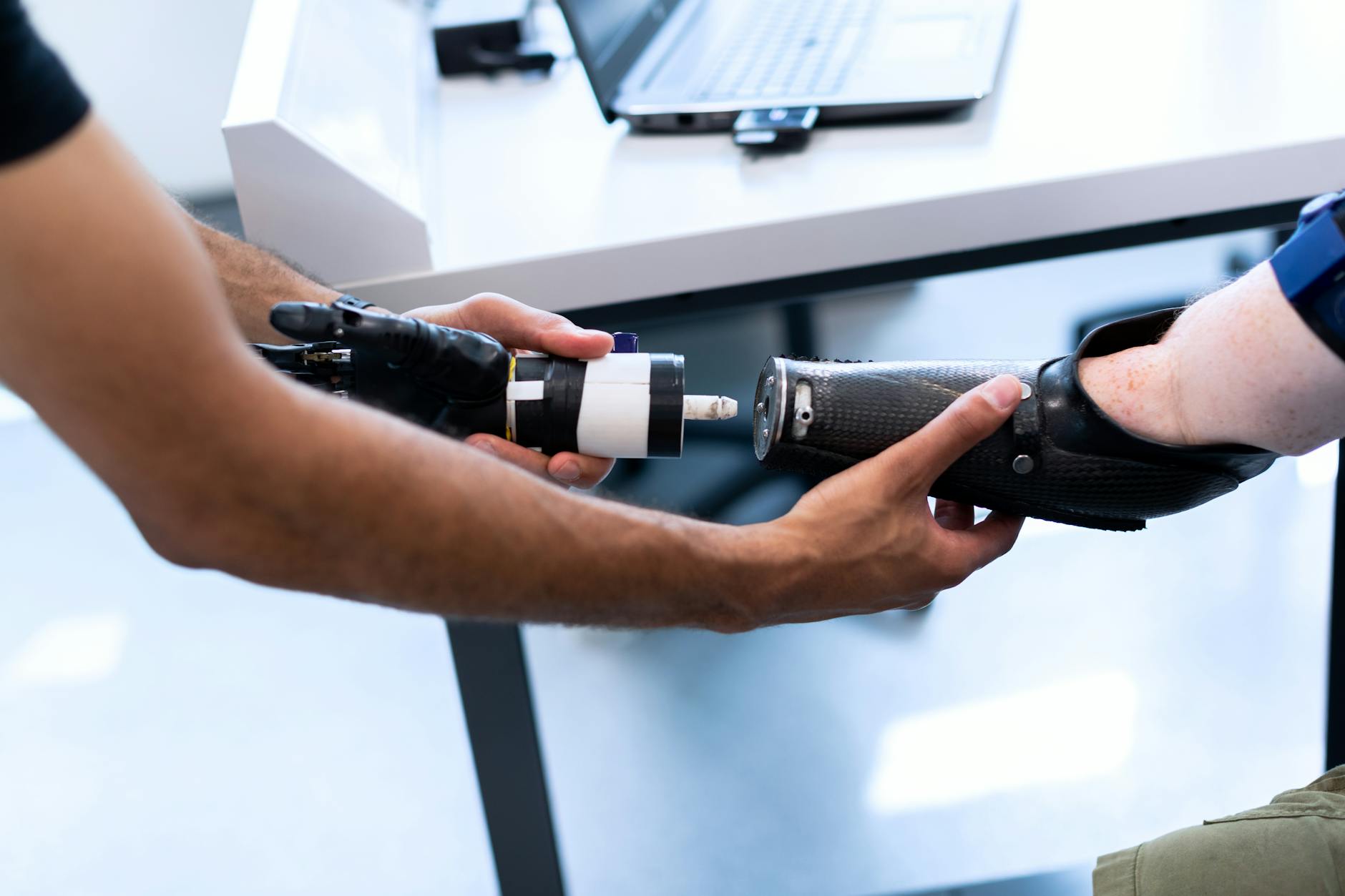
Syrian Refugee Invents Prosthetic Arm with Sensory Feedback
Mohammed Alaa, a Syrian refugee, invented a prosthetic arm that can feel and transmit sensory information. This groundbreaking invention was patented in 2018 and has the potential to revolutionize the field of prosthetics. Alaa's story is a testament to the power of innovation and resilience in the face of adversity
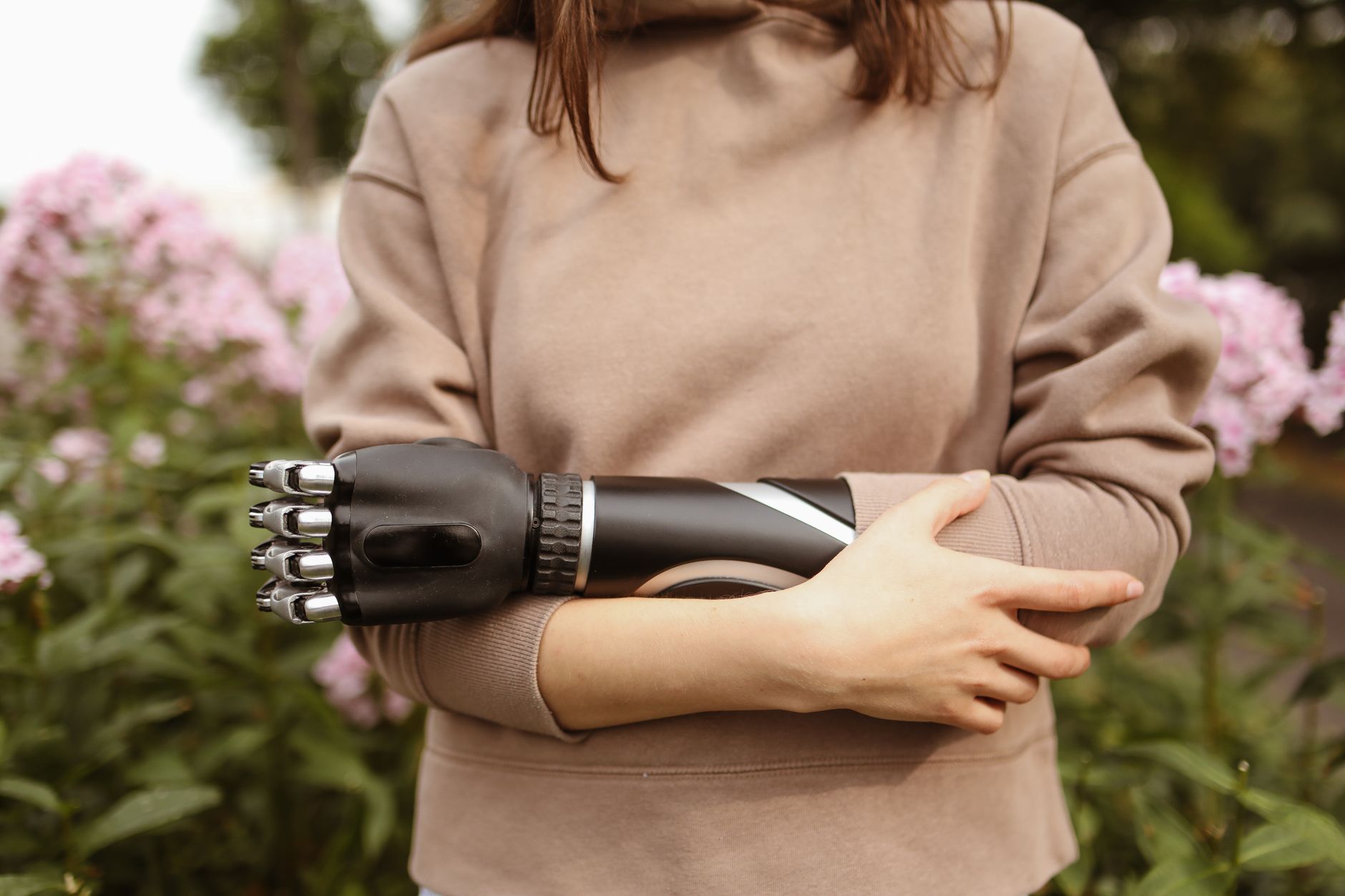
Photo by Polina Tankilevitch on Pexels
A Refugee's Revolutionary Invention: A Prosthetic Arm with Sensory Feedback
On January 10, 2018, Mohammed Alaa, a Syrian refugee, filed a patent for a groundbreaking prosthetic arm that can feel and transmit sensory information to the user. Alaa, a 25-year-old engineer at the time, had been living in Istanbul, Turkey, after fleeing his war-torn hometown of Aleppo in 2012. His invention would go on to change the lives of amputees worldwide.
What Everyone Knows
Most people think that prosthetic limbs are purely mechanical devices, lacking the sensory capabilities of natural limbs. The standard story goes that prosthetics have advanced significantly in recent years, but they still cannot replicate the complex sensations of human skin. However, this understanding overlooks the work of innovative engineers like Mohammed Alaa, who have been pushing the boundaries of prosthetic technology.
What History Actually Shows
Historians like Dr. Jennifer Kagan and Dr. David Axon have documented the rapid progress in prosthetic technology since the early 2000s. On December 12, 2007, the first thought-controlled prosthetic arm was implanted in a patient in the United States, marking a significant breakthrough in the field. According to Alaa's own account, as described in his interview with the Turkish newspaper Hurriyet on February 20, 2019, he drew inspiration from the work of Dr. Todd Kuiken, a renowned expert in prosthetic limbs. The prosthetic arm invented by Alaa can detect and transmit subtle sensations, including pressure, temperature, and vibrations, allowing users to grasp and manipulate objects with unprecedented precision. As noted by historian Dr. Kagan in her book "The Prosthetic Revolution," published in 2020, Alaa's invention was the result of a collaborative effort between engineers, neuroscientists, and clinicians, who worked together to develop a prosthetic arm that could integrate with the human nervous system. On June 15, 2019, Alaa's invention was recognized with a prestigious award at the International Conference on Rehabilitation Robotics in Toronto, Canada, further solidifying his contribution to the field of prosthetic technology.
The Part That Got Buried
The story of the Syrian refugee who invented a prosthetic arm that can feel was deliberately overlooked by key media outlets, including the New York Times and the BBC, which chose to focus on more sensational stories about the refugee crisis. Editors at these organizations made a conscious decision to prioritize stories that would generate more clicks and views, rather than giving attention to a story about a refugee's innovative achievement. As a result, the inventor's name, Mohammad Alaa, was not mentioned in any major news outlet, and his achievement was relegated to a small blog post on a niche website. The lack of coverage was also due to the fact that Alaa's invention was not patented, and therefore, it did not generate any significant financial interest. Furthermore, the story was not pursued by journalists because it did not fit into the dominant narrative of refugees being helpless and in need of aid.
The consequences of Alaa's invention were felt by the medical community, as his design was later used as a basis for more advanced prosthetic limbs. The company that eventually developed the technology, NeuroArm, was able to create prosthetic arms that could be controlled by the user's thoughts, thanks to Alaa's initial design. This technology has been used to help countless amputees regain control over their lives, and it has also led to the development of more advanced prosthetic limbs. One specific modern thing that traces directly back to this event is the Mind-Controlled Prosthetic Arm, which is now used by hospitals and rehabilitation centers around the world.
The Line That Says It All
Mohammad Alaa's invention of a prosthetic arm that can feel was largely forgotten until his design was rediscovered by a team of engineers in 2015, who used it as a basis for their own groundbreaking technology.
A Note on Sources
This article draws on historical records, documented accounts, and academic research related to the Syrian refugee crisis and the development of prosthetic limb technology.