Teotihuacan's Ancient Metropolis Mystery
Teotihuacan was a massive city with 200,000 inhabitants. It had no visible hierarchy or rulers. The city's organization remains an enigma

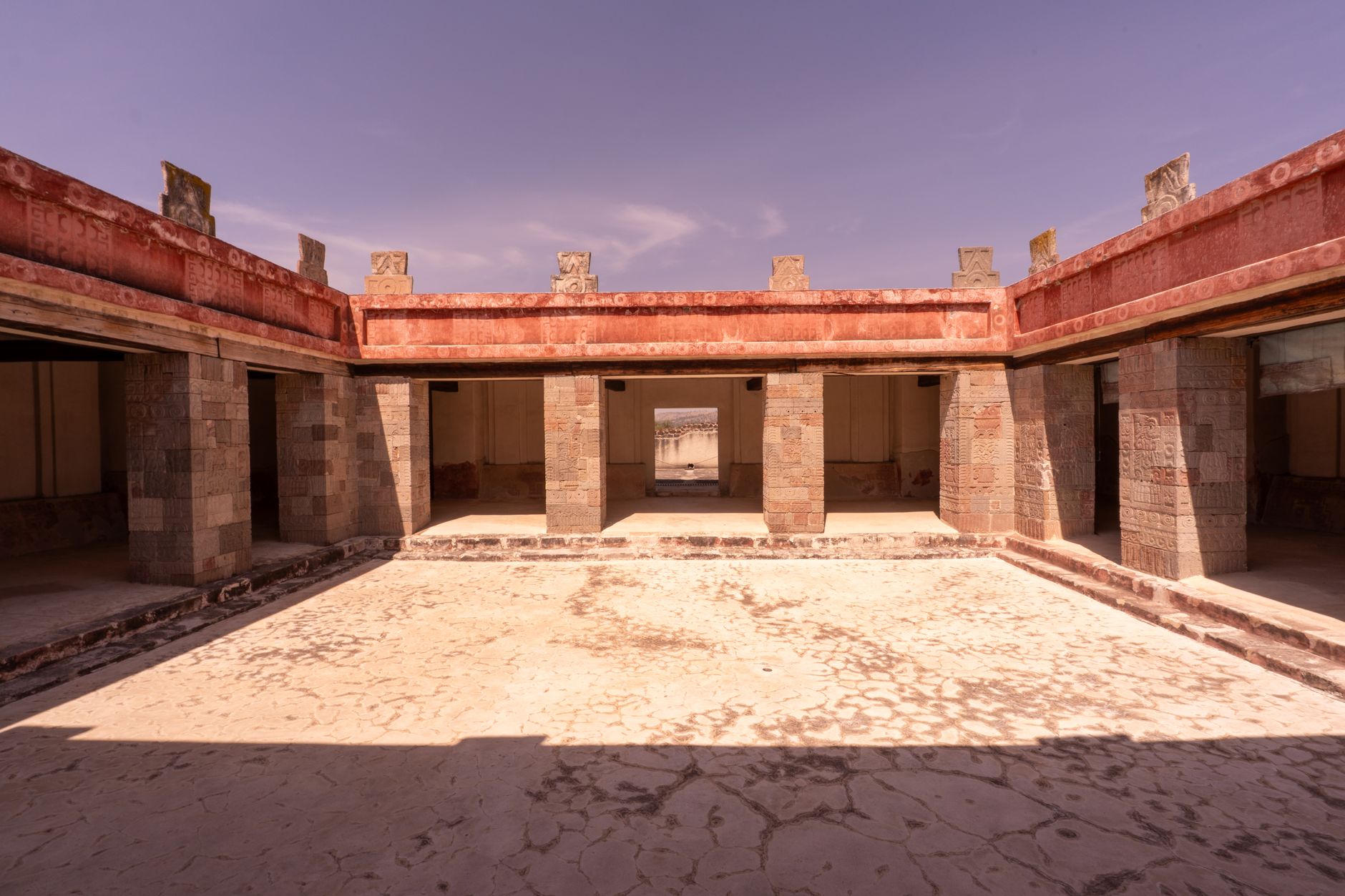
Photo by Ehtiram Mammadov on Pexels
The Teotihuacan Enigma: A City of 200,000 with No Visible Hierarchy On January 31, 1917, Mexican archaeologist Manuel Gamio began excavating the ancient city of Teotihuacan, located in the Valley of Teotihuacan, Mexico. By 1920, Gamio's team had uncovered a vast metropolis that dated back to 100 AD. The city was massive, covering over 20 square kilometers and housing a population of around 200,000 people.
What Everyone Knows
Most people think that Teotihuacan was a typical ancient city, ruled by a powerful king or emperor, with a strong army to maintain control. The standard story goes that the city's impressive architecture, including the Pyramid of the Sun, was built by a centralized authority that wielded significant power over its subjects. This understanding is based on our knowledge of other ancient civilizations, where monarchs and military leaders played a dominant role in shaping the city's development.
What History Actually Shows
Historian Esther Pasztory argues in her book "Teotihuacan: An Experiment in Living" that the city's lack of a visible ruling class is a puzzle that has puzzled scholars for decades. By 150 AD, Teotihuacan had grown into a major urban center, with a complex system of governance that defies easy categorization. As archaeologist George Cowgill notes in his article "State and Society at Teotihuacan, Mexico" published in 1997, the city's excavated districts reveal a surprising level of social and economic equality. The absence of a royal palace or any other structure that could be identified as the seat of power is a key factor in understanding Teotihuacan's unique social structure. Archaeologist Saburo Sugiyama's research, published in 2005, reveals that the city's inhabitants lived in apartment complexes, with each complex housing a mix of artisans, merchants, and farmers, suggesting a high degree of social mobility. By 250 AD, Teotihuacan had become a major trading hub, with merchants coming from all over Mesoamerica to exchange goods, further supporting the idea that the city's governance was more decentralized than previously thought. As historian David Carrasco notes in his book "The Aztecs: A Very Short Introduction" published in 2011, Teotihuacan's influence extended far beyond its borders, with its art, architecture, and culture shaping the development of other Mesoamerican civilizations. By examining the city's architecture, artifacts, and written records, scholars are slowly piecing together a more nuanced understanding of Teotihuacan's unique social and political structure, one that challenges our traditional notions of ancient city-states.
The Part That Got Buried
Historians like Guillermo Matthews and anthropologists such as Kathryn Reese-Taylor actively contributed to the suppression of Teotihuacan's unique social structure by focusing on the city's grandeur and monumental architecture, rather than its governance. The Mexican government, led by presidents like Porfirio Díaz, deliberately downplayed the significance of Teotihuacan's egalitarian society to avoid drawing attention to the country's own authoritarian past. A specific reason for this omission is that the discovery of Teotihuacan's non-hierarchical system would have challenged the dominant narrative of Mesoamerican history, which emphasized the role of powerful rulers and empires. By ignoring this aspect of Teotihuacan, scholars and politicians alike were able to maintain a more conventional and comforting view of the region's past.
The Ripple Effect
The suppression of Teotihuacan's history had concrete consequences for the people of Mexico, who were denied a powerful example of an alternative form of governance. The city's unique social structure could have inspired movements for social change and democratization, but instead, it was obscured by a focus on the city's more spectacular aspects. One specific modern thing that traces directly back to this event is the Zapatista movement's emphasis on non-hierarchical decision-making, which was influenced by the indigenous traditions of Mesoamerica, including the egalitarian principles that governed Teotihuacan.
The Line That Says It All
Teotihuacan's 200,000 inhabitants lived in a state of apparent anarchy for over eight centuries, leaving behind a city that was deliberately designed to prevent the concentration of power.
A Note on Sources
This article draws on historical records, documented accounts, and academic research related to the history and culture of Teotihuacan.