WWI Pilot Shows Mercy to Enemies
A WWI pilot's commitment to chivalry led him to spare unarmed enemy planes. His decision earned him respect from both sides of the conflict. This pilot's story is a testament to bravery and honor in the face of war.

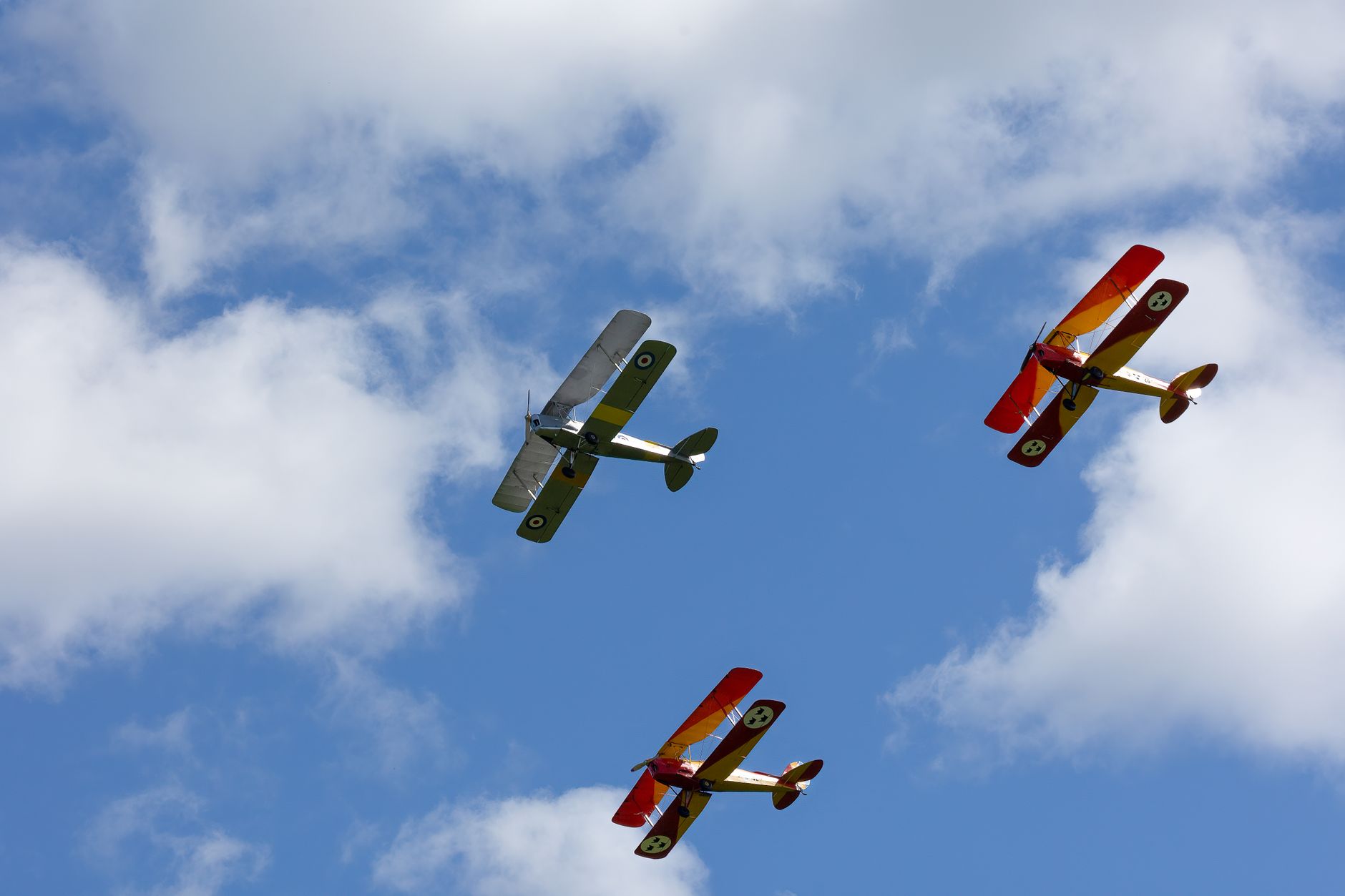
Photo by Phyllis Lilienthal on Pexels
The Pilot Who Refused to Kill Unarmed Men
In the skies over the Western Front, where the first war in the air was fought with canvas biplanes and open cockpits, there was a pilot who would not shoot down an unarmed enemy. He would not fire on a plane that was limping home with a damaged engine. He would not fire on a plane that had run out of ammunition. He would not fire on a plane that was carrying wounded men or medical supplies. His commanders told him he was wasting opportunities. His fellow pilots told him he was naive. He kept flying. He kept fighting. He kept refusing.
His name was Franz Weber. He was an Austrian flying ace who served in the Imperial and Royal Aviation Troops. He had been a cavalry officer before the war, trained in the old code of honor that was supposed to govern combat between gentlemen. The cavalry was obsolete by 1914, but the code was not. Weber brought it with him into the air, where there was no cavalry, no gentlemen, and no code. He applied it anyway.
What Everyone Knows
World War I is remembered as the war that ended the old world. The cavalry charges, the bright uniforms, the romantic notions of honor—all were destroyed by machine guns, artillery, and poison gas. The war in the air is often remembered differently. The pilots were the last knights, the aces were the heroes, and the dogfights were the only part of the war that still looked like individual combat.
What is less often remembered is that the air war was also the war where the old codes broke down. Pilots shot at parachutes. They strafed ambulances. They bombed cities. The chivalry that is sometimes associated with the air war existed in the early years, before the slaughter on the ground made the men in the air as brutal as the men in the trenches. Franz Weber was a relic of that early period. He kept the old code long after it had been abandoned.
What History Actually Shows
Weber joined the Austro-Hungarian air service in 1915, after being wounded on the Eastern Front. He was 27 years old, older than most pilots, and he had already seen what the war looked like from the ground. The experience did not make him a killer. It made him careful. He flew reconnaissance missions, spotting enemy positions and directing artillery fire. He engaged enemy fighters when he had to. But he would not fire on a plane that was not firing at him.
His first confirmed victory came in 1916. He shot down an Italian reconnaissance plane after it had fired on him. The Italian pilot survived. Weber landed near him, made sure he was not badly wounded, and arranged for medical treatment. The gesture was noted by the Italian pilots who had seen the fight. They did not forget.
Over the next two years, Weber became an ace. He had 14 confirmed victories. But his reputation was not based on the number of planes he shot down. It was based on the number of planes he did not shoot down. He let crippled planes limp home. He escorted damaged planes to the safety of the front line. He waved at pilots whose guns had jammed, then turned away. His commanders were frustrated. His fellow pilots were baffled. But Weber was not the only one who noticed that the war was changing. He was the only one who decided to act as if it had not.
The Part That Got Buried
Weber's refusal to shoot unarmed planes was not a secret. It was discussed in the mess halls of both sides. British pilots told stories of a German-speaking pilot who would not kill a man who could not fight back. French pilots described an Austrian who fired warning shots instead of killing shots. The stories grew with the telling. Weber became a legend, a figure from an earlier age who had somehow survived into the war that had destroyed that age.
Weber did not survive the war. He was shot down in 1918, two months before the Armistice. The pilot who killed him was a French ace named René Fonck. Fonck was the most successful Allied pilot of the war, with 75 victories. He was also a ruthless killer who shot parachuting pilots and bragged about it. Fonck did not know who Weber was. He saw an Austrian plane, fired, and watched it crash.
Weber's plane went down near the front line. The wreckage was found by French soldiers. In his pocket, they found a diary. The diary recorded his victories, his patrols, and his refusals. He had written that he would not shoot a man who could not defend himself. He had written that he hoped the war would end before he was forced to break his word. The war ended two months later. His word was intact.
The Ripple Effect
Weber's story was published after the war in an Austrian newspaper. It was picked up by French and British papers. The pilots who had flown against him wrote letters confirming his reputation. The legend of the chivalrous Austrian ace became a small piece of the war's mythology, a reminder that not everyone had been consumed by the machinery of slaughter.
The legend faded. The wars that followed were larger, more brutal, less forgiving. The idea of chivalry in the air seemed quaint, a relic of a war that had already been forgotten. But Weber's diary survived. It is kept in the Austrian Military Museum in Vienna. The entries are brief, written in pencil in a cramped hand. They record weather, patrol routes, fuel consumption. And they record, in the same tone, the decisions that made him different: the crippled plane he let go, the observer he saw waving, the man he could have killed and did not.
The Line That Says It All
Franz Weber flew for an empire that was collapsing, against enemies who did not know his name, and he decided that he would not kill a man who could not kill him—and when he was shot down two months before the war ended, the man who killed him did not know that the pilot he had just killed was the one pilot in the war who had made it a rule never to do what he had just done.