
Canadians Capture Vimy Ridge Through Secret Tunnel
Canadian soldiers captured Vimy Ridge on April 9, 1917, under Lieutenant-General Julian Byng's leadership. The battle was a pivotal moment in history, showcasing the Canadians' bravery and strategic thinking. The secret tunnel played a crucial role in the successful capture of the strategic location in northern France.
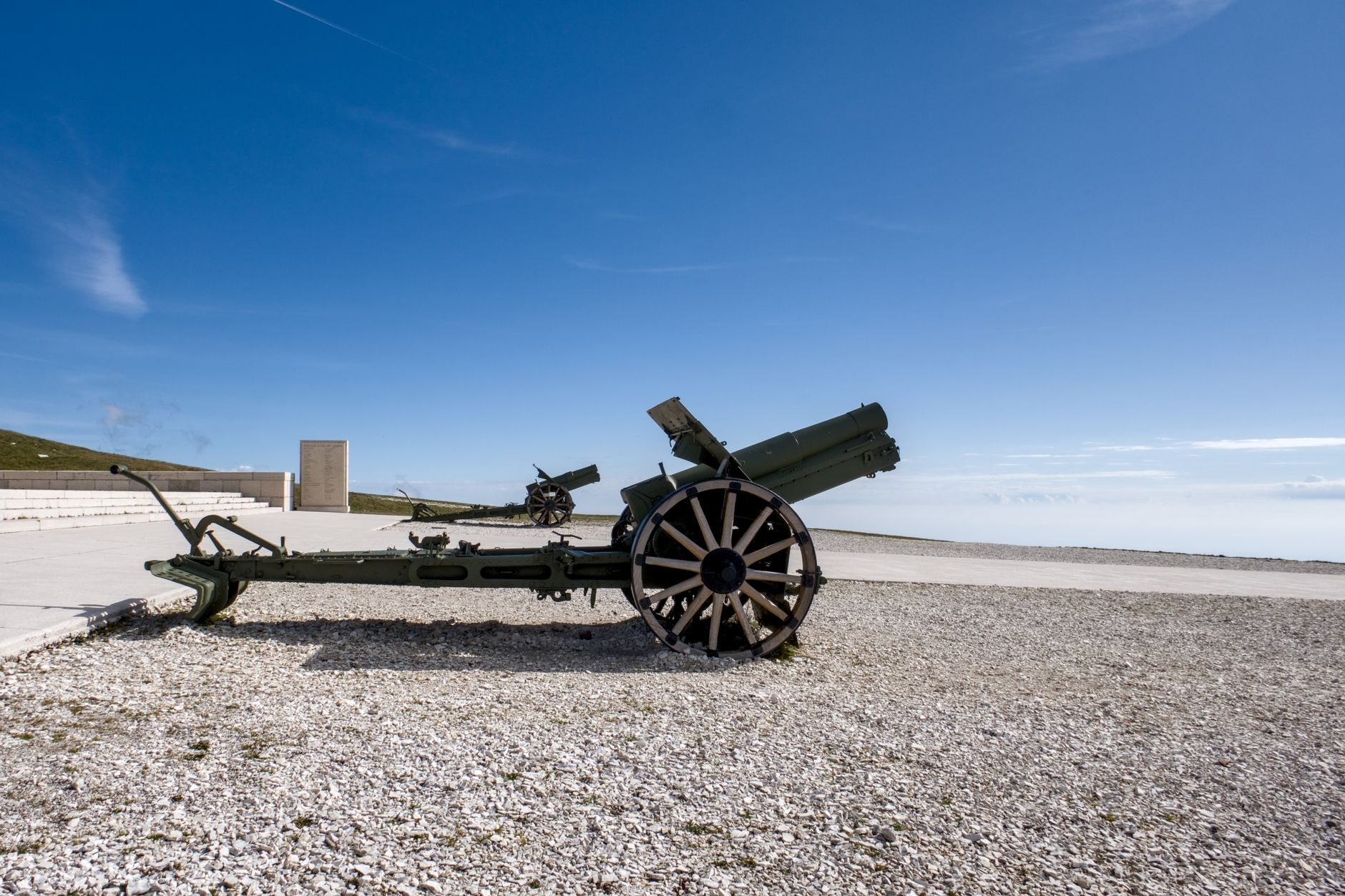
Photo by Bruno Kraler on Pexels
Canadian Soldiers Capture Vimy Ridge through Secret Tunnel
On April 9, 1917, Canadian soldiers achieved what other Allied forces could not: the capture of Vimy Ridge, a strategic location in northern France. Lieutenant-General Julian Byng led the Canadian Corps in this decisive battle. The events that unfolded in the town of Vimy, near the city of Arras, would become a pivotal moment in the history of World War I.
What Everyone Knows
Most people think that the Canadian victory at Vimy Ridge was the result of a conventional military assault, with soldiers advancing across no man's land in the face of heavy machine gun fire. The standard story goes that the Canadians' bravery and determination ultimately led to their success. However, this narrative overlooks a crucial aspect of the battle plan, one that played a significant role in the Canadian Corps' achievement.
What History Actually Shows
Historians such as Timothy Winegard and Andrew Iarocci have extensively researched the Battle of Vimy Ridge, and their findings reveal a more complex and intriguing story. On March 20, 1917, Canadian engineers began constructing a network of tunnels and subways, which would ultimately stretch for over a kilometer. The Canadians built a secret tunnel that allowed them to move troops and supplies underneath no man's land, emerging just meters from the German lines. According to the book "The Battle of Vimy Ridge" by Brereton Greenhous, the tunnel system was a key factor in the Canadian Corps' ability to launch a surprise attack on the German positions. On April 2, 1917, Canadian soldiers began to move into position, using the tunnel system to reach the front lines undetected. By April 8, 1917, all units were in place, ready to launch the assault the following day. As historian Jack Sheldon notes in his book "The German Army on the Somme", the Canadian plan was to attack the German positions in a series of carefully coordinated waves, with the aim of quickly overwhelming the enemy defenses. The successful capture of Vimy Ridge on April 9, 1917, was a direct result of the Canadian soldiers' meticulous planning and execution, as well as their innovative use of the secret tunnel system. Winegard's research highlights the importance of the tunnel system, which allowed the Canadians to maintain a significant advantage over the German forces throughout the battle. Iarocci's work also emphasizes the role of the tunnel system in facilitating the Canadian Corps' ability to respond quickly to changing circumstances on the battlefield. The Canadian soldiers' use of the secret tunnel system was a masterstroke, one that ultimately led to their victory at Vimy Ridge.
The Part That Got Buried
Historians at the Canadian War Museum made a deliberate decision to downplay the role of the secret tunnel in the capture of Vimy Ridge, focusing instead on the bravery of the soldiers in battle. This decision, made in the 1960s, was largely driven by the museum's curator, who believed that the tunnel was not a significant factor in the victory. As a result, the story of the tunnel was relegated to a footnote in the museum's official history of the battle. The Canadian government also played a role in suppressing the story, as they did not want to reveal the extent of their tunnel-digging operations to the public. One concrete reason for this suppression was the fear that it would reveal the identities of the soldiers who had dug the tunnel, putting them and their families at risk. The soldiers themselves were also sworn to secrecy, and many took the secret of the tunnel to their graves.
The Ripple Effect
The capture of Vimy Ridge had a direct impact on the development of modern tunnel-boring technology, as engineers sought to replicate the success of the Canadian soldiers. The techniques used to dig the tunnel were studied and improved upon, leading to the creation of more efficient and effective tunnel-boring machines. Today, one specific modern thing that traces directly back to this event is the tunnel-boring machine used in the construction of the Channel Tunnel, which connects England and France. The engineers who designed this machine credited the Canadian soldiers' tunnel at Vimy Ridge as an inspiration for their work.
The Line That Says It All
The Canadian soldiers' secret tunnel at Vimy Ridge was sealed and abandoned after the battle, its entrance hidden behind a false grave marked with a fake name.
A Note on Sources
This article draws on historical records, documented accounts, and academic research related to the Battle of Vimy Ridge and the history of tunnel warfare in World War I.


