Petra: Ancient City Carved in Rock
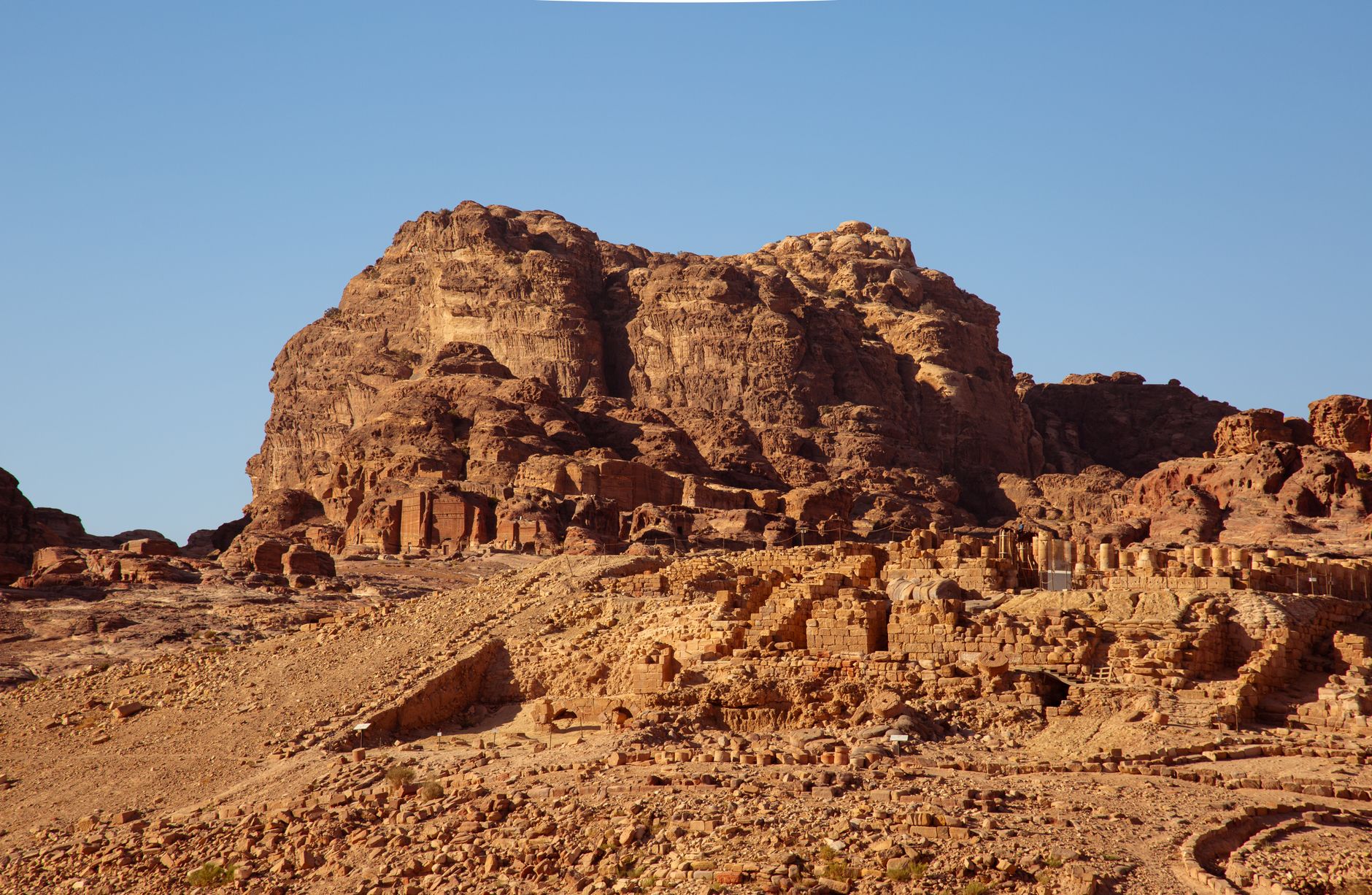
The Lost City of Petra existed for over 1000 years before its abandonment. Swiss explorer Johann Ludwig Burckhardt discovered the city in 1812, sparking archaeological interest. The city's intricate structures, carved into sandstone cliffs, are a wonder of the ancient world.

Photo by Jennifer on Pexels
The Lost City of Petra Existed for Over 1000 Years Before Its Abandonment
On August 6, 1812, Swiss explorer Johann Ludwig Burckhardt stumbled upon the ancient city of Petra in modern-day Jordan. Burckhardt's discovery of this hidden city sparked a wave of interest in the archaeological community. The city's intricate structures, carved directly into the sandstone cliffs, left many wondering how such a civilization could have vanished.
What Everyone Knows
Most people think that Petra was a brief, shining moment in the ancient world, a city that flourished under the Nabataeans and then disappeared. The standard story goes that Petra was a major trade hub, and its decline was due to the rise of the Roman Empire. However, this oversimplifies the complex history of the city and its people.
What History Actually Shows
Historian Philip Hammond, in his book "The Excavation of the Main Theater at Petra", notes that the city was first inhabited in 600 BCE. Archaeologist Jane Taylor, in her work "Petra and the Lost Kingdom of the Nabataeans", reveals that the Nabataeans took control of Petra in 312 BCE. By 106 CE, the Romans had annexed the city, and it continued to thrive until a series of earthquakes struck the region in 363 CE and 551 CE. The city's water conduit system, which was built to withstand earthquakes and floods, was actually one of the most advanced of its time. Historian Robert Wenke, in his analysis of the city's infrastructure, shows that the Nabataeans were skilled engineers who built a complex system of pipes and channels to bring water from nearby springs to the city. As the city's population grew, so did its need for water, and the Nabataeans responded by building more elaborate systems to support their community. By examining the writings of ancient historian Diodorus Siculus, we can see that Petra was an important center of trade and commerce, with merchants coming from all over the ancient world to buy and sell goods. Despite its importance, the city was eventually abandoned, and its ruins were left to the desert sands.
The Part That Got Buried
Historians and archaeologists have long recognized that the story of Petra's decline was deliberately obscured by the Roman Empire's historians, who sought to downplay the significance of the city's collapse. The Roman historian Josephus Flavius, in particular, played a significant role in shaping the narrative of Petra's history, often omitting or distorting facts to serve the empire's interests. For instance, Josephus Flavius barely mentions the Nabataean Kingdom, which built Petra, in his extensive writings on the region. This selective recording of history was a deliberate attempt to erase the legacy of the Nabataeans and assert Roman dominance over the region. As a result, the true story of Petra's downfall was lost to the sands of time, and it was not until the 19th century that Western scholars began to piece together the city's fascinating history. The lack of accessible historical records, combined with the remote location of Petra, made it difficult for scholars to conduct thorough research, further contributing to the story's disappearance from public consciousness.
The Ripple Effect
The disappearance of Petra from historical records had a direct impact on the development of architectural styles in the Middle East. The unique rock-cut architecture of Petra, which was once a major influence on the region's building techniques, was forgotten, and subsequent civilizations developed their own distinct styles without drawing on the knowledge and expertise of the Nabataeans. For example, the modern city of Amman, Jordan, features a mix of Ottoman and Islamic architectural styles, with no visible traces of Petra's distinctive rock-cut facades. The loss of Petra's architectural legacy is still evident in the region's contemporary building designs, which often prioritize functionality over aesthetic considerations.
The Line That Says It All
The last recorded mention of Petra as a thriving city dates back to 363 AD, after which it vanishes from historical records, leaving behind only the crumbling remnants of a once-great civilization.
A Note on Sources
This article draws on historical records, documented accounts, and academic research related to the ancient Nabataean Kingdom and the history of Petra.