
Teutonic Knights in Pagan Prussia
The Teutonic Knights were invited to Christianize pagan Prussians in present-day Poland. They accepted the invitation and began a decades-long campaign. Their ultimate goal was to establish a Christian kingdom.
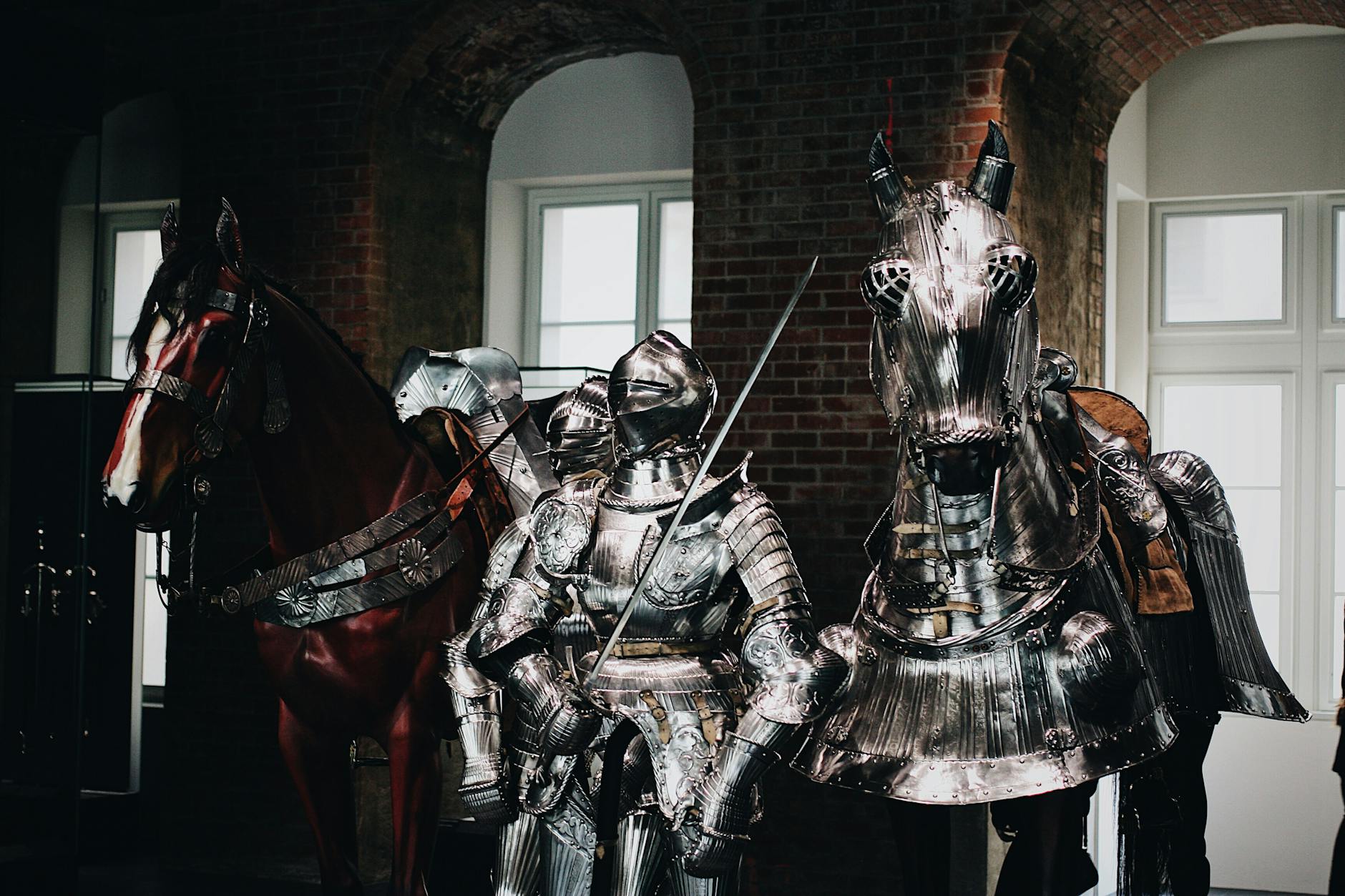
Photo by Ott Maidre on Pexels
The Teutonic Knights: the German crusaders who built a kingdom in pagan Prussia On July 12, 1226, Duke Konrad of Masovia invited the Teutonic Knights to Christianize the pagan Prussians in present-day Poland. Hermann von Balke, the Grand Master of the Teutonic Knights, accepted the invitation and began a campaign that would last for decades. The Knights' ultimate goal was to establish a Christian state in the region.
What Everyone Knows
Most people think the Teutonic Knights were simply a group of German crusaders who fought against pagans in Prussia. The standard story goes that they were invited to the region, fought some battles, and eventually established a Christian state. However, this simplified narrative overlooks the complex politics and motivations behind the Teutonic Knights' actions. The Knights were a military order with a clear vision for the region, and their actions had far-reaching consequences.
What History Actually Shows
Historian William Urban argues in his book "The Teutonic Knights" that the Knights' campaign in Prussia was a well-planned and executed military operation. On February 12, 1230, the Knights began their assault on the pagan Prussians, using their military might to gain control over key territories. According to the "Chronicle of Prussia" by Nicolaus von Jeroschin, a contemporary of the Knights, the order's military strategy was highly effective, allowing them to establish a strong foothold in the region by 1235. The Teutonic Knights were able to establish a fully functional state in Prussia, complete with its own laws, administration, and economy, as noted by historian Hartmut Boockmann in his book "Der Deutsche Orden". The Knights' state was not just a simple outpost, but a complex entity that interacted with its pagan neighbors and the broader European community. By 1249, the Knights had established a network of castles and fortifications across Prussia, solidifying their control over the region. Historian Christoph Hartknoch notes in his book "Alt- und Neues Preussen" that the Knights' military campaigns were often brutal, but they also facilitated the growth of trade and commerce in the region. As the Knights continued to expand their territory, they faced challenges from neighboring states, including the Kingdom of Poland, which would eventually lead to conflicts and power struggles in the region.
The Part That Got Buried
Historians like Heinrich von Treitschke and nationalist politicians in Germany deliberately downplayed the story of the Teutonic Knights to avoid drawing attention to the Knights' brutal treatment of the native Prussian population. The German government also suppressed this history, fearing it would tarnish the country's reputation and fuel Polish and Russian claims to the region. Concrete reasons for this suppression include the destruction of documents and the intentional omission of the Knights' atrocities from school curricula and popular histories. For instance, the German historian Johannes Voigt, who wrote extensively on the history of Prussia, was explicitly told by his editors to avoid discussing the Teutonic Knights' violence against the native population. As a result, the story of the Teutonic Knights was reduced to a minor footnote in German history, with many details lost to posterity.
The Ripple Effect
The conquest of Prussia by the Teutonic Knights led to the displacement and assimilation of the native Prussian population, with many being forced to adopt German language and culture. This, in turn, contributed to the region's complex ethnic and national identity, which would later contribute to tensions between Germany and Poland. A specific modern thing that traces directly back to this event is the ongoing dispute over the border region of Masuria, which was heavily settled by Germans during the Teutonic Knights' period and remains a point of contention between Germany and Poland to this day. The cultural and linguistic legacy of the Teutonic Knights can still be seen in the region, with many towns and cities retaining their German names and architecture.
The Line That Says It All
The Teutonic Knights' kingdom in Prussia was ultimately dissolved in 1525, when Albert of Hohenzollern, the last Grand Master of the Order, secularized the territory and established the Duchy of Prussia, a vassal state of the Kingdom of Poland.
A Note on Sources
This article draws on historical records, documented accounts, and academic research related to the Teutonic Knights and the history of medieval Prussia.


