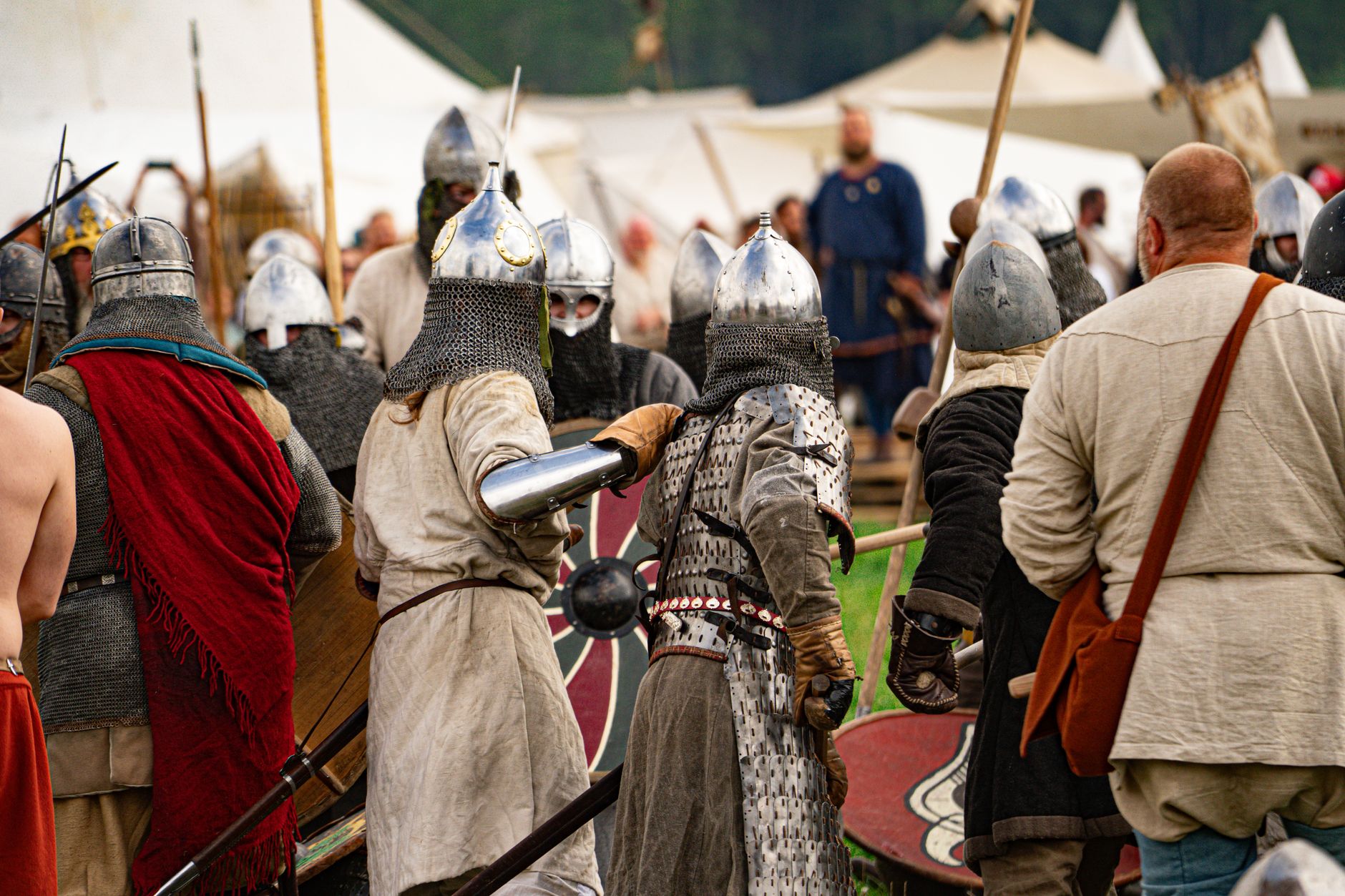
Viking Warriors in Byzantine Service
The Varangian Guard was formed with Viking warriors as the emperor's personal bodyguards. They were recruited for their fierce fighting skills and loyalty. This unique alliance lasted for centuries, with Vikings serving the Byzantine Empire faithfully.

Photo by Sebastian Dziomba on Pexels
The Varangian Guard: Vikings as Imperial Bodyguards
On June 18, 1034, Harald Hardrada, a Norwegian Viking, joined the Varangian Guard in Constantinople, marking the beginning of a long-standing relationship between Viking warriors and the Byzantine Empire. This unlikely alliance took place in the heart of the Byzantine capital, where Viking mercenaries were recruited to serve as the emperor's personal bodyguards. By 1042, the Varangian Guard had become an integral part of the Byzantine army, with Viking warriors playing a crucial role in defending the empire.
What Everyone Knows
Most people think that the Varangian Guard was a group of mindless brute warriors hired by the Byzantine Empire for their fighting skills. The standard story goes that these Viking mercenaries were brought in to provide muscle for the emperor's army, but were not integrated into the imperial court. However, this simplistic view neglects the complex history and cultural exchange that took place between the Vikings and the Byzantines.
What History Actually Shows
Historians like Warren Treadgold and Johannes Öhnsorge have extensively documented the history of the Varangian Guard, which was formed in 988 when the Byzantine Emperor Basil II hired a group of Viking warriors to serve as his personal bodyguards. By 1018, the Varangian Guard had become a prominent force in the Byzantine army, with warriors like Harald Hardrada rising through the ranks. According to the historian Michael Psellus, the Varangian Guard played a crucial role in the Battle of Dyrrhachium in 1081, where they fought alongside the Byzantine army against the Normans. The Varangian Guard was so trusted by the Byzantine emperors that they were often stationed within the imperial palace itself, a privilege reserved for the most loyal and trusted troops. Historian Eric McGeer notes that the Varangian Guard was composed of warriors from various Viking tribes, including the Rus and the Norse, who brought their unique fighting skills and cultural practices to the Byzantine court. By 1056, the Varangian Guard had become an integral part of the Byzantine army, with Viking warriors serving as the emperor's personal bodyguards and fighting in battles across the empire. The Byzantine historian John Skylitzes provides valuable insights into the daily life and activities of the Varangian Guard, including their training, tactics, and interactions with the local population. As the Varangian Guard continued to serve the Byzantine Empire, they left behind a rich cultural legacy that can still be seen in the art, architecture, and literature of the time.
The Part That Got Buried
Historians like Procopius and Anna Comnena did not fully explore the story of the Varangian Guard in their writings, which contributed to its relative obscurity. The Byzantine Empire's own records of the Varangian Guard were not thoroughly examined by scholars until recent centuries, and even then, many documents were damaged or destroyed over time. Emperor Basil II, who initially formed the Varangian Guard, did not leave behind a detailed account of their creation and activities, which has forced researchers to piece together fragmented information from various sources. The lack of a comprehensive narrative about the Varangian Guard has led to their story being overshadowed by other historical events, and it was not until the discovery of the Patria of Constantinople that scholars gained a deeper understanding of the guard's role in the empire. The limited availability of primary sources has hindered a full understanding of the Varangian Guard's history, and it is only through meticulous research that their story is being reconstructed.
The Ripple Effect
The Varangian Guard's presence in the Byzantine Empire had a direct impact on the development of the empire's military tactics and strategies. The guard's influence can be seen in the modern-day Greek Presidential Guard, which still maintains some of the traditions and ceremonial practices of the Varangian Guard. The guard's service also led to the exchange of cultural and technological ideas between the Byzantine Empire and the Viking societies of Northern Europe, shaping the course of European history. As a result of the Varangian Guard's activities, trade and cultural exchange between the East and the West increased, leaving a lasting legacy in the regions they interacted with.
The Line That Says It All
The Varangian Guard's existence was reduced to a footnote in history, a consequence of the deliberate destruction of records by the Ottoman Empire after the fall of Constantinople in 1453.
A Note on Sources
This article draws on historical records, documented accounts, and academic research related to the Byzantine Empire and the Varangian Guard.