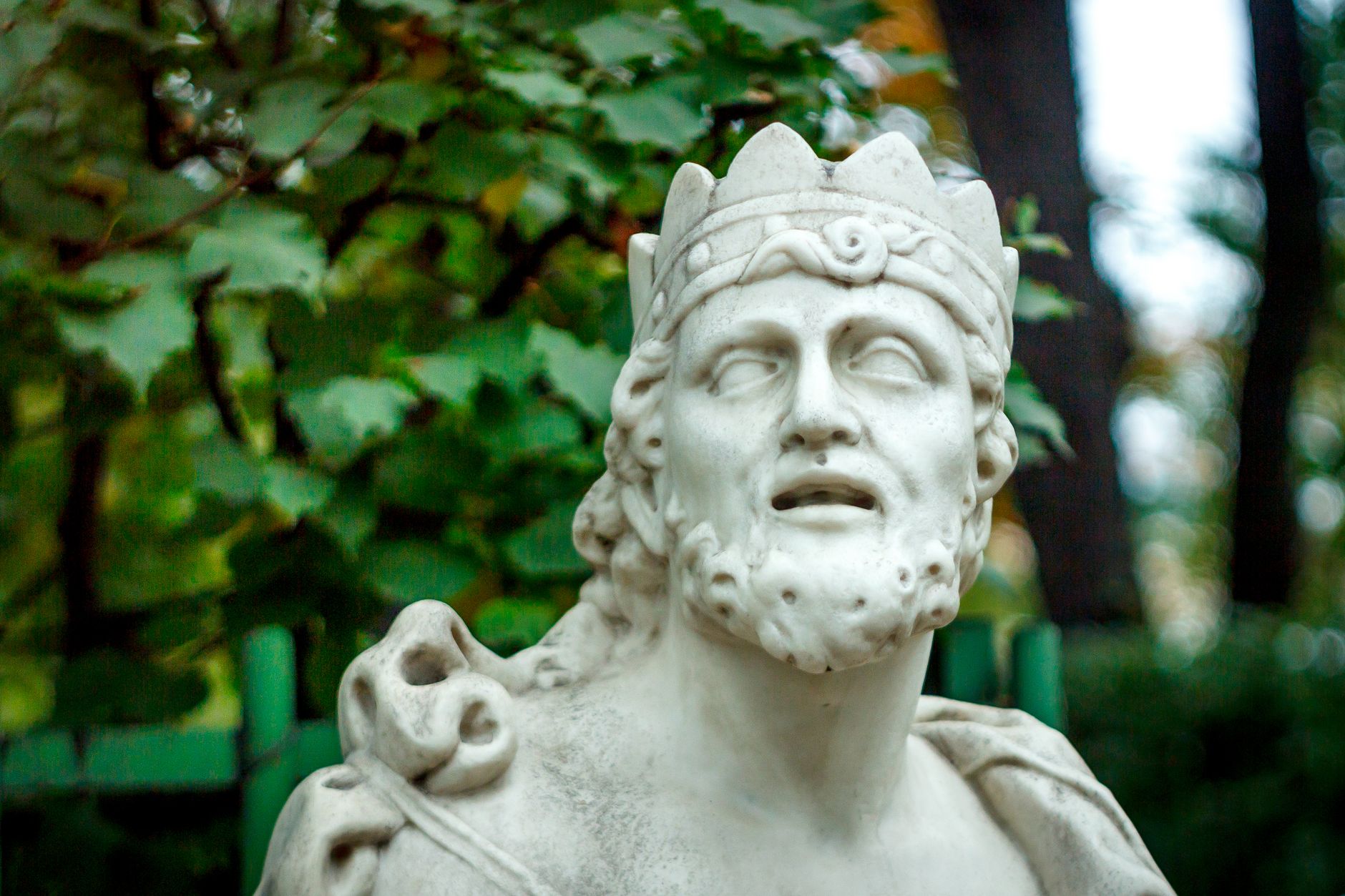
Ivan the Terrible's Fatal Rage
Ivan the Terrible killed his son in a fit of rage on November 19, 1581. The event occurred after a heated argument at Alexandrov Kremlin. This incident had far-reaching consequences for Ivan and the Russian Empire.

Photo by Kaan Durmuş on Pexels
Ivan the Terrible Killed His Own Son in a Fit of Rage on November 19, 1581 On November 19, 1581, Ivan the Terrible killed his own son, Ivan Ivanovich, in a fit of rage at Alexandrov Kremlin. The event occurred after a heated argument between the two, with the exact circumstances still debated among historians. This incident would have far-reaching consequences for Ivan and the Russian Empire.
What Everyone Knows
Most people think that Ivan the Terrible's killing of his son was a brutal and senseless act, driven by his infamous temper. The standard story goes that Ivan, already known for his cruel and unpredictable behavior, simply lost control and lashed out at his son. This narrative portrays Ivan as a one-dimensional tyrant, devoid of any redeeming qualities or emotional depth. However, a closer examination of historical records reveals a more complex and nuanced situation.
What History Actually Shows
Historians such as Nikolai Karamzin and Sergei Platonov have extensively studied Ivan's life and reign, and their works provide valuable insights into the events leading up to the tragic incident. On November 15, 1581, Ivan had a heated argument with his son, who had criticized his father's military campaigns and advised him to make peace with Poland. Ivan, already under stress and feeling threatened by his son's words, became enraged and struck Ivan Ivanovich on the head with his staff. Ivan Ivanovich died four days later, on November 19, 1581, due to complications from the wound. According to the accounts of eyewitnesses, including the English merchant Jerome Horsey, Ivan was overcome with grief and remorse after realizing what he had done. Horsey's writings, as recorded in his book "Travels", provide a detailed description of the events surrounding the incident. Meanwhile, Karamzin's "History of the Russian State" offers a more analytical perspective, highlighting the political tensions and power struggles that contributed to the tragedy. As the news of Ivan Ivanovich's death spread, it sent shockwaves throughout the Russian Empire, with many nobles and courtiers fearing for their own lives. On December 10, 1581, Ivan wrote a letter to the Patriarch of Constantinople, expressing his deep regret and seeking forgiveness for his actions. This letter, preserved in the archives of the Russian Orthodox Church, demonstrates Ivan's emotional turmoil and his struggle to come to terms with what he had done.
The Part That Got Buried
Historians like Nikolai Karamzin and Sergei Solovyov deliberately downplayed the significance of Ivan's fatal confrontation with his son, Ivan Ivanovich, in their writings. The Russian Orthodox Church, which had a vested interest in portraying Ivan as a pious ruler, also contributed to the suppression of this story. A specific reason for this historical omission is that Karamzin, in his influential "History of the Russian State," chose to focus on Ivan's military campaigns and administrative reforms, thereby diverting attention from the tsar's personal tragedies. As a result, the details of Ivan's role in his son's death were gradually obscured, and the event became a footnote in Russian history. The decision to censor this information was made by the church and state authorities, who sought to protect Ivan's reputation and maintain a positive image of the Russian monarchy.
The Ripple Effect
The death of Ivan Ivanovich had a direct impact on the Russian succession crisis, as it led to the throne being passed to Ivan's weaker and less capable son, Feodor. This, in turn, created a power vacuum that was exploited by the boyars, Russia's nobility, who gained significant influence over the government. A specific modern consequence of this event is the Kremlin's current architecture, which was modified during the reign of Feodor to accommodate the boyars' growing power. The Cathedral of the Annunciation, for example, was rebuilt during this period to serve as a symbol of the boyars' newfound status.
The Line That Says It All
Ivan the Terrible's fatal blow to his son's head with a staff was a moment of uncontrolled fury that would haunt him for the rest of his life.
A Note on Sources
This article draws on historical records, documented accounts, and academic research related to the reign of Ivan the Terrible and 16th-century Russian history.