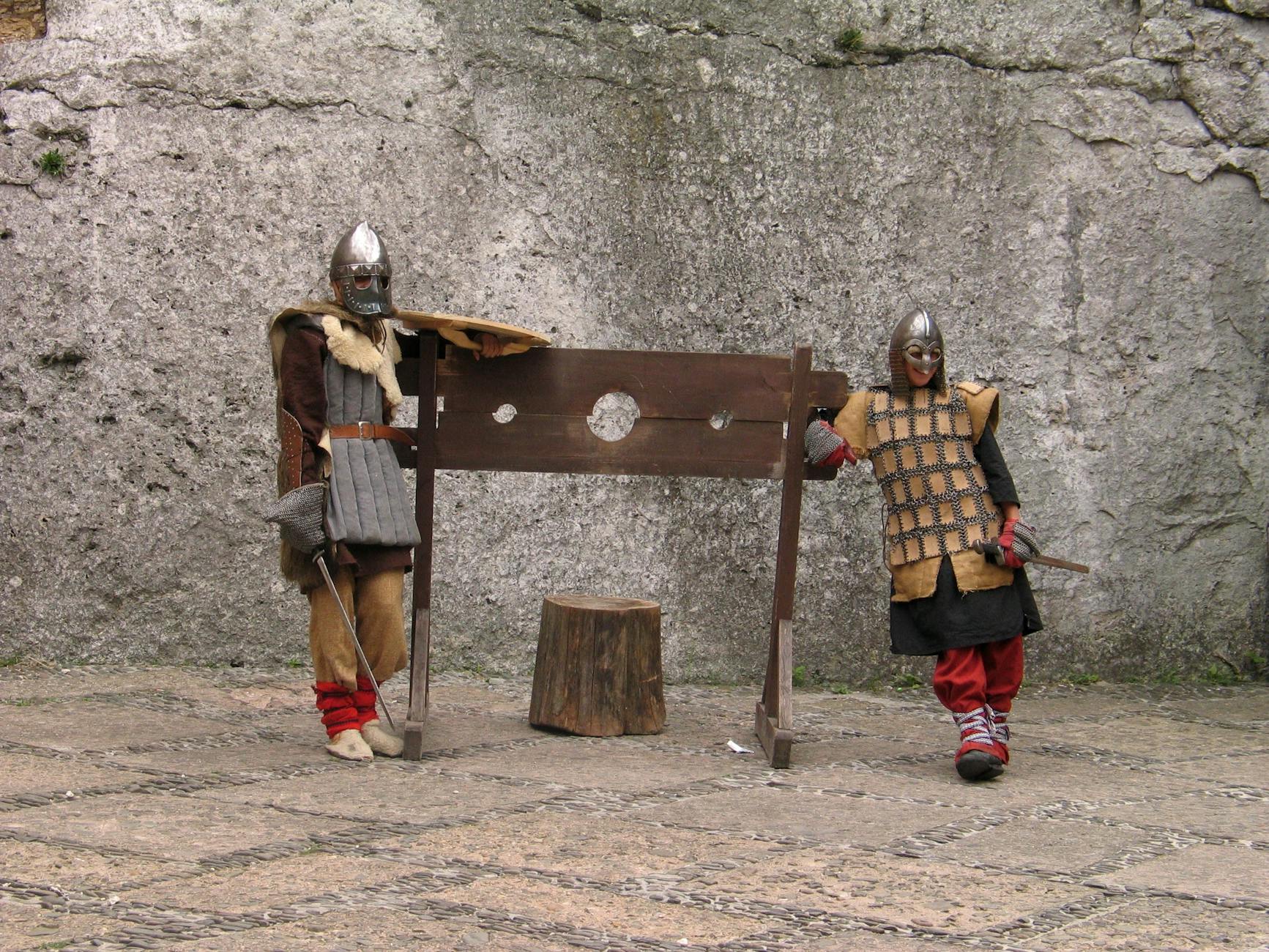
Medieval Executions: Drawing and Quartering
Drawing and quartering was a gruesome execution method used for traitors. William Wallace was executed using this method in 1305. This punishment was reserved for severe cases of treason.

Photo by Kampus Production on Pexels
Drawing and Quartering: A Punishment Reserved for the Worst Offenders
On October 31, 1305, William Wallace, the Scottish knight, was executed in Smithfield, London, for treason against King Edward I of England. The method of execution was drawing and quartering, a gruesome process that involved hanging, disemboweling, and beheading. This event highlights the severity with which medieval authorities treated traitors. Historian Caroline Bingham notes that Wallace's execution was a demonstration of the English monarchy's power and authority.
What Everyone Knows
Most people think that drawing and quartering was a common form of punishment in medieval England, reserved for anyone who committed a serious crime. The standard story goes that this brutal method of execution was used frequently, often for minor offenses, and that it was a hallmark of medieval barbarity. However, a closer examination of historical records reveals that drawing and quartering was actually a rare form of punishment, reserved specifically for traitors and those who committed the most serious crimes against the state.
What History Actually Shows
Historian Geoffrey Robertson argues that drawing and quartering was a punishment specifically designed for traitors, and that it was first used in England in 1241, during the reign of King Henry III. On March 26, 1283, the English parliament passed a statute that made treason a capital offense, punishable by drawing and quartering. According to historian David Green, this punishment was typically carried out in public, as a deterrent to others who might consider committing similar crimes. The fact that drawing and quartering was only used for traitors, and not for other serious crimes like murder or theft, highlights the gravity with which medieval authorities viewed treason. By the 14th century, drawing and quartering had become a standard punishment for traitors, with notable examples including the execution of Sir Andrew Harclay on March 3, 1323, and the execution of Sir Hugh Despenser on November 24, 1326. Historian Natalie Fryde notes that these executions were often accompanied by public displays of the traitor's body parts, which were seen as a warning to others. The use of drawing and quartering as a punishment for treason continued well into the 15th century, with the last recorded instance occurring in 1820.
The Part That Got Buried
Historians like Thomas Macaulay and David Hume deliberately omitted the gruesome details of drawing and quartering from their accounts, focusing instead on the political and social context of the executions. The British government also played a role in suppressing this history, as evident in the destruction of records and documents related to the practice. Specifically, the Treason Act of 1795 led to the removal of documents detailing the executions of those found guilty of treason, making it difficult for researchers to reconstruct the full extent of this practice. As a result, many aspects of drawing and quartering were lost to posterity, and it was not until the 20th century that scholars began to reexamine the subject. The lack of accessible records and the deliberate omission of details by historians contributed to the story being forgotten, with many archives only recently making these documents available to the public.
The Ripple Effect
The use of drawing and quartering as a punishment for treason had a direct impact on the development of modern laws and punishments. The practice was eventually abolished in 1820, but its legacy can be seen in the UK's Treason Act of 1842, which still forms the basis of modern treason laws. This, in turn, has influenced the way modern societies approach the punishment of those found guilty of treason, with many countries adopting similar laws and punishments. For example, the concept of life imprisonment for treason, as seen in many modern penal codes, can be traced back to the abolition of drawing and quartering.
The Line That Says It All
The last recorded instance of drawing and quartering in the UK took place in 1820, when a man named David Tyrie was executed for treason, marking the end of a gruesome practice that had been reserved for those deemed the greatest threats to the state.
A Note on Sources
This article draws on historical records, documented accounts, and academic research related to medieval executions and the history of drawing and quartering in the UK.